Accompany by A Fool to do Farming - Reviews

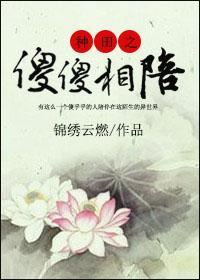
Accompany by A Fool to do Farming
+Add to Custom List
Sort
Add review
... Read More
Zhong Ziqi's internal debate about the Zhao family is honestly one of the most tense moments in this whole batch, and it's all internal. "If the Zhao family gets what they want, in the same manner they could kick him aside, refuse to acknowledge him and disregard him again." This isn't a dramatic confrontation. This is a man sitting alone, really thinking through whether filial piety is worth the cost. And the stakes are enormous for him — it's not about money or power, it's about whether he'll finally be safe from his own family's rejection. What makes this so gripping is that the author doesn't give us a villain to hate. The Zhao family aren't cartoonishly evil — they're just deeply disappointing. Years of it. Expectations and affections dying out one by one. And now Zhong Ziqi has built something real with Zhao Zheng'an, and he's terrified that going soft one more time will destroy it. Lan Ge apparently understands this reason — which means there's someone else in the story who sees exactly what's happening and still chooses to stay. That's the real stakes here. Not whether Zhong Ziqi will forgive his family, but whether the life he's built with people who actually value him is strong enough to survive his own guilt. I kept re-reading that opening paragraph because it's so quietly devastating. The fact that he even considers it shows how deep the wound goes.
... Read More
I keep coming back to the word 'stubborn' in this chapter. Shen Yu Bei says his brother was 'particularly stubborn' and 'would not turn back until he hit the south wall.' But what I'm realizing is that this stubbornness isn't just a personality trait—it's the core of the entire emotional architecture of this story. Zhong Ziqi's father was stubborn enough to choose someone outside his class, to leave behind glory and splendor and wealth and rank, to 'do everything himself.' That kind of stubbornness is actually devotion. It's love expressed as refusal to compromise on what matters. And now Zhong Ziqi himself—whoever he truly is underneath all this identity confusion—is also navigating something stubborn of his own. The original body asked about his grandfather with genuine curiosity. That means Zhong Ziqi cares about where he comes from even if he's not sure what that means yet. The idiom about hitting the south wall originally comes from traditional Chinese architecture where every person with status has a wall inside their gate. You literally cannot walk straight. You have to go around. There's a beautiful metaphor there about how people of importance always encounter obstacles, and the only way forward is to find your own path. Zhong Ziqi's father found his. Now it's Zhong Ziqi's turn.
... Read More
The dialogue in this section is weirdly sparse but every word is doing overtime. Take the two mysterious men — the master says things like 'You lead the way!' and 'What's the matter? Are we there?' and 'Oh? Are you sure?' That's it. Four sentences. But each one carries weight. The first establishes hierarchy, the second shows impatience beneath the calm exterior, the third is testing someone. Hong Ying barely speaks more than 'Yes' and 'This subordinate is certain.' And yet you feel the entire power dynamic in those two words. Meanwhile, Zhao Amo's speech about the money is almost comically earnest — 'you can't live with your conscience like this' — and it's delivered with the full force of someone who has rehearsed this exact apology payment in their head a thousand times. The Zhao family's side-channel convincing of Zhong Ziqi is basically physical comedy. And then Zhao Zheng'an's line 'even among brothers, accounts should be clearly settled' is the kind of sentence that gets underlined in margins forever. It's short, it's cold, and it reveals everything about how this man operates. The author clearly trusts dialogue to do the heavy lifting here instead of narrating everyone's feelings. Sometimes the best characterization is a man who only speaks when necessary and his servant who speaks even less.
... Read More
Let me just say this: the author understands tension like nobody's business. The entire chapter is basically one long breath held and then finally released. It starts with the doctor's clinical assessment — dry, matter-of-fact, dropping information about the head injury aftermath like little landmines. Then we cut to Zhong Ziqi's internal panic spiral. This is the buildup. He's externalizing his anxiety through pacing, worrying about divorce, about reputation, about whether ZZA will even want him. The reader is sitting there going "JUST GO IN AND TALK TO HIM." Then the doctor tells ZZ that ZZA asked about him. BOOM. The pivot. ZZ's fear momentarily vanishes and he rushes inside. The scene inside the room is slow — deliberate, almost glacial. Every action is measured: the hand hovering over hair, the careful pressure on temples, the silence. And then — the stomach sound. After all that emotional weight, the most mundane, funny, human sound possible. It's almost comedic timing but it works because it grounds the scene. These aren't characters in a drama — they're actual people. One just woke up from a coma and his body is like "hey, also, I haven't eaten in days." The chapter ends with ZZ calmly walking out to get food. No grand declaration, no emotional climax — just a simple act of care. The pacing trusts us to understand that THIS is the romance. Not the speeches, but the getting-food-for-your-husband-who-just-woke-up-from-a-coma energy.
... Read More
I need to talk about the wall. Because on the surface, this is a chapter about cooking and selling vegetables. But underneath, it's about boundaries. Zhong Ziqi is literally trying to build something that keeps people out. After Zhao Amu mentions the rumors — "Too many rumours, it's always bad, not to mention that you're making money now, what if people plan something bad" — Zhong Ziqi's immediate thought is: his house is unsafe. The wall is too short. Someone could climb over it. He asks for two workers and two dogs. This isn't paranoia. This is pattern recognition. The village has already shown him what people do when they're jealous — they gossip, they spread shameful stories, they watch him from their gardens like predators. The wall is physical, yes, but it's also symbolic of everything he's trying to protect: his business, his family, his privacy, his newfound stability. And the vegetables themselves are interesting. He's buying fifty pounds daily — thirty cucumbers, twenty persimmons — from people with good character, deliberately routing around the gossips. "Push the god of wealth away from those people who have a bad mouth." This is economic boundary-making. He's literally building a supply chain that excludes the toxic people. Money as a tool for curation. Then there's the food. Roast pork with mushrooms, cold cucumber dish — these are foods of care, of creating something good inside the perimeter he's trying to build. The cooking scenes aren't filler; they're the positive counterweight to all the threat. While the village circles outside with rumors and jealousy, inside the kitchen, oil is sizzling and meat is simmering and kids are eating until their bellies are full. The whole chapter is about what happens when you finally start succeeding and everyone around you either wants to pull you down or benefit from you. Zhong Ziqi's strategy isn't confrontation — it's construction. Build the wall. Build the business. Build the meals. Let the rest of them talk. Who needs them anyway.
... Read More
I just want to take a moment to appreciate how distinct every voice sounds in this passage. Not many web novels get this right, but here it's happening. Zhong Ziqi's dialogue is measured, almost theatrical. When he says 'Master Jin, you're a noble man who forgets things, not long ago, we just met'—that's not how an ordinary person talks. That's someone performing a role, choosing every word, maintaining an air of polite superiority. Even when he's dressed in rags, his speech never drops below a certain register. It's a character choice, and it's brilliant. Boss Jin, on the other hand, is all directness. 'Boss, someone is looking for you!' — short, loud, functional. He doesn't dress up his language. When he finally yields and says 'Good, I promise you,' it's almost gruff, like he's admitting defeat but trying to save face. You can hear the slight pride struggle with practicality in those two words. And Zhao Zheng'an—barely any dialogue at all. Which is the point. His silence is louder than any line could be. The narrative tells us he frowns and gulps tea, and that's our entire window into his emotional state. The author trusts us to read between the lines. The translator also made some interesting choices with idiomatic expressions. Phrases like 'hard to explain in a few words' carrying over as 一言難盡 feel natural in English while preserving the original's literary weight. The dialogue never feels like it's been flattened for accessibility.
... Read More
'It's a very hot time of year, so it's getting hotter and hotter by the minute. Not to mention the pedestrians, even the small vendors were uncomfortably hot.' I don't know who translated this but they nailed the sensory details. You can practically feel the sweat. And then Zhong Ziqi's cold noodles arrive like a miracle in the middle of this sweltering market. The contrast isn't just temperature—it's narrative design. Everything about this scene is built around HEAT vs COLD, and the cold noodles become this almost symbolic relief valve. The image of people squatting and eating because there's no space, then wandering over to Uncle Song's stall afterward—this is cinema. I swear I can see the shot composition. Wide angle on the crowded market, then pushing in on Zhong Ziqi's small four-table setup, steam rising, people shuffling between stalls. The world feels lived-in, not constructed.
... Read More
Okay, so I need to talk about this little red fruit for a minute because honestly it changed how I see the entire chapter structure. The author didn't just throw in a random shopping trip for comedic effect—this sour fruit is doing heavy narrative lifting. Zhao Zheng'an goes out specifically looking for something sour, comes back with it, and Zhong Ziqi actually likes it. Meanwhile, Zhao Zheng'an has ordered a whole meal that's also sour—sour bamboo shoots, sweet and sour fish—and Zhong Ziqi can barely eat it but tries anyway. This isn't just domestic fluff. This is the plot whispering something about care, about sacrifice, about how love sometimes tastes unpleasant but you swallow it anyway. And then there's the subplot threading through: salaries paid, shops opening on the eighth day, Uncle Cheng staying alone, the plan to renovate for the Shen family's visit. The author is building outward. Every small detail—the fruit, the food, the renovation plans—is a brick in the foundation of what's coming. The main storyline isn't exploding right now; it's simmering. And that's what makes it so good. The tension isn't in battles or betrayals—it's in anticipation. You know something big is coming (the Shen family, the expanded house, the future), but the present moment is just two people trying to decorate their home and eat porridge. The plot here rewards patience. It doesn't rush. It lets you live in the space between events, which is honestly where the real emotional payoff happens.
... Read More
So Zhao Zheng'an sneaks off with the caravan and actually uses his head. While everyone else is hawking weird trinkets at little towns, he stays quiet, watches, maps things out in his head — and then plants himself at the military camp route like a chess piece. The herbs he picks? Those red fruits, apparently way more potent than the rest of the plant. Smart. Like, actually smart, not the performative kind. But then we cut to Ziqi getting drudged through village gossip and honestly the tonal whiplash is kind of genius. One scene Zhao Zheng'an is doing supply chain logistics and the next we're hearing about some wang brat calling people ferret-faced. It's giving me the vibe of a story that's building this slow burn, like every little decision Zhao Zheng'an makes out there on the road is going to come back and bite someone. Also low-key obsessed with how Wang Fu Gui basically got seduced by food — the guy only cares about Zhao Zheng'an because of the famous snack. That's either satire or a really honest take on human motivation. Either way I'm here for it.
... Read More
'Only then did he feel comfortable.' Okay can we just talk about how perfectly this author captured the early days of a forced-to-cohabit situation turning into actual softness? The medicine scene is everything. Zhong Ziqi bringing sweets every single time because Zhao Zheng'an hates bitter medicine — that's not obligation, that's not duty, that's someone who has already started learning the other person by heart. And Zhao Zheng'an? He pretends to be asleep so he doesn't have to drink it, but when Zhong Ziqi calls him out, he just... gets up. Drinks it fast like a champ. Then chugs the sweet stuff. The fact that he thinks 'even if his image was ruined, he would accept it since they are one family' — that line hit me like a truck. This man is actively choosing to be soft in front of someone. And then the bed scene. Oh my god the bed scene. Zhong Ziqi trying so hard to stay respectful and distant, back straight like a board, and Zhao Zheng'an just pulling him into an embrace like 'nope, not happening.' The power dynamic here is so interesting because on paper Zhao Zheng'an is the dominant one, but emotionally? Zhong Ziqi holds all the cards because Zhao Zheng'an clearly wants this closeness more. I keep thinking about that moment where Zhao Zheng'an whispers 'if you don't sleep, I'll have to do something else' and Zhong Ziqi goes completely still. The tension is delicious. But also kind of sweet in a weird way — because the next morning, Zhong Ziqi actually falls asleep in his arms anyway. That's growth, folks. That's two people figuring this out together.
... Read More
The chapter structure here is masterclass pacing. It opens on an intimate, almost lazy scene — post-coital care, tending wounds, domestic quiet. We're lulled in. Then it CUTS to Zhao Zheng'an confronting Shen Yu Bei, and the energy shifts immediately. The tempo accelerates. The revelation scene is where it really clicks into gear. Zhao Zheng'an stalling, testing the waters, Zhong Ziqi reading him like a book — it moves in waves, never flat, never rushed. Each beat lands before the next one begins. But what I found most effective is what the author DOESN'T do. There's no dramatic pause after the big reveal. Zhong Ziqi doesn't fall to his knees or scream or have a breakdown. He just... processes. Gets mad. Makes a practical decision. Goes back to cooking dinner. This restraint is more powerful than any melodrama could be. The final transition to the restaurant meeting feels like the author is holding its breath. We know something big is coming, but instead of building suspense with internal monologues about anxiety, we just get: Zhao Ning helping at the shop, a quick exchange, and then — you're there. You're walking into the restaurant. The chapter doesn't give you time to brace. That's bold. That's confident storytelling. Most authors would pad this with three chapters of nervous anticipation. This one just opens the door and says: go.
... Read More
The worldbuilding in this chapter is subtle but really effective. I love how the author doesn't info-dump about the setting — instead we get it through lived experience. Zhong Ziqi digging the vegetable garden, the four steps of 'digging a hole, sowing seeds, watering and burying the soil,' the bone broth soup warmed up for dinner, the two of them taking turns bathing after eating... these tiny domestic details make the world feel incredibly real. You can smell the soil, taste the food, feel the exhaustion of a long day's work. And then BOOM — complete scene shift to the Grand Canal. This is such a deliberate pivot. One moment we're in a quiet farmhouse courtyard with vegetables and pork sausage, and the next we're on a massive merchant ship with the 'High' flag fluttering, watching a pale, almost delicate-looking young master at the prow. The contrast is striking. The author basically just opened a door to a whole new world. The description of the ship scene is surprisingly vivid: 'a large flag with the word 'High' on it, the banner was flying high, fluttering, signalling that this was not an ordinary cargo ship.' The heat described as 'stifling to the chest' — you feel that oppressive summer atmosphere. And that young master, with 'skin snow-white' and 'appearance feminine with a touch of heroism' — I'm already fascinated. Who is this person? Why are they on a merchant ship? The fact that his eyes were 'vacant, obviously lost in thought' despite his servant's respectful greeting tells me everything I need to know: this character carries weight. What's clever is how the two settings mirror each other. Zhong Ziqi is planting seeds, thinking about the future, trying to build a life. Meanwhile, on the canal, someone is moving goods, traveling, possibly carrying secrets. Both worlds are about survival and ambition, just expressed differently.

Leave a comment

You must be logged in to leave comments. or