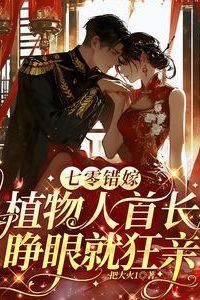
“Accidentally Married in the '70s: The Comatose Commander Wakes Up and Kisses Me Wildly”
+Add to Custom List
Genres:
Novel Info

Summary

... Read More

Song Tian, a mechanical engineering researcher with superhuman strength, transmigrates into the body of an eighteen-year-old orphan in 1972 China. The original owner was tricked by her adoptive family into marrying Lu Beizhen, a military commander who had been in a vegetative state for two years following a combat injury. The Song family promised a docile husband who would not argue, but Song Tian discovers upon waking on her wedding night that her husband is unconscious. Lu Beizhen’s mother, Fang Shuqin, initially offers to cancel the marriage out of guilt, but Song Tian, calculating her bleak future if returned to her abusive adoptive family, chooses to stay. She convinces Fang Shuqin that she is willing to care for her husband, securing a stable living situation and protection from her hostile relatives.

On the wedding night, while Song Tian is changing Lu Beizhen’s clothes, he suddenly awakens. His initial reaction is hostility; he feels deceived and demands a divorce, refusing to accept her as his wife. However, Fang Shuqin intervenes, leveraging military regulations that require a six-month waiting period before a divorce can be processed. During this time, Fang Shuqin actively schemes to bring the couple together, hiding Lu Beizhen’s car keys and forcing them to share a bedroom. Song Tian’s innate strength becomes a recurring point of surprise; she effortlessly repairs military vehicles and moves heavy industrial equipment, distinguishing her from the ordinary women of the era.

A critical turning point occurs when Song Tian suffers from severe menstrual cramps. Lu Beizhen, despite his cold demeanor, brings her hot water and a hot water bag. In her pain-induced delirium, Song Tian clings to him throughout the night, mistaking his body heat for comfort. This intimate moment shifts Lu Beizhen’s perception of her, though he remains outwardly stoic. Shortly after, Jiang Xiaoyu’s mother arrives, revealing that Lu Beizhen had previously been engaged to Jiang Xiaoyu, who abandoned him when he fell ill. The mother’s entitlement and greed provoke Fang Shuqin’s fury, reinforcing her determination to keep Song Tian as her daughter-in-law.

Seeking financial independence, Song Tian visits the local machinery factory. She witnesses a safety accident where a worker is trapped under a falling steel coil. Using her strength, she operates a forklift to rescue the man and identifies a critical manufacturing defect in the steel coils that the factory director had overlooked. Her actions prevent further accidents and save the factory significant economic loss. Impressed by her technical knowledge and bravery, the director hires her as a full-time level-four worker, granting her a stable income and social status.

As Song Tian establishes her career, her relationship with Lu Beizhen evolves from hostility to a complex coexistence. He begins to notice her competence and kindness, particularly when she gifts him items purchased with her own wages. Meanwhile, Fang Shuqin continues her relentless matchmaking efforts, interpreting every small interaction as progress. The story follows Song Tian’s navigation of 1970s societal constraints, her professional growth, and the gradual thawing of her marriage as Lu Beizhen confronts his growing attachment to the woman he initially rejected.

Novel Items

More
Document
The official marriage document between Song Tian and Lu Beizhen. Fang Shuqin called the military to prevent it from being canceled after Song Tian agreed to stay.
Clothing
Pajamas found in the wardrobe that Song Tian used to help change Lu Beizhen out of his thick military uniform during the hot July weather.
Money
The amount the Song family received when they married off the original girl to Lu Beizhen, deceiving her about his condition.
Household Item
An enamel tea cup stamped with the words Labor is glorious, found on the table in the wedding room.
Vehicle
The military vehicle from which Jiang Guo'an and Chen Feng step out when they witness the thief stealing Zhang Xiaolan's bag.
Tools
Sizes six and eight pliers and wrenches used by Song Tian to repair Lu Beizhen's military jeep. Tools from this era were not very precise, causing nuts and wrenches to slip easily.
Latest Release
DateGroupRelease
2026-08-11shanghai fantasy c18
2026-08-11shanghai fantasy c17
2026-08-11shanghai fantasy c16
2026-08-11shanghai fantasy c15
2026-08-11shanghai fantasy c14
2026-08-11shanghai fantasy c13
2026-08-11shanghai fantasy c12
2026-08-11shanghai fantasy c11
2026-08-11shanghai fantasy c10
2026-08-11shanghai fantasy c9
2026-08-11shanghai fantasy c8
2026-08-11shanghai fantasy c7

Community Reviews

Rating(4 / 5.0, 33votes)
5 stars
9(27%)
4 stars
14(42%)
3 stars
10(30%)
2 stars
0(0%)
1 stars
0(0%)

Popular reviews

... Read More
The central conflict here is deceptively simple but loaded with tension. Lu Beizhen wants a divorce. Song Tian is fine with that — she just wants six months to get her bearings. But Fang Shuqin is actively working against the divorce, which means she's creating obstacles for both of them in different ways. What makes this conflict so compelling is that neither person is the villain. Lu Beizhen isn't being cruel for no reason — he was tricked into this marriage too, he just found out about it after he woke up. Song Tian isn't manipulating him; she's manipulating the situation to survive. And Fang Shuqin genuinely believes she's doing the right thing by keeping them together. The stakes are personal but not life-threatening — at least not yet. Song Tian stands to lose her independence if she stays and he refuses to divorce. Lu Beizhen stands to lose his autonomy if he's trapped in a marriage he doesn't want. But there's also something riskier at play: emotional vulnerability. Every day they're forced to coexist, the chance of real feelings developing increases. And for two people who value control, that's the real danger. "Make Song Tian leave. Immediately. Now." — Lu Beizhen's first thought after waking up. That's not just anger; that's someone who has lost control of his own life and is fighting to regain it. Song Tian's response is equally telling: she doesn't beg, she doesn't cry, she simply says she'll leave if he wants her to. The power dynamic here is fascinating because on the surface, Lu Beizhen has all the power — he's the husband, the soldier, the one with the divorce application. But Song Tian holds something he doesn't: she's already accepted whatever happens. That detachment is its own kind of strength.
... Read More
I need to talk about Fang Shuqin because this woman is an absolute legend and I would fight anyone who says otherwise. The way she handles Jiang Xiaoyu's mom is something else. This woman shows up acting like Song Tian is some temporary guest and Fang Shuqin is over there like 'excuse me, SHE is my daughter-in-law.' The protectiveness! The fire! And those slaps—two perfectly timed smacks disguised as mosquito swatting. I literally screamed when the second one landed. But what got me was the tenderness underneath all that fierceness. She's making brown sugar steamed egg custard, using moxa sticks on Song Tian's belly, genuinely worried that Song Tian will hear about Jiang Xiaoyu and leave. This woman is building a real bond with her daughter-in-law and it's so wholesome it hurts. And Lu Beizhen—don't think I forgot about him. The fact that he stayed up all night holding a woman who was literally using him as a body pillow, that he quietly fixed the door she broke, that he made her brown sugar water despite pretending not to care... this man is so done for and he doesn't even know it yet. The tension between them is everything.
... Read More
'Before her was a gray-white wall full of the era's flavor, a five-drawer cabinet painted red, and a wooden frame bed. On the nearby table sat a red-plastic thermos and an enamel tea cup stamped with 'Labor is glorious'." That one paragraph. That's it. Three sentences and I'm suddenly in 1972 China. The red-plastic thermos, the enamel cup with that slogan — these aren't just props, they're time machines. The author doesn't need to explain the Cultural Revolution or the rationing system; the objects in the room tell you everything. And the house itself! A three-room bungalow with single-layer red brick walls that can't block sound. Song Tian can hear her husband and mother-in-law arguing about divorce through the wall. That's such a specific, lived-in detail. You can feel the thinness of those walls, the lack of privacy, the way everyone's business is everyone else's business in that era. The bridal chamber scene is also surprisingly vivid — July heat, thick military uniform, the sweat on Lu Beizhen's forehead. The contrast between the cold, commanding man and the warm, humid summer air creates this almost cinematic quality. And then Song Tian lifting him with one hand because she inherited superhuman strength? The physicality of that moment — the bed frame, the fall, the accidental kiss — it's choreographed like a movie scene. I could see it. The worldbuilding isn't just background; it's woven into every action.
... Read More
Okay so let me just say—this author is a menace. The way Jiang Xiaoyu sets these traps is genuinely impressive in a villainous sort of way. First the spoiled mangosteens, then the gum situation. It's like she's running some kind of elimination tournament and Song Tian is the only obstacle between her and marrying Lu Beizhen. But here's what actually got me: the mangosteen scene. Jiang Xiaoyu brings these 'imported' mangosteens, knows they're spoiled, and forces Lu Beizhen to eat half to prove they're safe. Song Tian knocks it out of his hand. And then—plot twist—Zhou Yi comes sprinting down the stairs with everyone having diarrhea. The timing is chef's kiss. But the real plot gem is Lu Beizhen's reaction. Instead of being mad at Song Tian for 'ruining' the fruit, he gets suspicious. He corners her against the wall. 'Where did you learn all this?' That's when the power dynamic shifts. He's not the all-knowing commander anymore—he's the one who doesn't know something, and it eats at him. Then the gum incident hits. Blue Arrow gum with English instructions. Jiang Xiaoyu 'forgets' to tell Song Tian it can't be swallowed. Fang Shuqin drops her spatula. I literally gasped. This woman is playing 4D chess while everyone else is playing checkers. And the fact that Song Tian probably didn't swallow it anyway? The reader knows she's capable. We're just waiting for everyone else to catch up. The subplot of Fang Shuqin secretly investigating Song Tian's background while pretending to be sweet is also doing heavy lifting. She's not fooled. None of them are, really—but the mask is starting to slip in interesting ways.
... Read More
There's a lot going on beneath the surface of this section, and I want to unpack it. The steel coil itself is the central symbol. It's heavy, hot, dangerous, and fundamentally *wrong*—overweight, poorly manufactured, with its alarm deliberately turned off. It represents the systemic failures that keep people trapped: the safety officer who did his job but was still scapegoated, the workers who stayed silent, the director who only cares about accountability when it suits him. The coil is literally crushing someone, and the machinery of the factory is designed to keep it hidden. Song Tian's entrance into this world is symbolic too. She's an outsider—a divorced woman, uneducated, without references. But she's also the only one who can see the problem clearly. Her knowledge of forklifts and machinery becomes her power in a space that initially dismisses her. The heat-resistant suit that makes her look like a mascot? That's the visual metaphor for her position: she's protected by her skills but still treated as an oddity. The burning of her arm is another loaded image. She's literally scarred by her willingness to enter a dangerous system, and the blood in the cooling pool—initially read as a death omen, then revealed as something mundane—speaks to how women's bodies are constantly misread, sensationalized, or dismissed. The pool turns red, everyone panics, and the explanation is just… biology. She's still a person, still capable, still heroic, despite her body doing what bodies do. The grade system (levels one through eight) is a microcosm of the entire social structure. Song Tian lands at level four—middle tier, respectable, but not at the top. It's a fair assessment of her position: she's proven herself, but she's still climbing. The director's line about 'talent must not be restricted by formalities' (attributed to Mao) is interesting because it's both genuine and self-serving—he needs her skills, so he makes an exception. The system bends for utility, not justice. And Fang Shuqin's fantasy about Song Tian reuniting with Lu Beizhen? That's the theme of women being defined by their relationships to men, even when they've already escaped one. The mother figure can't imagine a successful woman without her 'happy ending' involving the husband she left.
... Read More
Okay, let's talk about the absolute masterpiece of comedic misdirection in these chapters. The belt-for-panties swap is one of those plot devices that seems so simple on paper but is executed with such perfect timing that I literally gasped out loud. Song Tian buys a belt as a grateful gesture for giving her a ride, but in her flustered state, she hands Lu Beizhen the wrong box—the one containing the underwear she bought for herself. Then she goes back, rips a door off its hinges, shoves the belt into his arms, and bolts. The layers of misunderstanding here are insane. Lu Beizhen thinks she's making a bold romantic/sexual advance with panties. She thinks he's angry because he dislikes a cheap belt. Meanwhile, Fang Shuqin is over there living her best life, interpreting everything through the lens of romantic comedy tropes. The plot doesn't just move forward—it spirals, and that spiral is delicious. What really sells it is that every character is operating from completely different information, and the reader is the only one who sees the full picture. That dramatic irony is chef's kiss. And then Fang Shuqin's little scheme at the end—hiding the car keys, soaking the bed and sofa to force them into the same room—adds this wonderful subplot layer where the mother figure is essentially playing matchmaker with the tactical precision of a military operation. The story structure here is tight: setup (fixing cars, earning money), complication (the gift mix-up), escalation (door incident), and then a new setup (forced cohabitation). It's a perfect comedic cycle.
See all reviews

Characters

See all characters

Custom lists

Oops…There is nothing here.