Summary

... Read More
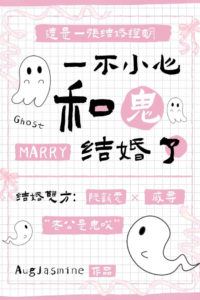
Ruan Xinyuan is a college freshman who, since childhood, has been told by his grandmother that he suffers from a rare fate condition requiring him to marry a specific man before turning eighteen or face death. His grandmother has spent years fortune-telling to identify this destined partner, providing three precise conditions: the man must have a mole on the back of his neck, be ten years older, and share the same birth date and month. Despite being a staunch materialist, Ruan Xinyuan begins to take the prophecy seriously after experiencing recurring nightmares of burning and intense chest pain that medical tests cannot explain.

One day, Ruan Xinyuan attends a lecture at a neighboring university where he encounters Qi Xun, an associate professor of ancient history. He immediately notices a mole on the back of Qi Xun's neck. Through online research, he discovers that Qi Xun was born on New Year's Day, matching his own birth date, and is twenty-eight years old, exactly ten years his senior. Realizing all three conditions are met, Ruan Xinyuan, encouraged by his friend Qiao Siming, decides to propose directly to save his own life. He purchases ninety-nine red roses and approaches Qi Xun after class, declaring his love and asking to marry him immediately.

To Ruan Xinyuan's astonishment, Qi Xun agrees without hesitation. The story reveals that Qi Xun is actually a ghost king from the Southern Yan Underworld who has lived for over nine hundred years. He recognizes Ruan Xinyuan as his reincarnated partner from a past life and has been searching for him across centuries. Qi Xun's swift agreement stems not from parental pressure as he claims, but from his ancient desire to reunite with the soul he has loved for centuries. After their meeting, Qi Xun consults with underworld officials and learns that Ruan Xinyuan's fate records are blank, indicating his soul is extraordinary and not bound by normal reincarnation rules.

Ruan Xinyuan and Qi Xun begin communicating through WeChat and arrange to discuss marriage details. They meet for dinner where Qi Xun explains his family is pressuring him to marry, creating a mutually convenient arrangement. During their conversation, Ruan Xinyuan experiences another episode of chest pain but manages to endure it. Qi Xun drives him back to campus, returning the romantic gesture by giving him ninety-nine white roses. Ruan Xinyuan introduces Qi Xun to his roommates and informs his family that he has found his destined partner. His grandmother calculates an auspicious date for the marriage certificate.

On the chosen day, Ruan Xinyuan and Qi Xun go to the civil affairs bureau to register their marriage. Along the way, they discuss their families and future plans. At the bureau, they encounter Song Min, a colleague of Qi Xun's, whom Qi Xun introduces as his fiancé. After receiving their marriage certificates, Qi Xun asks Ruan Xinyuan to change how he addresses him, suggesting the term "hubby." The story ends with Ruan Xinyuan flustered by the intimate address, while Qi Xun watches him with deep affection, hinting at the complex supernatural relationship that lies ahead between the mortal student and his ancient ghost husband.

Latest Release
DateGroupRelease
2026-08-11shanghai fantasy c38
2026-08-11shanghai fantasy c37
2026-08-11shanghai fantasy c36
2026-08-11shanghai fantasy c35
2026-08-11shanghai fantasy c34
2026-08-11shanghai fantasy c33
2026-08-11shanghai fantasy c32
2026-08-11shanghai fantasy c31
2026-08-11shanghai fantasy c30
2026-08-11shanghai fantasy c29
2026-08-11shanghai fantasy c28
2026-08-11shanghai fantasy c27

Community Reviews

Rating(4.3 / 5.0, 4votes)
5 stars
2(50%)
4 stars
1(25%)
3 stars
1(25%)
2 stars
0(0%)
1 stars
0(0%)

Popular reviews

... Read More
Okay so I need to talk about the supernatural subplot because this is genuinely one of the most creative plot devices I've encountered in a modern romance. Let me just say it: the ghostly figure that visits Ruan Xinyuan while he sleeps is NOT just Qi Xun being weird — it's Qi Xun's actual alternate spectral form, and it spent the entire night caressing him, embracing him, literally absorbing his essence. "There was nothing he could give up." That line hit me like a truck. The way the narrative builds from the awkward bathroom incident into this deeply intimate supernatural encounter is masterful storytelling. What I love is how the plot uses this ghost element to explore the relationship without any actual physical intimacy happening between the two main characters in the human realm. Ruan Xinyuan wakes up with this lingering, confusing dream and absolutely no idea that his body was being touched by Qi Xun's ghost form. The dramatic irony here is *chef's kiss*. He's panicking about his own inappropriate dream while Qi Xun is just sitting there, satisfied, having maintained "human distance" all night. The plot also does something really clever with the morning routine — washing clothes, making breakfast, the candy in the pocket — all these domestic moments that feel completely normal on the surface but are loaded with meaning because we know what happened during the night. The family visit subplot with He Qiu and Ruan Linfu adds warmth and grounds the story in reality, preventing it from becoming too fantastical. And that ending with the car ride and the White Rabbit candy? Perfect. It's a quiet moment that says everything without saying anything at all.
... Read More
I need to just stop and appreciate the visual writing in this text because the author clearly has a director's eye. The opening scene with the frosted glass bathroom — you can literally see the silhouette, the vague outline of Qi Xun drying off, Ruan Xinyuan's horrified realization hitting him. The warmth of the light, the condensation on the glass, the way Ruan Xinyuan "closed his eyes as if burned" — this is all painted in brushstrokes. But the ghost scene? That's where the author absolutely loses their mind (in the best way). "A strange red light flashed quickly, replaced by a deep green shadow. A black and red ghostly figure floated freely in the room." The color palette alone — red, black, green — this isn't just a ghost, this is a *presence*. The way the narrative describes the ghost's hair draping over Ruan Xinyuan's body, the red ribbon being untied and tied into a loose bun at the nape, the transparent hands exploring — every detail is so vivid I could see this as a film sequence. The domestic morning scene is a masterclass in contrasting tones. After the supernatural intensity of the night, we get lavender-scented clothes, a neatly made bed, avocado bacon and egg sandwiches, steaming milk. The contrast between the ethereal red-black ghost and the warm yellow kitchen light is intentional and brilliant. It makes the world feel real and lived-in, not just a fantasy backdrop. Even small details like Qi Xun's denim jacket — "usually he mixed black, white, and gray, but today he surprisingly wore a denim jacket paired with white wide-leg pants, looking fresh and handsome" — these clothing descriptions ground the characters in a specific visual world that feels contemporary and tangible.
... Read More
Let me just start by saying: Qi Xun is genuinely one of the most fascinating characters I've encountered. On the surface, he's the picture of considerate, gentle boyfriend material — washing Ruan Xinyuan's underwear separately with a lingerie machine, preparing breakfast, bringing milk candy because he remembered Ruan Xinyuan liked little cakes. But then you have the ghostly form that literally spends the entire night exploring Ruan Xinyuan's body while he sleeps. The duality is *delicious*. "I washed your personal clothes separately with the lingerie washing machine, sterilized and dried them, they're clean." — this line made me choke on my coffee. Qi Xun is so deadpan about it. He's like, yeah I touched your underwear, don't worry about it, it's sterilized. Meanwhile Ruan Xinyuan is over here clutching the fabric like it's evidence of a crime scene, face burning, mind replaying every scene from his dream. The relationship dynamic is built on this incredible tension where neither character is fully aware of what the other is feeling. Ruan Xinyuan thinks his dream was just some biological accident from seeing Qi Xun's abs. Qi Xun knows exactly what happened and is maintaining this perfect, patient composure. The ghostly figure tying its hair with a red ribbon and nuzzling Ruan Xinyuan's nose before fading away — this is a character who has loved someone for a thousand years and still can't fully touch them. "The ghostly body couldn't hold the real lover, but temporarily relieved the thousand-year-old ailment." I am not okay. And Ruan Xinyuan's internal monologue is absolutely priceless. The way he tries to rationalize his dream, then catches himself rationalizing, then spirals into even deeper embarrassment — it's so human and so funny.
... Read More
What strikes me most about the dialogue in this text is how much is communicated through what characters DON'T say. Qi Xun is a man of few words, and that's exactly why his dialogue hits so hard. "Finished?" — two words, delivered while Ruan Xinyuan is standing in a robe with wet hair, and it carries an entire universe of meaning. The casual tone is almost more devastating than if he'd said something dramatic. Ruan Xinyuan's dialogue, on the other hand, is all frantic energy. "I put the robe on the bed. I'm going to the guest room to shower. See you later!" — this is someone whose mouth is moving faster than his brain, trying to escape a situation before it gets worse. The rapid-fire delivery, the hot egg metaphor in his head, the slammed door — it's comedy gold and it feels completely authentic. The roommates' banter is where the author really shows off their voice. Fang Youzhi's "You seem to be in good spirits, better than when you sleep with us" is the kind of line that makes you laugh out loud because it's so casually devastating. Yan Kangliang's silent thumbs-up before being stopped by Ruan Xinyuan's smile — this is dialogue through action, and it's perfect. But the real standout is the candy exchange. Qi Xun doesn't explain himself directly. He just hands over the White Rabbit candy and says, "A colleague shared them in the office today. I don't really like sweets, but I saw you liked little cakes last time, so I brought it for you." The fact that he remembered something as small as Ruan Xinyuan liking little cakes, that he carries candy in his pocket specifically for him — this is the kind of quiet, understated dialogue that builds the most powerful romantic tension. And Ruan Xinyuan's response, those dimples appearing "as sweet as the candy," saying just "I do like it" — that's it. That's all. And it's everything.
See all reviews

Characters

See all characters

Custom lists

See all custom Lists