Summary

... Read More

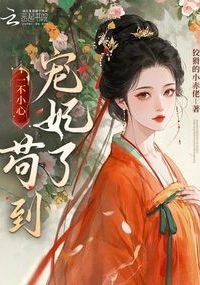
Yu Zhu, the daughter of a sixth-rank official in the Ministry of Revenue, is handpicked by the Empress to become a concubine of Prince Jin, the Emperor's youngest and most favored son. She enters the Prince's manor on her wedding night, unaware that she is being used as a placeholder to "practice" before the arrival of the true heir, Qian Wan Hui, the daughter of the Imperial Censor. The Prince is cold and indifferent during their first night, treating Yu Zhu with detached physicality while she endures the experience with quiet suffering and hunger. Despite this rough beginning, Prince Jin notices her honesty and simple nature, which contrasts sharply with the calculated decorum of the imperial court. He begins to favor her, spending consecutive nights in her courtyard and providing her with luxury and gifts, including a set of erotic illustrations intended to improve her skills.

As Yu Zhu settles into her role, she navigates the treacherous dynamics of the inner courtyard. She is watched closely by Nanny Du, a veteran servant loyal to the future Princess Consort, who views Yu Zhu's rising favor as a threat. Yu Zhu's head maid, Lan Xi, remains fiercely loyal, while other servants like Lan Zhou are coerced into spying for Nanny Du. Yu Zhu discovers Lan Zhou's betrayal when the maid falls ill with measles, and she secretly provides funds for her treatment and a transfer to the kitchen, demonstrating her compassionate but naive nature. Meanwhile, Prince Jin hunts extensively, not for sport, but to fulfill Yu Zhu's desire for venison and to prepare gifts for Wan Hui, revealing his dual allegiance to his duty and his growing affection for Yu Zhu.

The core conflict centers on Yu Zhu's precarious position as the first concubine in a household where the Princess Consort is imminent. While she enjoys Prince Jin's favor, she is acutely aware of her low status and lack of family power. She hopes for a peaceful life, content with simple pleasures like food and the Prince's attention, rather than seeking political dominance. However, the court politics surrounding Prince Jin are intense. He maintains a facade of laziness and lack of ambition to avoid the suspicion of his older brothers, particularly the Crown Prince and Prince Qi, while secretly managing his responsibilities at the Ministry of Revenue. His relationship with Yu Zhu becomes a rare source of genuine comfort and relaxation away from the pressures of imperial intrigue.

Key turning points include Prince Jin's decision to prioritize Yu Zhu's wishes over his hunting duties, resulting in the death of a deer meant as a live gift, and his subsequent provision of bear pelts and fox furs for both Yu Zhu and the incoming Princess Consort. These events highlight the disparity between Yu Zhu's simple desires and the complex, often brutal, realities of court life. The narrative also introduces the looming presence of Qian Wan Hui, who is rigorously trained in etiquette to become the perfect Princess Consort, setting the stage for inevitable tension between the two women. Yu Zhu's innocence and lack of guile serve as both her protection and her vulnerability, as she remains oblivious to the deeper schemes orchestrated by Nanny Du and the expectations of the Empress.

The story direction follows Yu Zhu's gradual adaptation to life in the Prince's manor. She learns to balance her natural kindness with the necessary caution required in the inner courtyard. Her relationship with Prince Jin deepens from a transactional arrangement to one of mutual affection and comfort, though she remains humble about her standing. As the wedding date approaches, the narrative builds toward the confrontation with Wan Hui, exploring how Yu Zhu will maintain her position and happiness in the face of a superior rival and the rigid hierarchies of the royal household. The tale underscores the contrast between Yu Zhu's genuine, unpolished humanity and the artificial, performative nature of court life.

Novel Items

More
Decoration
A Double Happiness character pasted onto the window, signifying the wedding day. Yu Zhu stared at it before remembering she was to enter the Prince's manor that day.
Clothing
Red padded shoes embroidered with mandarin ducks and adorned with two small pearls. Her mother used her own dowry money to purchase the pearls. A concubine was not permitted to wear bright red, so this was a loophole exploited by Yu Zhu's mother.
Item
A piece of red silk that Mu Anran tore off and draped over her head as a makeshift bridal veil since no proper ceremonial preparations were made at the Taizi Fu.
Item
Given to Yu Zhu by Lan Xi to keep her warm on her wedding morning.
Money
A pouch of silver coins given by Yu Zhu's mother for tipping servants who could be useful in the manor. Lan Xi also tried to offer some to Nanny Du, who politely declined.
Book
An erotic book with entwined figures that Nanny Du gave to Lan Xi to review while Prince Jin had not yet returned. Lan Xi's face flushed when she received it.
Latest Release
DateGroupRelease
2026-08-11shanghai fantasy c10
2026-08-11shanghai fantasy c9
2026-08-11shanghai fantasy c8
2026-08-11shanghai fantasy c7
2026-08-11shanghai fantasy c6
2026-08-11shanghai fantasy c5
2026-08-11shanghai fantasy c4
2026-08-11shanghai fantasy c3
2026-08-11shanghai fantasy c2
2026-08-11shanghai fantasy c1

Community Reviews

Rating(4 / 5.0, 9votes)
5 stars
3(33%)
4 stars
3(33%)
3 stars
3(33%)
2 stars
0(0%)
1 stars
0(0%)

Popular reviews

... Read More
I need to talk about the rice cakes. Not the venison. Not the wedding descriptions. The rice cakes. Yu Zhu spends her entire afternoon pounding glutinous rice, mixing in osmanthus flowers, adding honey dates and raisins and nuts. She's making two batches. The first one she's not satisfied with. The second one—"truly top quality." And then she wraps them up and sends them to Xue Ningshuang, not Prince Jin. This is the most devastating romantic moment in the entire chapter, and it's not a love scene at all. It's a woman making food for her friend because the man she's supposed to be courting is too busy preparing to marry someone else. And Prince Jin? He receives the rice cakes and feels "a faint sweetness in his heart." He thinks she made them because she loves rice cakes. He doesn't understand why she didn't come herself. He doesn't understand ANY of it. The breakfast scene the next morning is where it really hits. She's up before dawn, making his favorite soup, blowing on it to cool it down. She gives him a red envelope—her own red envelope, not one from him—and he just... accepts it. He thinks this is normal. He thinks this is how things are supposed to be. And Yu Zhu? She's thinking about her family. Her mother, her father's sorghum wine, her brothers sneaking fried meatballs. "That kind of family harmony was the true flavor of the New Year." She's remembering a life she'll never have while sitting across from a man who is preparing to give her nothing but scraps of attention. I'm not okay with this.
... Read More
Okay we need to talk about the servant politics because this is where the real tension is. On the surface it's all sweet romance and roasted oranges, but underneath? There's a whole faction war happening and the author is planting bombs everywhere. Lan Zhou. Lan. ZHOU. The one who was standing by the wall, expression tense, who reported Yu Zhu's stove-and-oranges moment to Nanny Du who then called her "too frivolous, utterly lacking in decorum." This is not a harmless gossip — this is espionage. Lan Zhou is feeding information to Nanny Du, who keeps a LEDGER. A freaking ledger with the times and frequencies from the previous night and Yu Zhu's menstrual cycle. Do you understand how violated that is? And Lan Xiang sees it, calls her out directly: "You belong to this courtyard, not to Nanny Du." And Lan Zhou just shrinks into the shadows. No denial, no apology. She's committed. The stakes here are enormous. If Yu Zhu falls from grace, all the servants in her courtyard fall with her. Lan Xiang understands this — she's thinking about honor and disgrace being shared. But Lan Zhou has already chosen a side, and that side isn't Yu Zhu's. This is the kind of betrayal that in these stories usually leads to someone getting punished, exiled, or worse. And Prince Jin himself — he's newly enthusiastic about intimacy, which makes him vulnerable. He's developing real affection for Yu Zhu, and the text literally says "it was only natural for him to develop a different kind of affection." But he's also a prince in a political marriage market. Every other concubine entering his residence is a threat, and his favor is a finite resource. Yu Zhu has this moment of absolute dominance right now, but how long does it last? The snowman will melt. The favor will fade. And Lan Zhou will be waiting with her little reports to Nanny Du. I'm already bracing for impact.
... Read More
"A gentleman stays away from the kitchen." That line hit me like a ton of bricks right at the start. Here we are, Yu Zhu standing in a kitchen full of rabbits and venison, and the narrator is telling us she's a gentleman. The irony is so thick you could spread it on bread. But seriously, the plot structure in these chapters is doing something really clever. On the surface, it's just... domestic life? Eating, making rice cakes, talking about weddings. But underneath, the entire narrative is building toward this massive collision course. Prince Jin is preparing to marry the princess consort, and every single scene is layered with dramatic irony. We know Yu Zhu is doomed, and she's just... making rice cakes. She's thinking about whether Xue Ningshuang will like the osmanthus flavor. The wedding announcement itself is the plot's ticking clock. Every mention of red lanterns, red carpets, the eight-bearer sedan chair—it's all counting down. And the best part? Prince Jin genuinely doesn't seem to understand the damage he's causing. When he says "you will always be different," the reader is screaming. He thinks he's being sweet. He has no idea he's carving her heart out with every word. I also love how the author uses the rice cakes as a plot device. Yu Zhu spends the whole afternoon making them, and then sends them away instead of delivering them herself. It's a small moment but it changes everything—Prince Jin is confused, Lan Xi is frustrated, and we're left wondering if Yu Zhu is protecting herself or protecting him. The author is playing 4D chess with domestic details, and I am here for it.
... Read More
Let me just say it straight: Prince Jin is a nightmare of a human being, and the author knows it. The scene where he describes the princess consort's wedding in such exquisite detail—Suzhou embroiderers, sandalwood sedan chair, golden bells, nine auspicious animals—and then watches Yu Zhu's face while doing it? That is not a man who is unaware. That is a man who is performing kindness and doesn't even realize he's being cruel. Or maybe he does realize it and doesn't care. Which is worse? And Yu Zhu—oh, Yu Zhu. The most tragic thing about her is how smart she is and how little it saves her. She calculates everything. She knows the rice cakes should be delivered by a servant, not by her, because going herself would be a slap in the face to the princess consort. She's playing a game where the rules are written by people who want her to lose, and she's still trying to win. "Your Highness, you are so good to me. I will miss you dearly." She says it. She actually says it. And then the narration drops this: "a man's promise is like passing gas." I literally laughed out loud. That is the most Yu Zhu thing ever written. Their dynamic is so toxic and so tender at the same time. He strokes her hair. He gives her red envelopes. He lets her invite her friend. And she leans into him like a boneless creature. But underneath all of it, she's already counting the bricks on the wall. She's already prepared for the worst. And that's what breaks my heart—the moment she stops hoping is the moment she becomes untouchable, and Prince Jin has no idea he's lost her already.
... Read More
Okay so I need to talk about this one moment because I literally squealed out loud. When Prince Jin is tickling Yu Zhu's waist and she's all flustered saying "I was wrong, Your Highness!" — this is NOT the cold, icy prince I expected from the earlier chapters. He's literally playing with her like a couple of teenagers. And then later when he's nuzzling her cheek and she has those deer-like eyes? I'm dead. The author really said "let's give the stoic male lead a soft side for once" and I am HERE for it. But what really got me was the morning-after scene. Prince Jin waking up first, his hands wandering over her chest, pinching her nose because she won't get up. That's not just lust, that's... comfort? Affection? He's already so used to having her there. And Yu Zhu, who was so timid and nervous on her first night, now she's the one initiating — tracing his abs, teasing him. The power dynamic has completely flipped and it's so satisfying to watch. The red marks everywhere, the sweat, the fact that they lasted a full hour — the author doesn't shy away from the physicality but what's interesting is how the intimacy keeps deepening. It's not just sex, it's becoming something more. Lan Xi even thinks about how wonderful it would be if Yu Zhu gets pregnant, just to secure her position. That's the underlying anxiety though, isn't it? Every sweet moment is shadowed by the fact that this favor could vanish like smoke. "His Highness truly dotes on you, miss." — Lan Xi saying this with gritted teeth, half-jealous, half-happy for her mistress. The servant's perspective adds this layer of bittersweetness. They're all praying for something stable, something lasting. And Yu Zhu looking in the mirror, seeing this unfamiliar allure in her own eyes, wondering if she's still the same girl... that moment hit me like a truck. She's changing, and she knows it, and it's both beautiful and terrifying.
... Read More
I keep coming back to the imagery in these chapters and I think the author is building this whole thematic framework around temperature. It's constantly cold outside — snow knee-deep, wind howling, servants' eyelashes frosted — and inside it's warm, fragrant, alive. The roasted oranges, the charcoal stove, the rose tea, the warmth of the bedding. This isn't just atmosphere, it's symbolism for Yu Zhu's position: she's found a pocket of warmth in a frozen world, but the cold is always right outside the door. The snowman is another symbol I can't stop thinking about. It's temporary, it'll melt, it's ridiculous and imperfect — just like Yu Zhu's position in this residence. Xiao Quanzi makes it, Yu Zhu praises it, Prince Jin notices it. Three people, three different relationships to something fragile and fleeting. And it's placed beneath the eaves, half-protected from the snow but still exposed. That's Yu Zhu right there. Then there's the Spring Palace Illustrations. Prince Jin giving her those books after their first night — is it instruction? Is it control? Or is it actually him trying to connect with her in his own awkward way? The fact that she hides them under the bedding, blushing, and then later he asks "Have you read it yet?" and she says no... it's almost comical but also kind of sweet. He wanted her to learn, to be prepared, and when she hasn't, he just says "read it now" while peeling an orange. The juxtaposition of instruction and intimacy, of duty and desire — that's the whole theme right there. The red marks on her neck, the rosy flush on her face, the sweet juice flowing from the orange — all of these images of warmth and life against the backdrop of ice and snow. The story isn't just about a girl becoming a concubine, it's about finding warmth in a cold world and whether that warmth can survive.
See all reviews

Characters

See all characters

Custom lists

Oops…There is nothing here.