About My Genius Roommate Being My First Love - Reviews

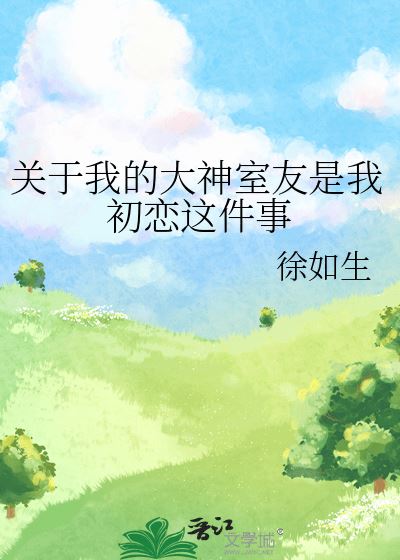
About My Genius Roommate Being My First Love
+Add to Custom List
Sort
Add review
... Read More
What is this story even about underneath all the gaming and campus romance? I think it's about the gap between who we are online and who we are in person—and the terrifying vulnerability of letting someone see both versions. Yan Linjian has two worlds: the confident guy who brags about his face in the dorm, and the online version who is shy about his school, nervous about meeting in person, genuinely tender with God Yuè. Qi Jingzhi exists in both spaces too, but inverted—he's the skilled jungler in game and the awkward roommate in real life. The dual identities aren't just a plot device; they're the actual emotional core of the story. That moment when Yan Linjian searches for Endless Moon and sees his own phone number pop up as a saved password—it's symbolic in the cruelest way. The digital trail of his own emotions, literally written in code, waiting for him to discover it. The student ID password. The greeting message. All the pieces of his heart laid bare on a screen he can't control. And what about the game itself? The jungle role—controlling the flow, watching from the shadows, making moves that determine the outcome—Qi Jingzhi jungling as God Yuè, while Yan Linjian plays marksman as himself, relies on someone else to carry. It's all mirrored. Their gaming roles ARE their relationship roles. I keep coming back to this idea and it just keeps getting deeper.
... Read More
The game world in this story is actually really vivid once you get past the initial setup. There is this one image of God Yuè standing under the peach tree in front of Yan Linjian's house, silhouetted against moonlight with robes flowing and a light blue ribbon fluttering behind their head. That picture alone is worth a thousand words. It creates this dreamy almost romantic atmosphere that contrasts nicely with the modern dorm setting where Yan Linjian is actually sitting hugging his laptop. The contrast between the fantasy game world and real life is handled really well—I keep feeling like I am floating between two spaces. And the game mechanics themselves feel lived-in. You can tell from the text that Endless Moon has a whole ecosystem: dungeons, friend requests, team invites, public chat spam, scenic spots to id and look at views. The author doesn't info-dump any of this. Instead they just show you Yan Linjian checking his phone, opening dungeons, watching the public chat fill with “Yuè-shen is amazing!” type messages, and suddenly the world feels enormous even though we only see tiny pieces of it. The peach tree scene especially has this cinematic quality to it. It's like the game engine rendered everything perfectly just for that moment. I could absolutely picture it as a still frame from an anime or something.
... Read More
"Two-timing doesn't seem right," Yan Linjian actually started thinking it over. "I mean, I definitely wouldn't be okay with it. Isn't dating supposed to be about being devoted to one person?" I screamed. This character writes himself. Every single line from Yan Linjian feels like it could come from a real person — specifically that friend who takes everything literally and has absolutely zero gaslighting instincts because he doesn't even know what gaslighting is. The girl loses her mind and Yan Linjian is genuinely taking notes. "Why?" Yan Linjian looked like he was ready to take notes. That line made me laugh out loud on the subway. He's so earnestly trying to understand why his relationships fail, and the tragedy is he's almost right — his methods are impeccable. He lets his girlfriend know where he is. He gives them a sense of security. He's read relationship guides. What he's missing is the one thing you can't read about. And Shen Yang's voice is such a fun contrast. "Your tricks are all about sweet-talking girls into getting a room. I have no interest in learning them." Shen Yang: the guy who definitely knows exactly what his tricks are for. The banter between these three feels effortless. Shen Yang pushes buttons, Yan Linjian deflects with logic, and Qi Jingzhi just watches the whole thing eat his sweet and sour pork in silence. The author knows how to give each character a distinct rhythm — Yan Linjian's lines are longer, more explanatory; Qi Jingzhi's are clipped and loaded with subtext; Shen Yang's are pure provocation.
... Read More
The author just wrote the word 'End.' after a scene where one guy tries to negotiate a postponement of sex and the other guy shuts it down with four words. And I am emotionally compromised. Let's talk about what's actually at stake here, because this isn't just a fluff chapter. We've been reading this book long enough to know that both of these characters have dealt with loss, with people trying to separate them, with external pressure. The ring isn't just jewelry—it's a public declaration in a world where they may have reasons to be cautious. 'When the time comes, just use the ring as your Moments background. That way no one will be foolish enough to come and bother you.' Yan Linjian is using technology and social media as armor. He's solved a security problem with an engraving job. But the real tension in this scene isn't about external threats—it's the internal conflict of two people who have spent the entire narrative learning how to trust each other enough to be vulnerable. Yan Linjian's fear of pain, his sudden desire to watch a movie instead—that's not comic relief, that's him being honest about his limits for the first time. And Qi Jingzhi hearing him and not making it a bigger deal? That's the real story. The conflict was never whether they'd end up together—it was whether they could be real with each other. They just did. The stakes were always emotional, not physical. Could Yan Linjian show up as his full self—the engineer, the joker, the person who gets nervous? Could Qi Jingzhi accept it? The answer to both questions is yes, and the author signals it with surgical precision. One line. 'That's not up to you.' The chapter closes. No epilogue, no extra sentiment. Just two people who figured it out. And somehow that's more satisfying than any fireworks display could be.
... Read More
Let me just say it straight: this chapter is about a person learning what it feels like to be seen, and the cactus is literally wearing armor made of recycled packaging foam. Yan Linjian protecting his cactus — covering every sharp spine with soft foam — is basically the thesis statement of his entire emotional arc. He's spent his life prickly and defensive, and now he's trying to armor himself against getting hurt. But the irony is that the foam doesn't actually protect him from anything. He still gets caught. Still blushes. Still lets Qi Jingzhi hold his hand. The heart made of foam pieces on Qi Jingzhi's hand is the most vulnerable Yan Linjian has ever been in this entire story. He creates it instinctively, then tries to destroy it when he realizes what it looks like. This is exactly how he handles every emotion — through indirect action, through deflection, through making someone else clean up his messes. "Yan Linjian had never experienced what it was like to have a crush in secret." This line is SO important. The entire chapter is about role reversal — the person who's always been on the outside looking in, urging his friends to confess, now finds himself on the receiving end of years of quiet devotion. The theme of unrecognized love, of emotional asymmetry, of one person carrying everything while the other remains blissfully unaware. And Qi Jingzhi's quiet declaration — "I'll wait until you say it yourself" — this is the thematic core. Patience as love. The belief that something true will eventually be spoken. The story isn't about grand confessions or dramatic gestures. It's about a guy who's been waiting a YEAR to hear three words, and the fact that Yan Linjian still hasn't said them out loud but has communicated his feelings through foam hearts on someone's palm instead.
... Read More
This chapter hit me like a freight train. The opening line—'only your gender changed'—immediately upends everything we thought we knew. It's a masterclass in gradual revelation. We've been following this game romance assuming Yan Linjian was the female 'God Yuè', and now we learn he's actually male. But here's what really gets me: the plot doesn't just twist for shock value. Every revelation serves the emotional core. The gift-giving sequence is brilliant plotting. Lú Biān Rén Sì Yuè (Qi Jingzhi) sending limited-edition items isn't just world-building—it's an apology, a love letter, a desperate attempt to make amends for years of silence. Each gift notification is a beat in their reconciliation arc. And then the grandmother reveal? Brutal. 'She passed away two years ago.' Two words that carry decades of grief. But the plot smartly avoids melodrama—she 'passed away peacefully and content,' which reframes everything. Yan Linjian wasn't just a random encounter; he helped her live those final two years. The meta-twist of Qi Jingzhi logging into Yan Linjian's account to reply to the meeting request is perfect plot architecture. It's not deception for its own sake—it's protection, both for Yan Linjian (who's emotionally overwhelmed) and for Qi Jingzhi (who's terrified of rejection). The fact that Yan Linjian agrees to meet while thinking he's talking to his old gaming friend adds dramatic irony that makes my chest ache. The plot keeps layering revelations while maintaining emotional truth.
... Read More
I keep coming back to the symbol of the ring throughout these chapters. Yan Linjian literally thinks about it: 'Rings were a kind of contract. They meant that in this lifetime I entrust myself to you, and likewise, you belong to me.' It's interesting because rings have this dual meaning—they're both a promise and a possession, which mirrors the whole tension in their relationship between freedom and commitment. But the deeper symbol is the apartment itself. Qi Jingzhi buying a house in Yan Linjian's name before he even had the words to say 'marriage' is this profound act of creating a home, of building something permanent in a world where being gay might not always be safe or accepted. The property certificate sitting on the coffee table is essentially a love letter. And Yan Linjian's mother helping choose the furniture—this symbolizes how their relationship isn't just about two people anymore, it's about families intertwining. Even the keys matter. Qi Jingzhi unlocking the door, leading Yan Linjian into their future—the physical act of opening a door to a new space is so loaded with meaning. Both characters are trying to answer the same question in different ways: how do I make you feel safe? How do I show you I'm not going anywhere?
... Read More
Okay so let me just say this: Yan Linjian buying those rings is honestly one of the most satisfying plot beats I've read in a while. Like, it starts with this whole messy situation where someone sold Qi Jingzhi's WeChat ID for THREE THOUSAND YUAN—can you believe the audacity?—and instead of just complaining about it, Yan Linjian channels all that frustration into planning something meaningful. The fact that he came up with the ring idea himself, that 'cliché but meaningful' Valentine's Day surprise, shows how much he's grown throughout this story. And then there's the parallel with Qi Jingzhi, who was quietly pulling strings behind the scenes the entire time. The apartment reveal at the end? Chef's kiss. Both of them were trying to give each other security in completely different ways, and neither knew about the other's plan until that moment in the elevator. That scene where Qi Jingzhi says 'Even if one day the two of us are no longer together, you might still let me stay the night out of pity'—it's devastating and sweet at the same time. The plot is really about two people who keep trying to protect each other, right?
... Read More
There's something almost cinematic about the way this chapter frames Qi Jingzhi's space. He's behind his bed curtains like he's built his own little bunker, a cave where he can exist as both boyfriend and jungler simultaneously without anyone seeing him fall apart. The image of him with one hand on his phone and the other on his tablet — "the screens were nearly sparking from friction" — that's not just a funny exaggeration, that's a visual I can't get out of my head. Meanwhile the rest of the dorm is this chaotic normal world: Shen Yang lounging with one leg dangling off his bed, Miao Xin watching everything unfold from a distance, Yan Linjian being completely oblivious in the center of it all. It's this juxtaposition between the mundane college dorm atmosphere and the emotional earthquake happening silently behind those curtains. I also love how the gaming itself becomes this kind of worldbuilding layer. Tower jail. Pentakill. Launch attack. These aren't just game terms, they're the language these characters use to communicate feelings they can't express directly. When Yan Linjian says "watch out for the bushes, their mid is coming over," he's being protective. When Qi Jingzhi tanks with his side-lane hero just to free his hands for the jungler, he's basically shouting I LOVE YOU through a screen and no one notices.
... Read More
I need to talk about the proposal scene because I am STILL not over it. Yan Linjian just casually drops 'let's get married after graduation' like he's ordering bubble tea and Qi Jingzhi's entire composure SHATTERS. He stammers 'Alright... alright.' Three times. This is a man who hacked servers and tracked down strangers and faced down his own poverty and despair, reduced to a speechless wreck by one sentence from the person he's loved since high school. And then Yan Linjian tells him exactly HOW to propose—when he's not paying attention, make me cry. He's not asking for grandeur. He's asking for intimacy, for surprise, for a moment where Qi Jingzhi shows him something real and unguarded. That's the thing that gets me. This isn't about romance-novel perfection. It's about two people who have survived things they shouldn't have survived, who chose each other across class lines and silence and years of separation, saying 'I want forever with you' in the most ordinary, devastating way possible. 'I want forever with you. Please make me cry doing it.' God help me I love this story.
... Read More
There's a recurring image in this chapter that I can't shake—light in darkness. Qi Jingzhi rides into the pitch-black night, arrives at a building where only two or three households have their lights on, and then the old man's cough keeps the motion-sensor lights flickering, casting a shadow at his feet. He's coming home to near-total isolation. But then his phone lights up with Yan Linjian's messages and his 'previously dull eyes now filled with a bit of light.' The author is doing something deliberate here with illumination as a metaphor for connection versus emptiness. The floor-to-ceiling window in Yan Suici's foreign apartment is another version of this—a massive glass barrier between him and the world, surrounded by light but completely alone. And Yan Linjian's dumpling-dragon, which everyone else calls a long worm, is a tiny symbol of the same thing: finding shape and meaning where others see nothing, seeing a dragon when everyone else sees pasta. It's Yan Linjian's entire approach to life, honestly. The Cheng Song thread adds another layer—this older man who chased Yan Suici relentlessly, did all those embarrassing public gestures, and then apparently moved on almost immediately to someone young and bright. Is the theme here about the gap between how we perform devotion and how we actually feel? Or about how some people's love is loud and performative while others' is a single text message saying 'now I can see it'?
... Read More
Okay so the whole structure of this reveal is actually really clever when you think about it. The chapter opens with Yan Linjian's plan — stand Qi Jingzhi up, get revenge for the deception — and then immediately undermines it. He goes to the café, stands outside, chickens out, wanders back to the dorm, realizes Qi Jingzhi isn't there, goes BACK to the café. The narrative itself is doing what Yan Linjian can't: he keeps circling back to this person he supposedly wants to punish. And then Qi Jingzhi drops the entire backstory in one breathless confession — he's liked Yan Linjian since he was fourteen, chose the same high school entrance exam track, targeted the same youth program, ended up in the same university class by luck or fate or whatever you want to call it. Four years of silent devotion mapped onto a timeline that reads almost like a statistical impossibility. The author doesn't over-explain it, doesn't make it seem magical, just lets it land as 'yeah, this guy really did all that and here's why.' What I love is that the real plot twist isn't that Qi Jingzhi lied — it's that Yan Linjian was the one who set this in motion by saying he wanted to find his online partner. He unknowingly pulled the string, and Qi Jingzhi followed it all the way here. Classic dramatic irony. The chapter ends with the brother's text message giving advice that basically says 'you clearly like him,' which is the author winking at us. The plot was never about the lie. It was about the fact that both of them were already all in.

Leave a comment

You must be logged in to leave comments. or