A Study of the Second Male Lead’s Unfair Treatment - Reviews

A Study of the Second Male Lead’s Unfair Treatment
+Add to Custom List
Sort
Add review
... Read More
The structure of this section is doing something really clever that I want to unpack. We start with a quiet, intimate conversation between Edna and her mother — political strategy, heavy themes, the weight of legacy. Then BOOM, we cut to pre-dawn and Edna arriving at Ian's estate like a woman possessed. The pacing shifts from contemplative to kinetic almost instantly. What works brilliantly is the physical description of the estate functioning as a pacing device. Every detail Edna observes — the rusted gate, the dead trees, the weeds — slows us down just enough to feel the decay before the energy picks back up. Then Henry appears, sweating and stammering, and we get comedic relief that doesn't undercut the tension. It's a masterclass in breathing room. And then the arrival of Lady Molly's carriage creates this beautiful spike in urgency. Edna's reaction — decisive, immediate, ordering Thomas to hide their carriages — shifts the scene from political discussion into active crisis management. The chapter ends with her stepping into disguise mode, literally and figuratively. It's tight, it's moving, and I was genuinely hooked from start to finish.
... Read More
The pacing in these chapters is honestly masterful and I need to unpack why. We open with what is basically a sitcom — Henry getting bonked on the head repeatedly by household staff for his impertinence, the knight captain Ordo smirking from the corner, everyone armed with whatever object is closest. It's light, it's funny, it makes you smile. Then without warning, we cut to Ian's room and the author lays out his living situation like a slow knife: old wallpaper, no curtains, no paintings, an empty fireplace. One paragraph of comedy, the next paragraph of devastation. And then we get the backstory about his mother — the female knight, the Emperor's violation, the Empress's persecution, the death after childbirth — all woven in naturally as context for why Ian has nothing. The chapter then pivots again to the Whitteger household where the proposal scene plays out with perfect comedic timing (the beret falling off at the worst possible moment) before landing on that devastating final conversation between Edna and Katrina about the Crown Prince's real move on Saluga. The last lines hit like a gut punch after everything that came before. By placing the political threat at the very end, the author forces you to recontextualize the entire marriage proposal — this wasn't just a funny awkward encounter, it was a strategic move in a much larger war. The chapter structure mirrors the story itself: surface-level comedy masking deeper stakes, and every laugh is undercut by the knowledge that these characters are operating under constant threat. I couldn't put it down.
... Read More
There are so many layers underneath the surface politics in these chapters that I keep finding new ones every time I reread. Let me try to name just a few because they're too good to ignore. Gold is the central symbol and it works on at least three levels. First, it's literal currency—Edna's wealth is the weapon she's waging war with. Second, it's social capital, the ability to buy influence and reputation in a system that otherwise denies them. And third, and this is the darkest reading, it's the legacy of the Whitteger family's original sin. They got rich through usury, through stripping people bare, through bribes that rotted the empire from within. The same gold Edna is now using to build something noble came from the same poisoned well. That's not accidental theming—that's the author forcing us to sit with an uncomfortable question: can you build something clean with dirty money? Then there's the imagery of visibility and invisibility running through every scene. Edna wants to make Ian visible—to force the empire to see him. Rubens is obsessed with maintaining his own visibility as Crown Prince while simultaneously being unable to see what's happening beneath his nose. The lost ledger represents literally everything that was hidden coming into the light, and also the terrifying consequence of secrets finally being exposed. Even Tennyson, who exists in the margins of power, is constantly being asked to see and be seen. And I cannot get over the family history revelation. Edna saying the Whittegers were here before the empire, that they built this place and then were punished for the very sins the empire itself encouraged—bribes, exploitation, moral compromise—this reframes the entire conflict. It's not just rich vs. poor or noble vs. merchant. It's the empire eating its own foundation and then blaming the foundation for being eaten. This story is much smarter than it let on at first glance.
... Read More
I have to commend the author on something that most fantasy novels completely fail at: every character has a distinctly different voice and I never once confused who was speaking. Edna is sharp, direct, and carries this weight of someone who has already made up her mind and is now just executing. Her lines are functional but loaded. When she says, "The art of fighting is always simple... someone of high standing who, when angered, would think nothing of throwing gold and jewels must be avoided," she's speaking in a way that's almost aphoristic. She packages wisdom in plain language. That's her voice. Ian's dialogue is the opposite—shorter, more defensive, reactive. "But if that happens, there may truly be rumors that Ian Lombardi is draining the Whittegers to their roots." He's always slightly on the back foot, which makes sense given his circumstances, but it also means his voice feels raw and unpolished, like a guy who hasn't had the luxury of crafting his words carefully his whole life. Tennyson is the most fun. He's polite, evasive, and constantly triangulating between what he wants to say and what he's allowed to say. His excuse about teaching "how to make a favorable impression on ladies" and then immediately panicking when Edna catches him is genuinely funny. The humor comes from his voice, not from jokes the author is telling us to find funny. And Rubens—oh, Rubens. His dialogue is almost entirely indirect. He doesn't speak his anger; he speaks through the people beneath him. The scene where Marquis Stafford tries to comfort him and gets flayed alive with a single question? "Are you mocking me, Uncle?" Three words and the marquis is sweating through his robes. That's dialogue as a weapon. Even Henry, who barely has lines, has a grumbly voice that's instantly recognizable. The author isn't wasting a single character.
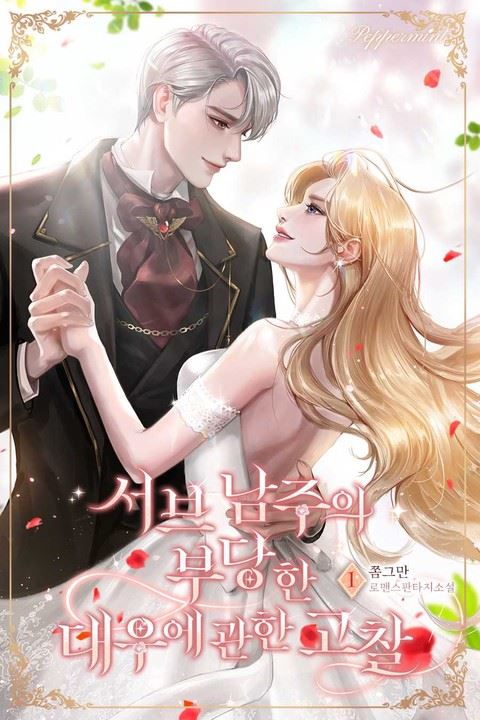
... Read More
This entire passage is soaked in symbolism and I can't stop thinking about it. The Lombardi estate — rusted gates, cracked decorations, dead trees, murky water where a pond should be — it's literally the body politic of a fallen house. Ian is the Emperor's illegitimate son, rejected, left to rot in a crumbling mansion, yet somehow still dangerous. The estate reflects him perfectly: decaying on the surface, but holding power underneath. Then there's the gold coins. Katrina sending boxes of gold to Ian isn't just political investment — it's literally buying time, buying survival. Money as both shield and weapon, which feels incredibly thematic for a merchant family like the Whittegers. They've always dealt in the tangible, the exchangeable. Now they're trading wealth for protection. And the female knights as 'courtesans of the Emperor' — that's such a loaded symbol. The sword, traditionally masculine, becomes a site of female exploitation. Edna fleeing that system only to enter another one (marriage as political tool) is deeply ironic. The book keeps asking: what does it mean to be powerful when the structures around you were designed to break you?
... Read More
The way this section is structured is genuinely impressive and I think I need to unpack it slowly because the author is running three separate engines at full throttle and somehow it doesn't feel crowded. Act One: the carriage scene with Edna and Tennyson. This is exposition-heavy, sure, but it reads like a war council. Every line of dialogue is doing double duty—characterizing Edna, establishing the political landscape, and laying out the actual plan. The pacing here is deliberate, almost measured, like someone unrolling a map and pointing at every coordinate. It works because Edna's voice is so commanding that even the informational bits feel charged. Act Two: the Crown Prince's scenes. The structural shift here is brutal and effective. We go from warm sunlight and garden descriptions to cold fury and sweaty courtiers. The fire at the gambling den isn't just a plot event—it's a metaphor for everything Rubens has been losing control of. And the reveal about the ledger? That hits like a physical blow halfway through his scene. The author lets us sit with that information for a beat before pivoting to the real wound: Edna chose someone else. Act Three: back to Edna and Ian, but the emotional temperature has shifted entirely. Now that we've seen Rubens's desperation, Edna's declaration that she won't begrudge anything to Ian hits with completely different weight. It's not just devotion—it's defiance. The chapter ends on her speaking about her family's shameful history, and that cliffhanger-quality revelation about the Whittegers ties everything together. The transitions are seamless. No jarring jumps, no filler. Every scene earns its place.
... Read More
'The beautiful silver hair half-covered by a red beret was one thing, but the short cape that barely covered the back of a large man who was twenty-four years old was, no matter how one looked at it, ridiculous.' I literally screamed when I read this. The man is a duke, he's being sent as a diplomatic marriage prospect, and he's out here dressed like a court jester who lost a bet. And Edna is watching him trying NOT to laugh while he's also desperately trying to maintain his composure. The mutual suffering is everything. But let me actually talk about the relationships because this is where the story gets delicious. Edna and Thomas—god, Thomas. He stayed by her side until the very end in her past life, concealed his wounds, died standing upright with his sword in hand. And she just murmurs 'I'm sorry' without even opening her mouth this time around. The guilt is palpable. She's looking at him now and seeing a ghost, and he has no idea. Then there's the Whitteger siblings—Roderick, Marian, and Edna, all different mothers, united by those deep blue eyes. Roderick couldn't care less about family business, Marian is furious about the marriage proposal, and Edna is quietly plotting everyone's survival. The stepmother Katrina is fascinating too: cold on the surface, actually furious at the Crown Prince for treating marriage like a transaction, but masking it as anger at Marian for whining. That's a mother who's been burned by the same system. And Ian—poor, fashion-disastrous Ian. Henry is clearly the only sane person around him, calling him out for accepting treatment from family members who don't deserve his loyalty. The fact that Ian still calls him 'brother' despite everything? That's either profound devotion or profound self-delusion. I need to know which.
... Read More
'Those blue eyes, almost a symbol of the Whittegers, were the one trait the three siblings shared.' Right from the start, the author is telling us that genetics is fate in this world—but also that fate is something you can resist. Edna, Roderick, and Marian all have the same eyes but completely different lives. Different mothers. Different temperaments. Different relationships to the family's destiny. The eyes are inheritance, but they're not the whole story. Then there's the blood. Blood on the battlefield, blood caked on armor, blood drying in winter wind. Blood as connection and blood as waste. Edna dies in her past life standing in rivers of it, and now she's reborn and trying to prevent all of it. The blood motif ties together the personal and the political—the Whitteger family's wealth is built on trade routes that flow like blood through the empire's body, and when the Crown Prince cuts those routes off, the family literally bleeds. The carriages are another symbol I can't stop thinking about. Her father died in a 'carriage accident'—and Edna's first thought upon rebirth isn't about revenge or romance, it's suspicion. The carriage that killed her father is the same kind of vehicle that will carry her to a marriage she doesn't want. Transportation as destiny, as trap, as the thing that moves you toward your fate whether you like it or not. And the paintings. Dark, melancholy paintings of hungry commoners hanging in a rich noble's home while everyone pretends they don't see the contradiction. The emperor's banquet-meetings draped in flowers and champagne while the empire starves. These aren't just set pieces—they're the story's moral compass pointing at everything that's broken. The fashionably depressed art of a society that has normalized its own decay. But the most powerful symbol is probably Ian's ridiculous outfit. A man dressed like a clown being sent as a serious political match. Is the author saying that the imperial family's solutions are fundamentally absurd? That everyone involved knows this is a circus but nobody can stop the show? Or is it something simpler—that Ian himself feels ridiculous, inadequate, like he doesn't belong in this role either? Either way, it works.
... Read More
Let me just say this: the way the author slid us into the backstory of Ian's mother without any warning is genuinely impressive narrative engineering. One second we're watching Edna dramatically declare her engagement to shut down Lady Molly, and the next we're transported twenty years into the past through the Emperor's visit to the Empress. No chapter break, no signal—just a smooth, brutal drop into the past that completely reframes everything we thought we knew about this world. "Ian's gaze was composed and still. Eyes that at a glance appeared to be a light brown, upon closer inspection carried a strangely mysterious light due to the golden flecks surrounding the pupils." We get that visual anchor first—the eyes—and then we slide backward. It's cinematic in a way that makes me appreciate the author's structural choices so much. The present-day confrontation with Lady Molly creates the emotional temperature, then the flashback explains why that temperature matters in the first place. And the stakes escalation within the flashback? Chef's kiss. It starts with the Emperor asking for a deal, moves to the Empress revealing she's already decided to punish Ian regardless, and ends with her telling Lady Molly that "this is only the beginning." Each beat raises the temperature. By the time we're back in the present and Ian is casually hosting a teapot-wielding enemy in his own home, we understand that the prison he lives in was designed by two people who pretend to be on his side. The scene transitions are also worth noting. Henry appears exactly when needed—"appeared at just the right moment"—to defuse the Olitte dessert situation. That recurring comedic relief character is doing structural work too; he's the pressure valve between the heavy palace intrigue and the lighter romantic moments. And ending on Lady Molly's confusion over the desserts? Perfect. The author knows exactly when to let us exhale and when to tighten the screw.
... Read More
"In her previous life, when Edna had clung to the Crown Prince with a proposal, he had accepted reluctantly while making no effort to conceal his contempt." I need a moment. That line right there? That's the emotional gut punch of the entire passage. Edna, strong, sharp-edged Edna, once loved someone who looked at her like she was nothing. The Emperor created victims — Ian's mother included — and the female knights were treated as courtesans. She became a knight purely because she loved the sword, and the very people she served viewed her as disposable. And yet here she is, decades later, still carrying that wound. Still trembling slightly at the memory of his contemptuous acceptance. She didn't become a knight for power or glory. She became one because that was the only thing she truly loved. That detail — the sword as sanctuary — hits different. It makes everything she does now feel even more tragic and heroic at the same time. She's fighting not just for her family's survival, but against a system that told her she was worthless. No wonder she's so fierce.
... Read More
Okay so I walked into this whole arc thinking Ian was the delicate one, the pretty face who got overshadowed by the Crown Prince, and then BAM. This man literally climbs over walls of illegal gambling dens, fights his way through a fire, and lifts an overweight drunk noble like he weighs nothing. When he removes his mask and Tennyson sees him properly, the text says "he felt as though he were confronting a single enormous predator." PREDATOR. Not a duke. Not a prince. A predator. And those golden eyes — always described as delicate before, now "heavy and settled." I literally gasped. But the real gem here is Ian's dynamic with Henry. The banter is unmatched. Henry is out here moaning about being overworked and Ian just casually drops that he shamelessly visited the county and proposed, and Henry's like "then what does that make me, who spread the rumor?" Meanwhile Edna is literally holding back laughter behind her fan. These people have HISTORY and it shows in every exchange. Ian and Henry operate like an old married couple who somehow still find each other interesting. And then Ian drops his origin story in that carriage — Emperor's illegitimate son, treated like a plague, ignored by his own father since birth. He says it with a bitter smile, almost casually, like he's discussing the weather. That's when it hit me: this man has been faking weakness his entire life as armor, and Tennyson is the first person who actually SEES him. No wonder the rescue wasn't random. Ian has been watching. The question is whether Tennyson will survive knowing what he knows. Also can we talk about how Tennyson immediately negotiates even while sweating? "Even if you are fine with it, I will genuinely be thrown out of my house if they find out. And since when have you been so generous!" Dude. You just got rescued from a burning gambling den. Your first instinct is to demand better terms. That's the brown fox of the social world for you.
... Read More
Something I couldn't stop thinking about after reading these chapters is how the story uses objects and titles as symbols of power and powerlessness. Let me start with the most obvious one: the flying documents and books. Every time Henry speaks disrespectfully about Edna, an object hits him in the head. The narration explicitly notes that "befitting the subordinates of Ian Lombardi, famed for his swordsmanship, everything within reach became a weapon in that place." This is literally a household where the furniture fights back, which is both hilarious and deeply telling about the world they live in — violence is so normalized that it's domesticated. Even the clothing becomes symbolic. Ian's worn, torn room versus the borrowed fashionable outfit Henry brings him — the contrast between who Ian is (a duke with no resources) and who he needs to appear as (a viable marriage partner). The red beret in particular becomes this ridiculous crown of sorts, a symbol of performed identity. But the most loaded symbol in the text is the phrase "female knight" itself. The story spends considerable effort showing how this term shifted from meaning a skilled warrior woman to becoming a euphemism for courtesan — specifically through the story of Ian's mother, who chose the path out of necessity and was destroyed by it. The word itself carries the weight of institutional betrayal. And then there's the proposal document, drafted by Henry in "clean and elegant hand," described as solemn and courteous — a piece of paper that becomes a weapon of political alliance, accepted in five minutes, changing the fate of two houses. Papers and words as tools of power, weapons as household objects, clothing as disguise. The story is built on this layering of surface meaning versus actual function, and it never lets you forget it.

Leave a comment

You must be logged in to leave comments. or
