Summary

... Read More

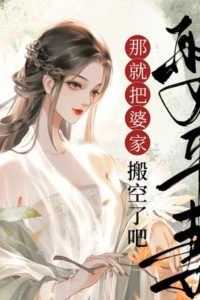
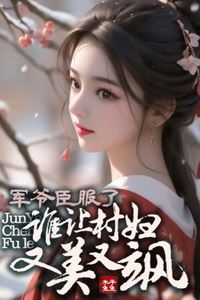
Wei Yunlan, the principal wife of the Heir of the Marquis of Jinyang, returns to her body eleven years in the past on the very day her husband, Shen Feng, marries his secret lover, Xue Linglong, as a secondary wife of equal status. In her previous life, Wei Yunlan had naively believed the Shen family’s promises to secure her imprisoned father’s release, only to be confined, betrayed, and left to die a miserable death while Xue Linglong seized her dowry, her home, and her life. Drifting as a spirit for a decade, she witnessed the Shen family’s rise and eventual massacre during a barbarian invasion, along with the discovery of a mysterious ancient jade space that Xue Linglong had used to amass wealth and power. Upon waking in the past, Wei Yunlan realizes she has the opportunity to change her fate. She discovers that the ancient jade, which she had kept hidden in a jade box, recognizes her as its master, granting her access to a vast dimensional space. With this advantage and her foreknowledge of the impending disaster, she resolves to sever ties with the Shen family before the imperial decree confiscating her natal Wei family’s property and exiling them to Beiguan arrives.

Wei Yunlan confronts Shen Feng and the Marquis’s household at the wedding banquet, publicly exposing the impropriety of marrying a former mistress as a second wife. She presents a divorce agreement, known as a He Li, which allows for an amicable separation initiated by the wife. Although Shen Feng and the Marchioness initially hesitate due to fears of social scandal and the possibility that her father might still be released, the arrival of the imperial edict confirming the Wei family’s downfall prompts them to eagerly accept the divorce. They seek to cut all ties with the disgraced Wei family to avoid political contamination. Wei Yunlan secures the signed agreement and immediately begins liquidating her assets. She sells her dowry properties through a discreet intermediary connected to the mysterious Tianshu Pavilion, converting them into silver and banknotes. With the proceeds, she purchases lightweight soft armor, concealed weapons, and hires a squad of elite guards from Tianshu Pavilion to protect her family during the journey. She also stocks up on essential supplies, including food, medicine, and baby care items, storing the bulk of them in her dimensional space to ensure her family’s survival.

Before departing the capital, Wei Yunlan returns to Zhufeng Courtyard to gather her loyal servants, offering them the choice to stay or leave with her. Most choose to follow her, while a few, including a trusted maid named Madam Sun who harbors hidden resentments, decide to remain. Wei Yunlan leaves the keys to the courtyard and her private storeroom with Madam Sun, knowing full well the woman’s treachery from her past life. She then exits the residence through the main gate, drawing the attention of onlookers who whisper about the fallen noble family and the swift divorce. Outside the city, she reunites with her natal family, who are already bound for exile. Her father, Wei Maolin, a Right Censor-in-Chief, and her mother, Gao Shi, are shocked but relieved to see her. Wei Yunlan explains her decision to leave the Marquis’s residence, citing the Shen family’s ingratitude and cruelty. The family is soon joined by other exiled households, including the Liang, Feng, and Bai families, who are traveling to Beiguan under armed escort.

As the convoy travels north, Wei Yunlan uses her resources to maintain her family’s health and dignity. When her sister-in-law, Cheng Yue’e, falls ill with a fever after giving birth, Wei Yunlan utilizes her stored medical supplies and knowledge to treat her, ensuring the newborn infant, Jiarong, is cared for with goat milk and rice cereal from her space. She also extends kindness to the Bai family, providing them with cooking utensils and food, thereby establishing a network of alliances among the exiles. Along the way, she encounters former suitors and acquaintances who have come to cut ties or offer hollow farewells, but she remains focused on her goal: surviving the harsh journey to Beiguan and eventually clearing her family’s name. The story follows her strategic preparations and the challenges of the exile road, as she navigates political intrigue, physical hardships, and the lingering threats from her past life, all while leveraging her unique dimensional space to protect those she loves.

Latest Release
DateGroupRelease
2026-08-11shanghai fantasy c200
2026-08-11shanghai fantasy c199
2026-08-11shanghai fantasy c198
2026-08-11shanghai fantasy c197
2026-08-11shanghai fantasy c196
2026-08-11shanghai fantasy c195
2026-08-11shanghai fantasy c194
2026-08-11shanghai fantasy c193
2026-08-11shanghai fantasy c192
2026-08-11shanghai fantasy c191
2026-08-11shanghai fantasy c190
2026-08-11shanghai fantasy c189

Community Reviews

Rating(4 / 5.0, 12votes)
5 stars
5(42%)
4 stars
2(17%)
3 stars
5(42%)
2 stars
0(0%)
1 stars
0(0%)

Popular reviews

... Read More
Okay, I need to talk about how this exile storyline is actually one of the most tightly constructed plot arcs I've read in a while. On the surface it's straightforward—officials demoted and sent north—but the author keeps layering in subplots that make it feel alive. First you have the Duke of Xu quietly slipping Manager Xu extra bundles, then the hidden money Yuying sewed into that cloak, then the Feng and Liang families' backstory about the palace sorcery case five years ago. It's all connected, and I love how the author reveals it gradually rather than info-dumping. The Wei family's situation is especially interesting because Wei Maolin was wrongly accused. That means the Emperor's punishment is based on a false charge, which sets up future tension—when the truth comes out, the political fallout could be massive. And the fact that both the Duke of Xu and the Empress Dowager still have them in mind? That's a plot thread I'm dying to see pay off. What really got me though is how the author uses the journey itself as a plot device. Every stop, every meal, every interaction with the other exiled families reveals something new. The Feng old madam complaining about the bread? That's not just flavor—it's showing how their family has already lost status and dignity. The Bai family's sons dead in the northwest? That's world-building through plot, not exposition. Genius. I also love that Wei Yunlan is clearly planning ahead. She hides the gold and jade, she transfers the hard buns into her space, she prepares food before anyone else. This is a woman who's lived this life before and knows exactly how brutal exile can be. Every smart move she makes adds to the tension because we know she's fighting against a timeline we can't see yet. How long can she keep everyone alive? What happens when her resources run out? The author is playing 4D chess here and I am HERE for it.
... Read More
There are some really interesting symbolic threads running through this section that I think are worth unpacking. The rabbit is the most obvious one. Wei Yunlan encounters it multiple times, and each time it's unafraid of her. In a story about exile and survival, a wild creature that chooses to stay near a displaced woman feels deeply symbolic. Rabbits are traditionally associated with luck and prosperity in Chinese culture, but they're also fragile, vulnerable creatures. The rabbit's presence near Wei Yunlan—someone who carries the weight of future knowledge—suggests a connection between her and the natural world that transcends ordinary understanding. When the rabbit is frightened away by Wei Mingxuan's stone, it's almost as if the universe itself is protecting this moment of connection. Then there's the Ziwei Star prophecy, which is perhaps the most politically charged symbol in the entire novel. The Ziwei Star (Polaris) is the celestial emperor—the one star that remains fixed while all others revolve around it. By calling the Crown Prince the Ziwei Star, the great-grandfather wasn't just making a prediction about good fortune; he was making a statement about legitimate authority. The current Emperor sits on the throne, but the TRUE ruler, the one destined to bring prosperity, is the Crown Prince. This is dangerous symbolism in a dynasty where succession is already contested. The wild vegetables themselves are symbolic too. In a landscape of hardship and displacement, Wei Yunlan's ability to find nourishment in the wilderness represents her unique gift—her ability to see opportunities where others see only scarcity. She's not just surviving; she's thriving in conditions that would break ordinary people. This connects to the broader theme of the novel: that true strength isn't about power or status, but about adaptability and foresight. And the conscripted young men—the absence of the strong and able-bodied from the villages—symbolizes a empire that is consuming its own children. The government is taking the youth to fight wars and build projects, leaving behind only the elderly and the vulnerable. This isn't just background detail; it's a critique of the current regime's failure. The most powerful symbol though might be the simplest: the wooden stick. A ten-year-old girl wielding a wooden stick against three older boys. It represents the theme that runs through the entire novel—that strength comes in unexpected forms, and that the marginalized (whether children, women, or exiled families) possess resources and capabilities that the powerful consistently underestimate.
... Read More
I'm not even gonna pretend I wasn't expecting this—Xiang Yuying's scene absolutely destroyed me. Let me just say it: a frail girl who barely leaves her house somehow convinces someone to let her ride outside the city in the cold just to see her friend off, and then she hides money in a cloak embroidered with plum blossoms? I am not okay. The detail that got me was when Wei Yunlan pinches the cloak and feels the small firm objects inside. She doesn't say anything out loud. She just looks into Yuying's eyes and says she'll wear it all the way to Beiguan. That silence between them—so much unsaid. Yuying probably risked her aunt and uncle's anger to give this. She probably couldn't even come in person because of the household restrictions. And yet she found a way to help anyway. And then there's Wei Jiayan. Little five-something-year-old boy who hugs his rice bowl and runs away from the Feng children reaching for it. Not because he's greedy—because he KNOWS. He knows food is scarce, he knows they can't afford to share right now, he knows his little sister needs to eat. That scene broke me. A child who has already learned the brutal arithmetic of survival. But the most touching thing for me was actually the relationship between Wei Yunlan and her sister-in-law Cheng Yue'e. When Wei Yunlan insists that Yue'e sit in the cart with the baby, and Yue'e discovers the soft padding Yunlan had secretly laid down—that's the kind of quiet, domestic love that makes fiction feel real. No grand declarations. Just a sister-in-law who notices and says thank you, and another who smiles and says no need to be polite between families. I also need to mention Wei Maolin's moment with Steward Wang. When he refuses to let his servants eat the hard buns and says they share everything now—that line about 'beyond distinctions between master and servant'? That's a man who has lost everything but is choosing to hold onto his humanity. I'm a mess.
... Read More
What I love most about this section is how the emotional core of the story shines through even in the smallest moments. This isn't a novel that relies on big dramatic declarations—it finds its emotional power in the quiet, almost mundane interactions between characters. Let me start with Wei Yunlan and Bai Si (the little girl). The scene where Bai Si helps Wei Yunlan and then asks to learn about wild vegetables is genuinely touching. There's something so pure about a child who just fought off three bullies and then shyly asks to learn from someone she admires. The moment where Wei Yunlan sees the rabbit unafraid of her and Bai Si is astonished—that's not just a cute detail, it's a metaphor for Wei Yunlan's nature. She has this gentle energy that draws people (and animals) to her, even in the most difficult circumstances. Then there's the relationship between Wei Maolin and Madam Gao. Oh, these two. Wei Maolin can't keep his mouth shut about the Emperor, and Madam Gao is constantly reining him in—but you can feel the deep care underneath her scolding. When she says "If it weren't for your mouth causing trouble, would our family be in this situation?" it stings, but it's also clearly coming from a place of love and fear. They're a married couple who've been through everything together, and that history shows in every exchange. The scene where Wei Yunlan shares half her wild vegetables with Bai Si is another quiet gem. It's a small gesture, but it establishes the foundation of a friendship that I'm sure will grow throughout the story. Bai Si's grandmother had already sent the Wei family things, and now Wei Yunlan is reciprocating—not out of obligation, but out of genuine warmth. And then there's the widow Sister-in-law Li, whose story is told in just a few lines but hits like a hammer. Her husband died, the government didn't compensate them, and now she's raising three children alone. This isn't just background detail—it's the harsh reality of the world these characters live in, and it makes their journey feel even more precarious. The emotional texture of this section is rich precisely because it doesn't try to be. It's just people navigating hardship together, finding small moments of connection and kindness.
... Read More
Let me just say this about the dialogue in these chapters—it's sharp because it's functional. Nobody's wasting words. Take the jail officer: "All of you, get up! Damn it, do you still think you're the young master or young lady of the capital, huh?" That's one line and I immediately understand who this man is. He's cruel, he's tired, he's been doing this job too long, and he takes out his frustration on people who can't fight back. The author doesn't need to tell me he's a bad person—the dialogue does it. Then there's Wei Yunlan's voice, which is completely different. When she says to Cheng Yue'e, "Sister-in-law, take your medicine. Get better. I'll take care of Jiarong," there's no drama, no long speech. Just three sentences that carry the weight of an entire relationship. And Cheng Yue'e's response—"Alright, I will recover as soon as possible"—is equally restrained. These two women have been through hell together and their dialogue reflects that. No florid declarations, just the bare truth between them. Wei Mingxuan's line is what got me though. "Eldest Sister-in-law, don't worry. Big Sister, Father, Mother, and I will all take good care of Jiarong. You must get well quickly!" A kid saying this while walking beside a mule cart on an exile road. It's innocent and devastating at the same time. The author lets children's dialogue carry emotional weight without making it sentimental. And the Bai family's Old Madam refusing the meat broth—"this old woman is already overwhelmed with shame"—that's not just dialogue, that's a whole philosophy of dignity in one sentence. The voices in this book are distinct enough that I can tell who's speaking without looking at the attribution.
... Read More
The worldbuilding in this section is so vivid that I can practically feel the heat coming off the road. Let me paint the picture for you. The journey north is described with such sensory detail that it becomes almost tangible. The ground feeling like an oven, everyone sweating profusely, the dry scorching weather that's completely out of season—these details do double duty. They establish the physical hardship of the exile while also hinting at something wrong with the natural order, which ties into the political themes. The scene where Wei Yunlan discovers the wild vegetables is one of my favorites from a visual standpoint. There's this moment of stillness amid the chaos of the journey—Wei Yunlan bending down among the bushes, identifying plants, and suddenly a rabbit appears right next to her, unafraid. The image of this woman in exile, surrounded by danger and uncertainty, calmly foraging for food while a wild rabbit watches her with curiosity—that's cinematic. It's the kind of scene that would look stunning on screen. Liwang Village is another example of excellent environmental storytelling. The villagers holding hoes at the entrance, their faces full of wariness—they're not hostile, just scared and suspicious. And the revelation that all the young men have been conscripted, leaving only elderly farmers behind, tells us so much about the state of the empire without a single exposition dump. The village itself, with its vacant rooms and signs of former prosperity, reflects the broader decline happening across the country. The Wei family's temporary home—a widowed mother and her three children at the far end of the village—adds another layer of social texture. Tingxue gathering information while boiling water is such a natural way to deliver worldbuilding details. We learn about the carpenter brother-in-law, the double conscription, the unpaid compensation, all through casual conversation. And the night scene, with the family gathered in the courtyard, the medicine being applied, the hushed political conversation—that's where the atmosphere really thickens. The darkness outside mirrors the uncertainty inside, and the whole scene feels like a held breath, waiting for something to happen.
See all reviews

Characters

See all characters

Custom lists

See all custom Lists