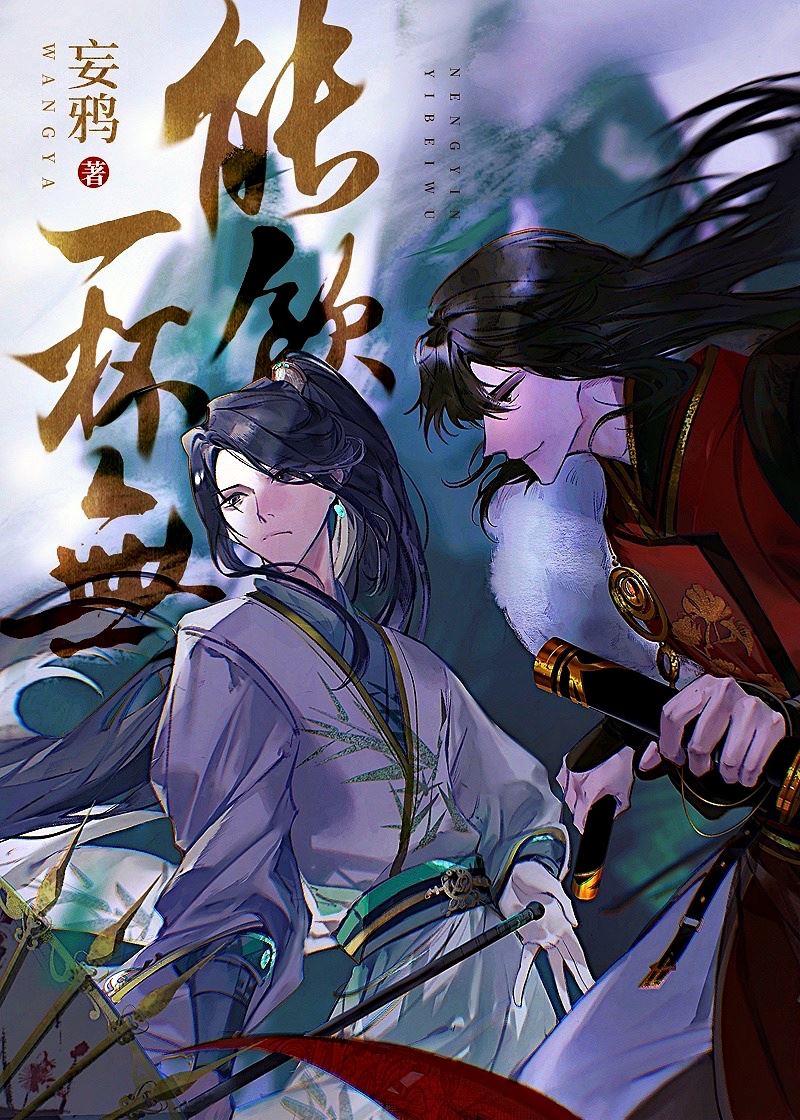
A Sand Sculpture in the Red Dust
+Add to Custom List
Novel Info

Summary

... Read More

Li Xiangfu spent twenty-three years in a parallel matriarchal world, where he completed a series of mastery assessments ranging from chess and cooking to music and craftsmanship. Upon finishing his mission, he requested that the cold, mechanical system accompanying him transform into a human child named Li Shasha so they could return home together. He arrived in his native country exactly at the point in time when he had originally left, retaining his advanced skills but facing a family that had written him off as a lost cause. His reputation was tarnished by past rebellious behavior and a mysterious missing person incident four years prior that resulted in memory loss.

Upon his return, Li Xiangfu was met by Zhao Kai, secretary to his eldest brother Li Huaichen, who was stunned by Li Xiangfu’s dramatic transformation from a disheveled troublemaker to an elegant, composed man. Li Xiangfu introduced Li Shasha as his adopted son, a claim that immediately sparked suspicion and gossip among his former social circle. His old friends, including Liu Yu, viewed his return with hostility and skepticism, believing he was scheming to reclaim family inheritance through the child. Meanwhile, the enigmatic business tycoon Qin Jin, who harbors a deep grudge against Li Xiangfu due to events during their shared expedition four years ago, took notice of his return and began monitoring his movements closely.

The family dynamics shifted when Mr. Li, the patriarch, returned from vacation. Initially cold and dismissive toward his younger son, Mr. Li’s attitude changed abruptly after witnessing Li Xiangfu’s eccentric celebration of freedom in the courtyard under the moonlight. Touched by the innocence and joy the child brought, Mr. Li decided to acknowledge Li Shasha as his grandson, offering to support the boy’s upbringing despite his disapproval of Li Xiangfu’s character. This decision placed Li Xiangfu back within the family’s protection network, though it also intensified the rivalry and scrutiny from within the household.

Li Xiangfu navigated his new life with calculated calmness, using his acquired talents to secure resources and maintain a low profile while uncovering fragments of his lost memories. He purchased a guqin and resumed his musical pursuits, all while managing the complex relationships with his brothers and sister. Li Huaichen, the responsible eldest son, remained watchful but pragmatic, arranging for Li Xiangfu to integrate into the family business structure if he proved stable. Li Shasha, acting as both son and advisor, provided analytical support, helping his father decode the subtle threats and alliances forming around them.

The tension peaked at a high-society wedding where Li Xiangfu attended with Mr. Li and Li Shasha. There, Qin Jin sent a bodyguard to deliver a business card, a clear provocation referencing their unresolved past. Li Xiangfu ignored the gesture, further frustrating Qin Jin, who then approached them personally. The encounter highlighted the lingering danger Li Xiangfu faced from outside forces, even as he secured his position within the family. Luo An, a former friend turned enemy, attempted to sabotage Li Xiangfu’s reputation by spreading rumors about the child’s legitimacy, but his schemes were foiled when Mr. Li publicly sided with Li Xiangfu.

As the story progresses, Li Xiangfu balances his desire for a peaceful life with the need to confront the secrets of his past. He begins to piece together what happened during the expedition that caused his amnesia and the disappearance of Qin Jin’s brother. The narrative follows his careful maneuvering through family politics and external threats, establishing a fragile stability while the shadow of Qin Jin’s vengeance looms in the background.

Latest Release
DateGroupRelease
2026-10-01hiraeth translations c28
2026-10-01hiraeth translations c27
2026-10-01hiraeth translations c26
2026-10-01hiraeth translations c25
2026-10-01hiraeth translations c24
2026-10-01hiraeth translations c23
2026-10-01hiraeth translations c22
2026-10-01hiraeth translations c21
2026-10-01hiraeth translations c20
2026-10-01hiraeth translations c19
2026-10-01hiraeth translations c18
2026-10-01hiraeth translations c17

Community Reviews

Rating(0 / 5.0, 50votes)
5 stars
0(0%)
4 stars
0(0%)
3 stars
0(0%)
2 stars
0(0%)
1 stars
0(0%)

Popular reviews

... Read More
Okay so let me just say—the scene where Grandpa Li watches his son unbutton his shirt by the fountain like some kind of dramatic opera hero and then immediately changes his entire mind about acknowledging the grandchild? I literally fell off my chair laughing. The man was ready to shrug it off and pretend he never heard of this kid, but one look at Li Xiangfu's moment of sheer freedom by the fountain and suddenly he's like 'from tomorrow on I will do my best to arrange his food, clothing, daily life, study and education.' That pivot was so fast I needed to re-read it three times. The whole setup of the rumor mill at the resort was also brilliantly executed—starting with whispers at dinner, escalating to that clueless young man who thought he could butter up the old man and ended up completely roasted. But the real plot bomb is Luo An. He's sitting there orchestrating everything from behind the scenes, sending people to spread gossip, getting confirmation that Grandpa Li 'doesn't know about his grandson.' Meanwhile Li Xiangfu still believes his father wouldn't lie about him. THAT dramatic irony is doing some heavy lifting here. Also the Mr. Qin thread is dangling like a knife over their heads and nobody except the narrator even knows it exists. Someone's going to get absolutely destroyed at that wedding party and I am HERE for it.
... Read More
Okay so the hair-washing scene between Qin Jin and Li Xiangfu is such a quietly charged moment. I need to talk about it because honestly it gave me all sorts of vibes. You've got this super composed CEO-type guy who casually invites someone to his place to wash his hair like it's the most normal thing ever, and Li Xiangfu just goes along with it because apparently he's also that chill. But then the physical closeness kicks in — fingertips on the back of the neck, foam, the whole thing — and Qin Jin has these reflexes that are frankly suspicious. "Li Xiangfu narrowed his eyes. With such a quick reflex, there was no reason why he couldn't dodge the moment the red cloth came over." Wait, what does that mean? Who is this person?? Then BAM, the whole school connection drops. Same high school as Qin Jiayu, and apparently even a parents' meeting. That's the kind of detail that makes me sit up straight and go "oh wait, they actually know each other's worlds." And the way Qin Jin answers so nonchalantly about it — like "the circle is so small" — while Li Xiangfu gets a sudden head pain? Something is going on here and I'm not even mad about it.
... Read More
This reads like a slow burn that's actually hiding a sprint underneath. The first chapter opens in a bamboo forest with nothing but wind and music and a system counting up titles like a video game completion screen. It's meditative, almost boring, and then—bam—twenty-three years compressed into a single emotional sentence. The transition back to the present is jarringly sudden, which I think is intentional. Li Xiangfu himself said the news traveled back two days before he did, and the structure mirrors that. We get dropped into a world where everyone already knows he's coming but he doesn't exist in their timeline yet. The pacing across the airport, the car ride, the bar scene, then back to his home—each location is a different arena where Li Xiangfu's presence creates a different kind of friction. The bar scene is the longest and most dialogue-heavy, which gives it a restless energy, but then it cuts back to the empty house and Zhao Kai reporting to the boss, and suddenly everything goes quiet again. It's a breathing rhythm. The chapter structure alternates between external scenes (where Li Xiangfu performs calmness) and internal/behind-the-scenes moments (group chats, secret messages, private thoughts). This dual-track pacing means we're always ahead of the other characters. We know what Liu Yu is texting while he's sitting right there pretending to be polite. That gap between what the characters know and what we know is where the tension lives. It's not frantic, but it's also not lazy. The author trusts us to sit with the discomfort of watching people underestimate the wrong person.
... Read More
This batch is a masterclass in controlled escalation. We start almost... domestic? A father and son going clothes shopping. It's mundane enough that you lower your guard. Li Xiangfu's OCD about long sleeves, the awkwardness of the mall, Li Shasha making deadpan suggestions about mental health and public appearances — it's charming, almost fluffy. You're not bracing yourself for impact. Then the headaches start. Memory gaps. Dreams. The Pandora's box metaphor appears and suddenly everything feels heavier. The author is laying groundwork for things to unravel. And then BAM — Saturday. Wedding. LUX Hotel. The scene shifts from a quiet mall to a space crackling with invisible tension. Every whisper between guests, every glance between Li Xiangfu and Qin Jin, every movement feels loaded. The pacing here is meticulous. The author doesn't rush the confrontation — we get the business card handoff, the refusal, the bride's entrance, the toasting, and THEN Qin Jin approaches. It's like the author is circling the storm, letting us feel the pressure building before the actual collision. Meanwhile, Luo An's subplot runs underneath like a parallel current. He's making shady calls, getting warned off, being interrupted by Qin Jin's arrival — it adds texture without derailing the main tension. When the two threads almost converge (Luo An on the phone, Qin Jin walking through the door), the timing is genuinely cinematic. The only minor critique: the transition from the car ride to arriving at the hotel felt slightly abrupt. But honestly, in a batch this long, those small rough edges are forgivable. The author knows when to accelerate and when to let a scene breathe.
... Read More
I keep thinking about the stakes here and they're not what you'd expect. On the surface, it's just a talent show. But look closer. Li Xiangfu is someone with a hidden past, someone connected to Qin Jiayu through that parents' meeting, someone whose identity could unravel if he performs without the mask. And yet he does it anyway. The head pain that strikes when he hears "Qin Jiayu" — is that physical, or is it his past catching up to him? The fact that he calculated everything — waiting to see the hot search before deciding whether to pursue the competition further, having a backup plan with another show ready — tells me this man doesn't take risks lightly. But he takes them anyway. Li Shasha's warning about identity exposure hangs over everything like a shadow. The family's reaction isn't supportive; it's stunned silence and turned-off TVs. Even the assistant director sees him as a "ratings bomb" — which means he's a commodity to some and a person to others. The real tension isn't whether he'll win. It's whether winning will cost him something he can't get back.
... Read More
So let me trace the pacing here because it's genuinely impressive. We start with something intimate and slow — Qin Jin's apartment, the hair-washing scene, quiet conversation about shared history. Then we cut to the Li mansion and the family dynamics, which plays out like a series of short comedic beats. Mr. Li's patience speech, Li Shasha's Rubik's cube commentary, the choreography breakdown — each moment is punchy and moves the story forward without dragging. Then Sunday comes, the recording happens, Wednesday arrives with the broadcast, and suddenly we're at the hot search list and the phone message from Qin Jin. The author doesn't dwell too long on any single section. There's a moment where Li Xiangfu is rehearsing dance steps in his room that could easily have stretched into a full chapter, but instead it's just five minutes of professional jargon and Li Shasha going numb. Then — boom — the performance, the family watching, the aftermath. The pacing is like a well-conducted symphony where each movement transitions smoothly into the next, and by the time you reach the end of the episode you realize you've been flying the whole time.
See all reviews

Custom lists

See all custom Lists