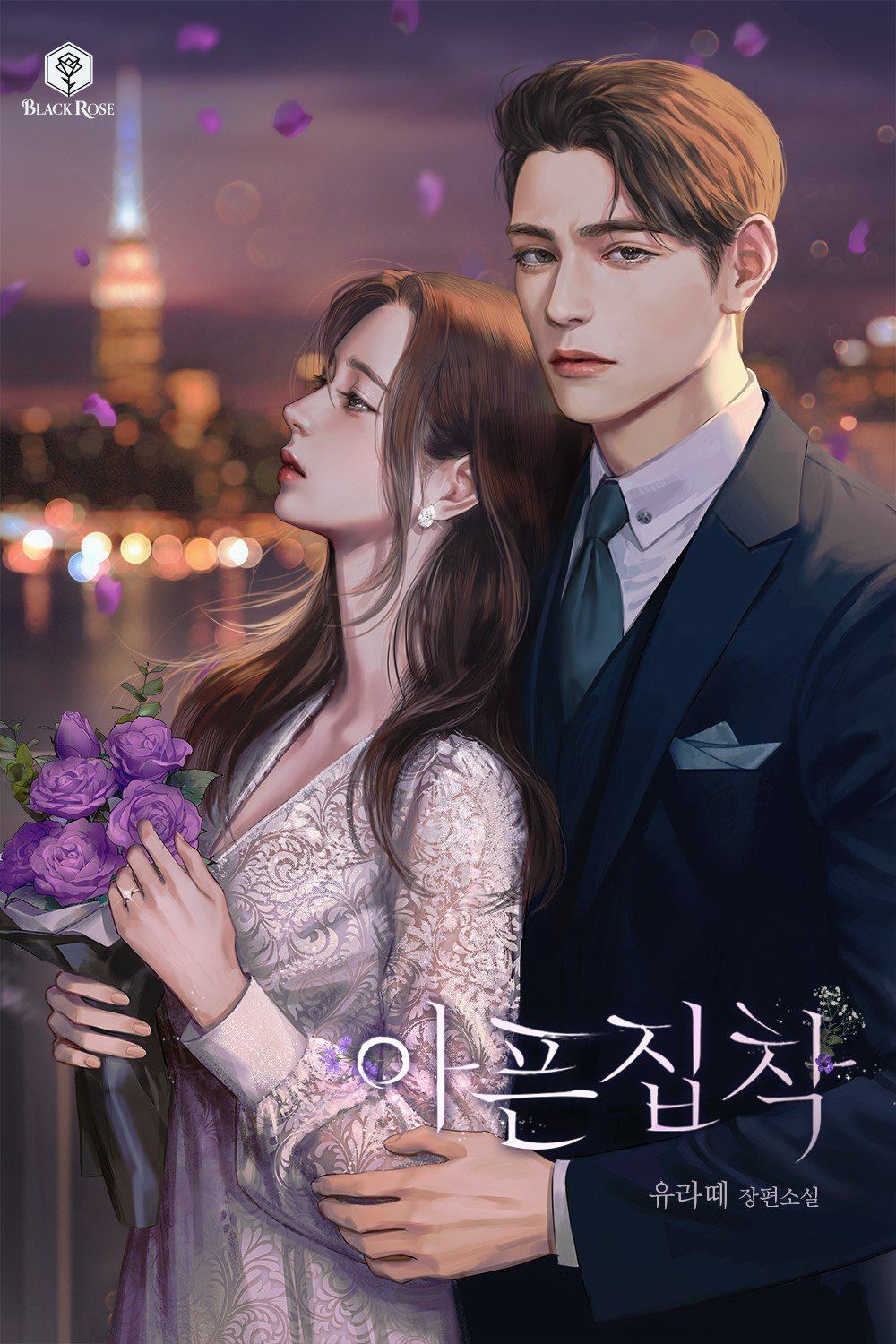
A Painful Obsession
Novel Info
  • Author:
  • Status:Ongoing

Summary

... Read More
Han Taeyun, the disciplined heir to a wealthy family and department president at Korea University, spends five years searching for Yoon Ina after she vanished without explanation. His investigation finally leads him to Tongyeong, a remote coastal village where he finds her running a dilapidated restaurant under the name Han Mi-ja. She is living a modest life, raising a four-year-old daughter named Dahyeon alone. When Taeyun enters the restaurant, Ina is visibly shaken. She attempts to maintain distance, claiming she has moved on and is with another man, though no husband appears in her records. The confrontation is interrupted by Dahyeon, who accidentally spills ice cream on Taeyun’s trousers, and by Doctor Jinho, a kind man who helps Ina care for the child. Taeyun leaves abruptly, unable to process the reality of her existence with another man and child, and retreats to a bar in Gangnam to drink heavily with his close friend Hyeseong, who is aware of their painful past.Seven years earlier, Taeyun and Ina met at an orphanage in Changwon where he volunteered with his university squash club. Ina, a resident who aged out of the system but stayed on to help, was initially cold and suspicious of his kindness. She had been abandoned by her parents as a child and harbored a deep fear of rejection. Despite her hostility, Taeyun persisted, bringing her gifts, offering academic help, and promising to return in two weeks. He provided her with textbooks, study materials, and even a mobile phone registered in his name, determined to support her goal of entering the pharmacy program. Their relationship gradually thawed through these small, consistent acts of care. During the volunteer trip, they shared intimate moments, and Taeyun’s genuine interest in her life became undeniable. However, Ina remained guarded, unable to believe that someone like him would care for someone like her.The turning point occurs when Taeyun discovers Ina is pregnant and has had a child. He confronts her in the restaurant, demanding to know why she disappeared. Ina deflects his questions with harsh lies, insisting she had a brief relationship with another man and that Dahyeon is not his. Taeyun, noting the child’s age, realizes Dahyeon was born more than a year after Ina vanished, but he hides this knowledge. His anger and confusion grow as she refuses to explain herself, telling him to let go and that it is all in the past. He grabs her wrist, desperate for the truth, but she pulls away, forcing him to leave without answers. After he departs, Ina breaks down in tears, confessing to her sleeping daughter that she forced herself to say cruel things to protect her secret. She weeps over the resemblance between Dahyeon and Taeyun, particularly their thick eyebrows, remembering how Taeyun once promised to come back.Taeyun returns to Seoul, consumed by a need to uncover the real reason for Ina’s disappearance. He drinks to dull the pain of her rejection and her claim that she hates his sudden appearance. Hyeseong urges him to move on, but Taeyun is resolve to find the truth, no matter how painful. Meanwhile, Ina continues her daily routine in Tongyeong, haunted by memories of Taeyun and the life she left behind. She struggles with guilt over lying to him and fear that her secret will eventually surface. The narrative alternates between Taeyun’s present-day investigation and flashbacks to his time at the orphanage, highlighting the contrast between his hopeful, affectionate past self and his current broken state. The story ends with Taeyun determined to press forward, while Ina is left alone with her child and the weight of her unspoken truth, setting the stage for a deeper exploration of their separated past and the circumstances that drove them apart.

Latest Release
DateGroupRelease
2026-10-03dusk blossoms c1

Community Reviews

Rating(0 / 5.0, 40votes)
5 stars
0(0%)
4 stars
0(0%)
3 stars
0(0%)
2 stars
0(0%)
1 stars
0(0%)

Popular reviews

... Read More
The structural boldness of this batch is what got me. We're literally tracking three separate storylines that feel like they're breathing different air, and the author just... lets them run parallel until they intersect like tectonic plates. It's masterclass-level pacing. First, there's Taeyun's thread—cold, controlled, moving at the speed of a man who has a whole security apparatus at his disposal but still can't get Ina on the phone. The Youngmin exposition dump about Choi Jinho is perfectly placed because it's Taeyun who reads it, which means we're getting the information filtered through his paranoia. Of course he zeroed in on the guy close to Ina. Of course. Then it SLAMS into the restaurant scene with Namhee and Seungah, and the temperature changes so drastically you feel it. One minute you're in Taeyun's world of surveillance and silence, the next you're in a marble-floored, chandelier-lit traditional Korean restaurant where every word is rehearsed and every smile is a strategy. The shift is jarring in the best way—it's like the book is forcing you to sit through that suffocating dinner alongside Taeyun so you understand exactly what he's running from without him ever having to say it out loud. And then—cut to Tongyeong. Jinho, Dahyeon, the clinic, the walking home. The prose slows down almost imperceptibly. The urgency drops. But then Ina's face darkens at the estate agent's numbers and suddenly the floor drops out again. 150 million won deposit. That's the third act of suffering hitting you in the same chapter. What I love is how the author uses the restaurant scene as a pressure valve. Taeyun hasn't had a single honest conversation all chapter, so we get that moment in the car with Seungah where he says "I have no intention of getting married"—not to Ina, not even close to her, but to a stranger—and it somehow carries more weight than any confession could. The pacing here isn't about building tension toward a climax. It's about layering different kinds of emotional exhaustion on top of each other until the reader is just as breathless as the characters.
... Read More
"I may not have anything, but I still have my pride."—INNA. INNA. BEST LINE. I literally gasped out loud. But like, the whole thing with Taeyun is so complicated and I love it. He comes back TWO WEEKS later because he PROMISED. Not because he felt like it. He postponed a department event. He drove all the way from Seoul to Changwon. And Ina—poor, wounded, proud Ina—just can't process it because nobody's ever chosen her before. Her own mother didn't come back. Why would he? The moment when she reads those messages on the phone and his voice just comes through even though he's not there? [Sleep well. You worked hard studying today.] I couldn't. My heart was literally aching for her. She's been guarding herself so hard and he's just... there. With notebooks and tea and study tips and a new phone and notes written in every single book like he spent weeks doing this for someone who told him to get lost. And she hasn't even apologized yet. She's sitting there holding all this stuff and he's already driving away. The tension is UNBEARABLE and I am here for it.
... Read More
I need to talk about how the author builds atmosphere because THIS is how you do it without writing three paragraphs of description. The opening line — "Creak—The faint sound of the door opening echoed inside." Just that one sound. You're immediately in the space. Quiet shop, Ina calling out to someone invisible, walking away with a shopping bag. Then Taeyun pushes the door open and the whole scene locks into place. Dahyeon coloring in her sketchbook, the child-sized focus, the way she keeps glancing up at him from beneath her lashes. You can SEE this. Every frame is cinematic. What I love most is how ordinary everything is. This isn't some dramatic mansion or stormy cliffside. It's a gukpap shop — a Korean soup rice place. The kind of place where life happens in between meals. Ina leaving her four-year-old alone to run to the market. The business card sitting on the table after the lawyer leaves. These domestic details make the emotional violence hit harder because the setting is so painfully normal. The contrast between Taeyun's world and Ina's is also built through environment. His lawyer arrives with a briefcase and formal language. Her world is bellflower-and-pear tea, coughing into palms, and hiding documents behind her back like a kid caught with cookies. The business card on the table — "Executive Managing Director of H Electronics, Han Taeyun" — that engraved name is its own kind of scenery. It tells you everything about the distance between them without a single word of exposition. And Yeongja's room — the closed door, the pity in her eyes, the way she watches Ina leave without answering. Small space, heavy with unspoken things. The author never needs to describe the walls or the furniture. The atmosphere does all the work.
... Read More
The dialogue in these chapters is ruthless and I mean that in the best possible way. "You forced me to put a price on my sincerity towards you. That's what you did." Taeyun's voice on the phone is something else. He's not yelling — he's cold. There's a terrible precision to the way he speaks, like he's been rehearsing this conversation in his head for years and finally got the chance to say it out loud. Every line is measured. Every pause is calculated. "If you had even a shred of feeling left, you wouldn't have abandoned me like that. Not knowing that, I—" He stops himself. He almost says something tender and then catches it and slams the door shut. The contrast between Ina and Taeyun in this call is *chef's kiss*. She's stammering, biting her lip, tears falling. He's steady, almost clinical in his anger. She reaches out; he pulls back. The power dynamic is completely inverted from whatever they had before. And Yeongja's dialogue is masterclass in deflection: "I'm old, so it's just taking longer to recover. You're making such a fuss over a little cough." She says this about thirty times in these chapters and each time it lands harder. The woman cannot let anyone worry about her. It's not modesty — it's armor. The narration itself has this beautiful rhythm too. Short sentences. Fragments. "Click." "The line went dead." These tiny beats create space for the reader to feel the weight of what just happened. The author trusts silence.
... Read More
I need to talk about this moment where Ina basically ignores Taeyun walking past him and he has to literally block her path to ask for directions. BRO. She's so cold and he's just... standing there flushed and sweating like a lovesick fool. And then Director Ji comes along and explains everything — Ina stayed at the orphanage because she couldn't leave, she failed her exams due to illness, she's been saving every penny. But here's what GETS ME: the way Ina looks at him in the present. Not with love. Not with anger. Just... emptiness. She's lived seven years without him and now he shows up and she tells him not to misunderstand. WHAT DOES THAT EVEN MEAN? And then we cut to Taeyun alone at a bar, bitter and confused, hospitalized from grief after she left. Meanwhile Ina is at home with her daughter — who looks EXACTLY like him — and she's crying silently because she can't let her child see her break. Their dynamic is this tragic echo chamber where neither person knows what the other is feeling. He thinks she abandoned him. She thinks she protected him. And the reader is just sitting there screaming at both of them. Hyeseong is the perfect contrast too — he's all bright energy and concern while Taeyun is deteriorating. But honestly, Ina's relationship with Dahyeon hits different. That scene where the kid says 'you look like you're going to cry' and Ina can't even lie to her own daughter? I'm not okay.
... Read More
I need to talk about Yeongja because this woman is quietly the most important character in the entire book and I am shook. "This time, I'll save you. Just like you saved me." Ina says this when she thinks Yeongja isn't listening, and it hit me like a truck. Think about it — Yeongja took in a stranger's granddaughter when she had every reason not to. She raised Dahyeon when Ina was falling apart. She ran a shop, held a household together, and never once made Ina feel like a burden. And now she's lying in bed facing the wall, pretending she's just "old" and it's "about time," while dying inside. The betrayal Ina feels toward Taeyun isn't just romantic — it's layered with this deeper guilt. She left him. She chose to disappear. And now her grandmother is sick, her child needs a father figure she never wanted, and Taeyun is sitting on the other side of that phone line holding a ledger of every kindness he ever showed her like it's a debt collection. And Jinho — oh God, Jinho. The doctor who shows up with rice balls and car rides and never once asks for anything in return. "Since she fled here, she had owed him more than she could count." The man remembers conversations from weeks ago. He notices when she's jumpy. He sees the truth in that shop argument and says nothing, just smiles awkwardly and drives them to the hospital. He's the kind of person who loves quietly and I genuinely cannot handle it. The mother-son dynamic with Taeyun's mom is also deliciously toxic. "It's hard enough to see my son's face" — she's inviting him to a birthday like it's nothing, completely unaware that her son is one phone call away from burning his world down. This family is a house of cards.
See all reviews

Custom lists

See all custom Lists