Summary

... Read More

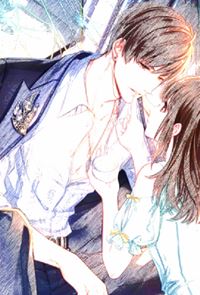
Maru is an eighteen-year-old hamster beastman and the illegitimate daughter of a lion king. Born with weak hamster blood in a society that values strength, she is considered a disgrace to the royal family and lives in isolation within the castle. Her mother was banished for infidelity, and Maru herself was hidden away until her eighteenth birthday, at which point she was sent to the Livestock Cabins, a prison-like facility where beastmen deemed useless are kept. Every two years, these women are surrendered to the neighboring elven country as part of a treaty following a lost war. The elves, suffering from a inability to produce female offspring due to their over-reliance on magic, take the beastwomen as brides to sustain their population.

Salami, a pig beastman and noble’s daughter also cast out for her weak lineage, becomes Maru’s closest friend in the cabins. When the elves arrive to collect the hundred brides, Maru rushes to protect the other women but is captured along with Salami. Maru is taken by Aiden, an elf doctor who works as a national representative. Unlike the terrifying monsters described in folklore, Aiden is gentle and sincere. He reveals that he had secretly helped Maru before the selection by magically sending her nuts from outside the cabin walls. Aiden asks Maru to be his wife, and despite her initial fear, she accepts because he promises to treat her with care and respect. Salami is taken by Riley, an elf representative who appears fierce but is actually bashful and kind.

Life in the elven country proves to be drastically different from Maru’s expectations. The elves are peaceful, and the beastwomen are treated as valued partners rather than slaves. Maru learns about pharmacology from Aiden, utilizing her keen sense of smell to identify herbs. She begins to lower her guard, eventually confessing her feelings for Aiden after he protects her from a violent sheep beastwoman who resents the elves’ kindness. Their relationship deepens through shared moments and mutual support, with Aiden showing particular tenderness toward Maru’s hamster form.

However, peace is disrupted when a messenger from the beastman kingdom arrives demanding Maru’s return. The king wishes to send her to the demon continent as a political bride to secure engineering knowledge. Aiden and Riley refuse to surrender her, leading to a diplomatic mission to the beastman kingdom. Upon arrival, Maru is lured out of her room under false pretenses and captured by bear and wolf beastmen who intend to smuggle her onto a ship bound for the demons. She escapes into the dungeon, transforming into a hamster to navigate the bars, but is eventually caught.

Aiden, having tracked Maru via a magical spell, infiltrates the dungeon and rescues her. He confronts the wolf beastmen, using magic to freeze them while retrieving Maru. When Riley arrives, the elves leverage the incident to negotiate favorable terms. The beastman king is forced to agree to improved conditions for the brides, the renaming of the Livestock Cabins, and a ban on slander against the elves. The immediate threat is resolved, and Maru returns to the elven country with Aiden.

On the final day of the festival, Maru and Aiden prepare to officially confirm their union. As Maru is about to accept the marriage, the swan maid who previously attempted to lure Maru into danger screams out, claiming that a hamster is too weak and low-born to marry an elf. The maid’s jealousy and prejudice cause a disturbance in the square, challenging Maru’s right to happiness. Despite the interruption, the story highlights Maru’s journey from an abandoned princess to a woman who has found love and acceptance in a foreign land, while Aiden’s fierce protectiveness underscores the shifting dynamics between the races.

Latest Release
DateGroupRelease
2026-09-26knoxt c7
2026-09-26knoxt c6
2026-09-26knoxt c5
2026-09-26knoxt c4
2026-09-26knoxt c3
2026-09-26knoxt c2
2026-09-26knoxt c1

Community Reviews

Rating(4 / 5.0, 55votes)
5 stars
19(35%)
4 stars
16(29%)
3 stars
19(35%)
2 stars
1(2%)
1 stars
0(0%)

Popular reviews

... Read More
Oh my god, can we just take a minute to appreciate what happens to Maru in these chapters? This girl went from being a victim of poison plots to literally walking into Aiden's hospital and grabbing the right herb by smell without hesitation. That scene where she just bolts to the medicine cabinet and brings back emeri flower while Aiden is watching her like she's some kind of miracle? Chills. Absolute chills. The plot here does something really smart — it's not just romance fluff, it's about Maru RECLAIMING the one thing her abusive family weaponized against her. She was surrounded by poison, right? Her own siblings coming at her with it constantly. And now she's in a room full of herbs and medicines, and she's SO GOOD at it. She remembers scents, she identifies what Aiden needs, she becomes useful. That's not a side detail, that's the whole arc compressed into one scene. And then the terminal elf patient shows up and Aiden can't save him. This is where the plot gets heavy. Maru has to comfort HIM. The roles reverse again. First she was the wounded one crying in his arms, then she was his capable assistant, now she's the one pulling Aiden out of his dark place. The author keeps flipping who holds the emotional power and I love it. The structure also works on a smaller level — the hamster transformation scenes are genuinely funny and break up the heavier moments perfectly. Aiden baby-talking to a hamster? "You're shoo cute~, Maru." I cannot get over how well the comedy lands here. It makes the emotional beats hit harder because you actually LIKE these two together.
... Read More
There's something deeply symbolic about Maru being in her hamster form for pretty much the entire sequence, and I think the author is doing a LOT of thematic work here without being heavy-handed about it. On the most obvious level, the hamster form represents vulnerability. She's tiny, she's soft, she can't fight back physically — the beastmen grab her by the flesh on her back and she's just dangling helplessly. But then there's the irony: it's THIS small, seemingly useless form that allows her to escape the cell. The gap at the top of the dungeon bars that's useless for a human-sized prisoner is PERFEKT for a hamster. Her weakness becomes her strength in a way that feels very intentional. I keep thinking about that line: "Small and weak hamsters are, of course, not a target." The dungeon was designed for big, strong beastmen — nobility and royalty cell. It wasn't meant for her. Which means the system literally has no category for someone like Maru. She's too small to be imprisoned properly, too weak to be threats, too insignificant in their eyes. And yet — she climbs. She escapes. She persists. The castle itself is a symbol of this hierarchy. The beastmen who tolerate hitting a princess because "his majesty tolerated it" — that's a microcosm of how power corrupts downward. When authority figures normalize violence, everyone below them feels entitled to do the same. The swan maid gets used as bait, the bear beastmen grab Maru without hesitation, the wolf beastmen treat her like cargo. Nobody in that chain of command seems to question it. But Aiden breaks the chain. He doesn't operate on this hierarchy of strength. To him, Maru isn't weak — she's his wife, and that's categorically different. When he freezes the wolf beastmen and calls them stupid for not understanding love, he's essentially rejecting their entire value system. Strength isn't about size or rank or species. It's about what you're willing to fight for. The demon country reference is also interesting — they want to send Maru there for her engineering knowledge apparently, even though she's just a hamster princess. She's being commodified, turned into a tool or a gift. Aiden's intervention is literally an act of refusing to let her be an object.
... Read More
The dialogue throughout these chapters has this wonderful range between the formal and the deeply personal. Aiden's lines to the beastmen are measured and diplomatic — he speaks about international problems and punishable offenses with the calm authority of someone who knows he holds all the cards. But then there's the scene where he's alone with Maru and his speech patterns shift entirely. Shorter sentences. Muttered threats about skin-peeling. The voice becomes that of a protective partner rather than a statesman. Riley is the comedic backbone. His line 'Someone took a false start and laid his hands on his wife like an idiot' while Aiden is happily hugging Maru is delivered with such casual judgment. And his internal monologue about being complicated toward Aiden — believing Aiden can touch Maru easily while he holds back for Salami — is both funny and unexpectedly poignant. Maru's dialogue evolves noticeably. In hamster form she says 'Kyuu' and 'Kyu, kyu' — these small vocalizations carry genuine emotion. When she transforms and speaks human words, her lines are hesitant ('Is, is it?') until the confession, where she finally speaks in complete, direct sentences: 'I like you, and I want to live with you.' The shift from animal sounds to vulnerable human speech mirrors her emotional journey in that scene. The swan maid's final outburst is appropriately shrill and unhinged. Her dialogue here — comparing Maru's rank to her own, screaming about not accepting Maru becoming happier — reveals someone who has internalized the entire hierarchy system so deeply that another beastman's happiness feels like personal theft.
... Read More
Let me be honest — the first section of this text was slow. Really slow. Maru walking around, checking the distribution station, heading to the wall, seeing the nuts, curling up, and then... nuts falling. I was like, okay, this is a character study, fine, I'm here for it. The pacing was deliberate, almost meditative in its sadness. But then chapter two hits like a truck and completely recontextualizes everything. The elves arrive at night. The hen beastman watchman shouts, and suddenly there are screams. The scene transitions from Maru's quiet desperation to full-blown panic in seconds. Women being dragged, magic circles flashing, people collapsing. And Maru — small, powerless Maru — runs TOWARD the screams instead of away. That structural choice is brilliant because it changes the entire story. Up until that point, she's been defined by her helplessness. Now she makes an active choice, even though she knows she'll lose. The pacing during the capture sequence is frantic but controlled. The dialogue between Maru and Salami at the beginning of chapter two grounds us before the chaos starts. "Are elves the kind who attacks in the middle of the night?" and Salami's flat "I don't know. Everyone was brought here without being provided any knowledge." — that exchange is so efficiently written. Then Maru bolts, and the chapter spirals. The author uses the magic circle description twice (yes, it's repeated in the text, which I think is intentional — it emphasizes how this image is burned into everyone's memory). When Maru yells out and gets pinned, the sudden drowsiness, the herb-like scent, the consciousness fading — that final beat lands like a door closing. We end on her going under, and I was left breathless. The structure moved from contemplative to violent to unconscious in just a few pages, and each shift felt earned.
... Read More
The pacing in this section is honestly masterful in a way that's easy to miss if you're not paying attention. It starts intimate—just Aiden and Maru in a room, a quiet conversation that could drag on forever—and then it pivots hard into community and world expansion when Salami appears. One moment it's a two-hander, the next it's an ensemble scene with four beastwomen, a dark elf, and human arrivals. The author doesn't rush any of these transitions though; they just open the door wider each time. What really keeps me hooked is the uncertainty about when the next conflict will hit. We've been reading this gentle, almost domestic scene for chapters and my brain keeps waiting for the other shoe to drop. The livestock cabin references, the mentions of wives having affairs and getting pregnant by other men's fiancés, the way the pregnant rabbit woman is introduced—all of these are tiny tension threads that the author is carefully threading through an otherwise calm narrative. I want to keep reading because I sense the calm won't last, but I also don't want it to end because honestly this peace feels rare and precious.
... Read More
The scene where the rabbit beastman guides Maru and Salami through the city is where worldbuilding becomes narrative rather than exposition. Every location mentioned — the vegetable store, the meat shop, the marine products store far from the sea, the district hospital that also serves as the princess's residence — paints a picture of a society that has thoughtfully integrated newcomers into its infrastructure. This isn't a conquest narrative where the conquered are left to fend for themselves; there's genuine civic investment in the wellbeing of these women. The hospital-princess residence building is particularly intriguing. It suggests a hierarchy where even the princess lives among the people rather than in isolation, and medical care is accessible to all residents regardless of origin. The bar where Riley's family owns the establishment shows social mobility within this world — the owner's son is now an established representative, suggesting that merit and hard work can transcend birth circumstances. What makes this worldbuilding effective is how it reveals values through mundane details rather than grand speeches. When the characters stop at a cafe because the cow beastman is hungry, we see a society where comfort and rest are normalized rather than indulged. The atmosphere is one of deliberate gentleness — not naive optimism, but conscious choice about how to build community with people who were previously treated as livestock.
See all reviews

Custom lists

See all custom Lists