A God’s Side Hustle is Raising Cubs on Livestream
Novel Info

Summary

... Read More

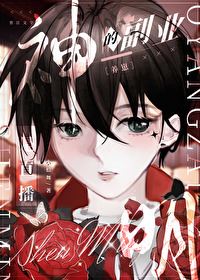
Sui Han awakens in a pristine, white-walled apartment on Di Xing, possessing no memory of his past life. He discovers he has transmigrated into the body of a popular cute pet streamer known as Sui Sui. On his shoulder sits a small zombie cub, and nearby resides a mythical Yingyu fish with rainbow wings. The internet viewers are fascinated by these rare creatures, with some offering millions for the zombie cub. Sui Han remains indifferent, treating the animals with casual competence despite his confusion about his new identity. He learns that his residence at 666 Wanhua Road is actually a ruin, isolated from the bustling city by a thick white mist that only lifts when he interacts with the outside world through specific means.

His existence is dual-natured. During the day, he lives in the silent, empty apartment, caring for his pets and livestreaming to an eager audience. At night, he enters a dreamscape where he is worshipped as a deity. In this realm, the floor is covered in clouds and strange flowers bloom around him. Believers appear to pray for his help. The first petitioner is Fat Uncle, the owner of a BBQ shop who is being harassed by customers suffering from nightmares after eating his food. Sui Han agrees to help, planting a seed that grows into a flower bearing the address of Fat Uncle's shop. Upon waking, he finds the physical sign for the shop in his home, realizing he can bridge the gap between his divine domain and the mortal world.

Sui Han descends to the real world, where the city is vibrant and full of life, unlike his isolated apartment. He visits Fat Uncle's BBQ shop and witnesses a confrontation. A group of troublemakers, secretly employees of a rival restaurant called Jiu Yi, are extorting Fat Uncle by claiming his food causes nightmares. Sui Han intervenes, effortlessly subduing the aggressors with his divine strength. He suspects a deeper conspiracy and follows the red-haired employee, who leads him to a hospital and then back to the Jiu Yi kitchen. Using the zombie cub as a spy, Sui Han records evidence that the rivals are lacing the meat with medication to drive customers away and frame Fat Uncle.

With the evidence exposed, the truth comes to light, and Jiu Yi's scheme is ruined. Sui Han returns to his apartment, which reverts to its silent, mist-shrouded state. He continues his life as a streamer, balancing his duties as a god with his new role as a pet caretaker. He names the zombie cub Big Banana and the Yingyu Erguotou, forming a bond with them that softens his aloof demeanor. Another dream brings a new petitioner, a girl named Li Le, whose twin brother Li Fan has gone missing. She recounts their tragic past, orphaned young and raised by their village, before Li Fan left for the city to find work and medical treatment for her illness. Sui Han listens to her plea, signaling a shift in his narrative from casual observer to active participant in the lives of those who seek his divine intervention.

The story establishes a world where ancient myths coexist with modern technology. Sui Han's journey involves uncovering the secrets of his new identity while navigating the complexities of human relationships. His pets, far from being ordinary animals, possess unique abilities and personalities that complement his own. The contrast between the sterile perfection of his apartment and the messy, emotional reality of the human world provides a backdrop for his growth. As he accepts his role as a god, he begins to understand the weight of the prayers he receives and the responsibilities that come with his power. The narrative moves forward as he prepares to assist Li Le in her search for her brother, expanding his influence beyond the immediate community of Shanhai City.

Throughout these events, Sui Han maintains a detached exterior, yet his actions reveal a growing sense of care and duty. He does not seek fame or wealth, but rather finds purpose in resolving the conflicts that arise around him. The livestreams serve as a window for the audience to witness these supernatural events, blending entertainment with mystery. The relationship between Sui Han and his pets evolves from mere ownership to companionship, with Erguotou and Big Banana providing emotional support and assistance in his daily tasks. The story culminates in Sui Han stepping fully into his divine role, ready to face the challenges that lie ahead as he helps those who call upon him.

Latest Release
DateGroupRelease
2026-08-11shanghai fantasy c16
2026-08-11shanghai fantasy c15
2026-08-11shanghai fantasy c14
2026-08-11shanghai fantasy c13
2026-08-11shanghai fantasy c12
2026-08-11shanghai fantasy c11
2026-08-11shanghai fantasy c10
2026-08-11shanghai fantasy c9
2026-08-11shanghai fantasy c8
2026-08-11shanghai fantasy c7
2026-08-11shanghai fantasy c6
2026-08-11shanghai fantasy c5

Community Reviews

Rating(3.9 / 5.0, 9votes)
5 stars
3(33%)
4 stars
2(22%)
3 stars
4(44%)
2 stars
0(0%)
1 stars
0(0%)

Popular reviews

... Read More
I need to talk about the relationship between the little zombie and the little Yingyu because honestly it's the emotional core of these chapters and it made me laugh out loud multiple times. The little Yingyu starts off clearly jealous. Sui Han gives the zombie a bath, the zombie gets all the attention, and Erguotou is over there flicking its tail uncomfortably. But then — and this is the part that got me — Erguotou actually *changes its strategy*. It stops being petty and tries to win affection the same way the zombie did. It makes a heart shape out of water, does a whole performance. The text says: "It seemed to be learning from the little zombie, expressing its love for its dear master." That line hit me. This creature that was being salty and jealous literally watches the zombie's tactics and copies them. That's not just comedic — that's genuinely sweet. And then when the zombie holds up the crystal flower Erguotou made and offers it back to it? The text says Erguotou thought: "Hmph, angry." But it's clearly not actually angry. It's soft. It's just a tsundere fish who wants to be loved. The coat scene is what really sealed it for me though. The zombie reaches for hot bubbles, can't break free from Erguotou's wings, gets sad and pouts. Then Sui Han starts cooking with chili peppers and the zombie sneezes. What does Erguotou do? It flies into the room and comes back with a coat, drapes it over the zombie. The netizens lose their minds over this and honestly I don't blame them. The description of Erguotou throwing the coat — "it didn't use a lot of force to throw it over, but gently" — that level of tenderness from a character who just said they weren't friends with the zombie? Chef's kiss. And Sui Han himself — he touches both their heads, "treating them equally. He liked them both." There's something really warm about that. He's not choosing favorites. He's just this quiet boy who cooks meatball rice and lets two magical creatures compete for his attention like it's the most normal thing in the world.
... Read More
Can we just take a moment to appreciate how the author uses the live stream comments as a narrative tool? Because this is honestly one of the most creative uses of internet culture I've seen in a novel. The comments aren't just filler — they provide comic relief, emotional commentary, and even plot information. When the hater shows up and starts insulting the little Yingyu, the comments immediately rally: "@Moderator, quickly get this keyboard-smashing idiot out of here." Then Erguotou switches to its perspective, unleashes the liquor aroma, and the hater gets drunk and goes on a streaking spree that apparently makes the news. The comments react in real time: "Haha, the hater showed his face" and "Not only did he show his face, didn't he also show his butt, pfft!" This is hilarious and it's done entirely through the comment section. The author also gives each pet a distinct internal voice through the bracketed thoughts. Little Yingyu: "Cunning little zombie, it's too good at competing for affection, hmph!" Little Zombie: "Good friend, good friend, flower~" These are completely different personalities — one is sassy and self-aware, the other is pure innocent joy. Even though they don't speak out loud to Sui Han or the chat, their thoughts come through and it makes them feel like real characters. Sui Han's own dialogue is notably sparse. He says things like "Yeah, I'll make it for them" and "Meatball rice is very simple, but it still depends on personal preference." He's quiet, practical, almost detached. The text explicitly says: "Even if someone came to his live broadcast room to insult him, his emotions wouldn't be affected in any way." This contrast — the chatty, emotional comments section versus Sui Han's near-silent demeanor — creates a really interesting dynamic. He's the straight man in a comedy routine where everyone else is losing their minds. The author's narrative voice itself is also worth noting. It's warm and slightly irreverent, never taking itself too seriously. Lines like "The boy finally spoke to the screen" after pages of him ignoring everyone feel intentionally funny.
... Read More
The dream sequence at the end is where this text gets philosophically interesting, and I want to unpack what's happening beneath the surface. Sui Han wakes up to find clouds on the floor instead of his usual flooring, the door wide open, and that same floral fragrance he's smelled before. He's in a dream realm — or is it a spiritual plane? — surrounded by a "riot of colorful flowers, most of them pink and red." Flowers as a symbol of prayer and devotion is pretty classic, but the specific detail about the fragrance being "strange and familiar" is what stands out. It's something he recognizes but can't quite place, which suggests this is a recurring spiritual experience that he's gradually becoming accustomed to. The text says: "Like riding a bike, it gets easier once you've done it a couple of times. The second time the boy received prayers from believers in a dream, he seemed much calmer." This is a huge revelation wrapped in a casual metaphor. He's receiving *prayers*. People are praying to him. And it's happening in his sleep. The girl kneeling before him, choked sobs, asking about her missing brother Li Fan — this is a devotee seeking intervention from what she perceives as a divine being. What's fascinating is the contrast between Sui Han's daytime self and his dream self. By day, he's a quiet boy cooking meatball rice with two magical pets, doing a live stream. By night (in dreams), he's an indifferent, powerful figure whose voice carries "an indescribable power." The text describes his eyes as "indifferent" even while addressing a suffering petitioner. This isn't a warm, approachable deity — it's something older and more aloof. The Li Fan storyline that opens at the end feels like it's setting up a larger mythological arc. Twin siblings, mysterious illness, disappearance — these are the kinds of stories that usually involve curses, spirits, or supernatural forces. Given that Sui Han's pets include a zombie and a divine fish, it's not a stretch to think the mortal world and the spiritual world are about to intersect more directly. The flowers, the fragrance, the clouds — these are all symbols of a liminal space, a threshold between the ordinary life Sui Han lives during the day and whatever he actually is at night.
... Read More
Okay can we just talk about the little zombie for a second because I am OBSESSED with this dynamic and I need to scream about it. This tiny little thing follows Sui Han around like a lost puppy, and every time Sui Han shows even the tiniest flicker of warmth—like when he picks up the zombie and puts it on his shoulder, or when he blocks the other bowl of congee so the shop assistant won't see the zombie drinking—it hits me right in the chest. The zombie bows like a gentleman because he saw it on TV, wiggles his butt when he's happy about food, covers his red face like he's shy... it's so painfully cute and I can't handle it. And Sui Han! He's this cold, distant god who barely shows emotion, but with the zombie he's soft. When the zombie is panicked because he can't find his master after Sui Han wakes up, the text says "Such a clingy thing" and Sui Han's lips curve up lazily. That's it. That's the whole emotional core of these chapters. A god who's been alone for who-knows-how-long finally has something that needs him, something that looks at him like he's the only person in the world. "Ding—" the elevator stops, and suddenly he's walking into the human world with this tiny creature on his shoulder. It's the most wholesome thing I've read in months. The zombie eats grilled banana with a big spoon, sits on the edge of the plate with legs crossed, gets banana stuck on its teeth and grins. I'm not crying, you're crying. Also the way Sui Han protects the zombie from the troublemakers at the BBQ shop—grabbing that guy's fist with barely any effort, telling him to be quiet and it actually works—that's him being a guardian. Not just to Fat Uncle, but to his little companion. Who else would stand between a tiny zombie and a mob of angry customers?
... Read More
Okay so let me just talk about how this chapter sequence is structured because honestly it's kind of genius. You've got the daily slice-of-life stuff with Sui Han cooking meatball rice and the two pets interacting, right? Totally cozy, totally low stakes. But then — BAM — he falls asleep and wakes up in a dream realm surrounded by flowers, and a girl is kneeling before him asking about her missing twin brother Li Fan. The tonal whiplash is real and I love it. What's interesting is how the author uses the live stream as a framing device. The streaming scenes feel like the surface plot — the daily interactions, the netizens commenting, the hater who gets drunk and streaks on camera (which is genuinely hilarious by the way). But underneath that, there's this whole mythological layer where Sui Han is receiving prayers. The dream sequence at the end recontextualizes everything. Is he some kind of deity? A spirit medium? The text says "he seemed much calmer" the second time he receives prayers, which implies this isn't the first time — we're getting incremental reveals here. The Li Fan backstory drop at the end is a classic hook. Twin siblings, orphaned, raised by a village, sister falls mysteriously ill, brother goes to the city to find work and then disappears. That's a full subplot setup in like three paragraphs. The author is basically saying: hey, remember all that cozy pet content? There's a whole mystery world underneath it and I'm just starting to peel it back. I also want to talk about the pacing. The cooking scene takes up a significant chunk — detailed steps, garlic, chili peppers, starch slurry — and on paper that sounds boring. But it works because it's contrasted with the supernatural elements. The little Yingyu sneezing bubbles, the zombie playing with hot water bubbles, the liquor aroma from the fish — these tiny magical moments are sprinkled throughout an otherwise mundane activity. It creates this texture where the ordinary and extraordinary coexist, which I think is the whole vibe of the story.
... Read More
This batch is a masterclass in pacing. Let me break down why it works so well. Chapter 14 starts IN A DREAM. We're dropped right into Sui Han's divine space with zero exposition. A believer kneels before him, he's curious, he listens, he agrees to help, and—boom—a red seed grows into a flower bud. The dream ends and he WAKES UP and the flower bud is REAL. That transition from supernatural to mundane is seamless. The author doesn't pause to explain how it works; they just let it happen and trust the reader to keep up. Then comes the descent. "So, to return to the everyday world, there had to be a believer's prayer." One line, and suddenly Sui Han is walking into a breakfast shop. The pacing here is deliberately slow and sensory—the car horns, the buns, the hurried pedestrians. It's a breath of fresh air after the dream sequence, grounding us in the human world before the chaos hits. And then CHAPTER 17 hits like a truck. The angry customers storm into Fat Uncle's BBQ shop demanding compensation. The red-haired man is winking at Fat Uncle, lying about meat quality, escalating the situation. Sui Han watches, waits, and then—grab. One move. The guy screams. Silence. "Don't be noisy." Done. What I love is how the author builds tension without rushing. The dream sequence establishes the supernatural rules. The breakfast scene establishes the mundane world. The BBQ scene throws them together and explodes. Each section earns its place. There's no filler, no dragging. By the time the red-haired man says "a gentleman uses his words, not his fists" and Sui Han internally deadpans "Isn't that backwards?"—I was laughing out loud because the relief after that tension was so well-earned. The cliffhanger ending with the fat uncle thanking Sui Han while the red-haired man watches with "unknown thoughts"? Perfect. I need to know what's going on with that guy immediately.
See all reviews

Characters

See all characters

Custom lists

See all custom Lists