A Fine Promise of the White Lotus
+Add to Custom List
Novel Info
  • Author:
  • Status:Ongoing

Summary

... Read More

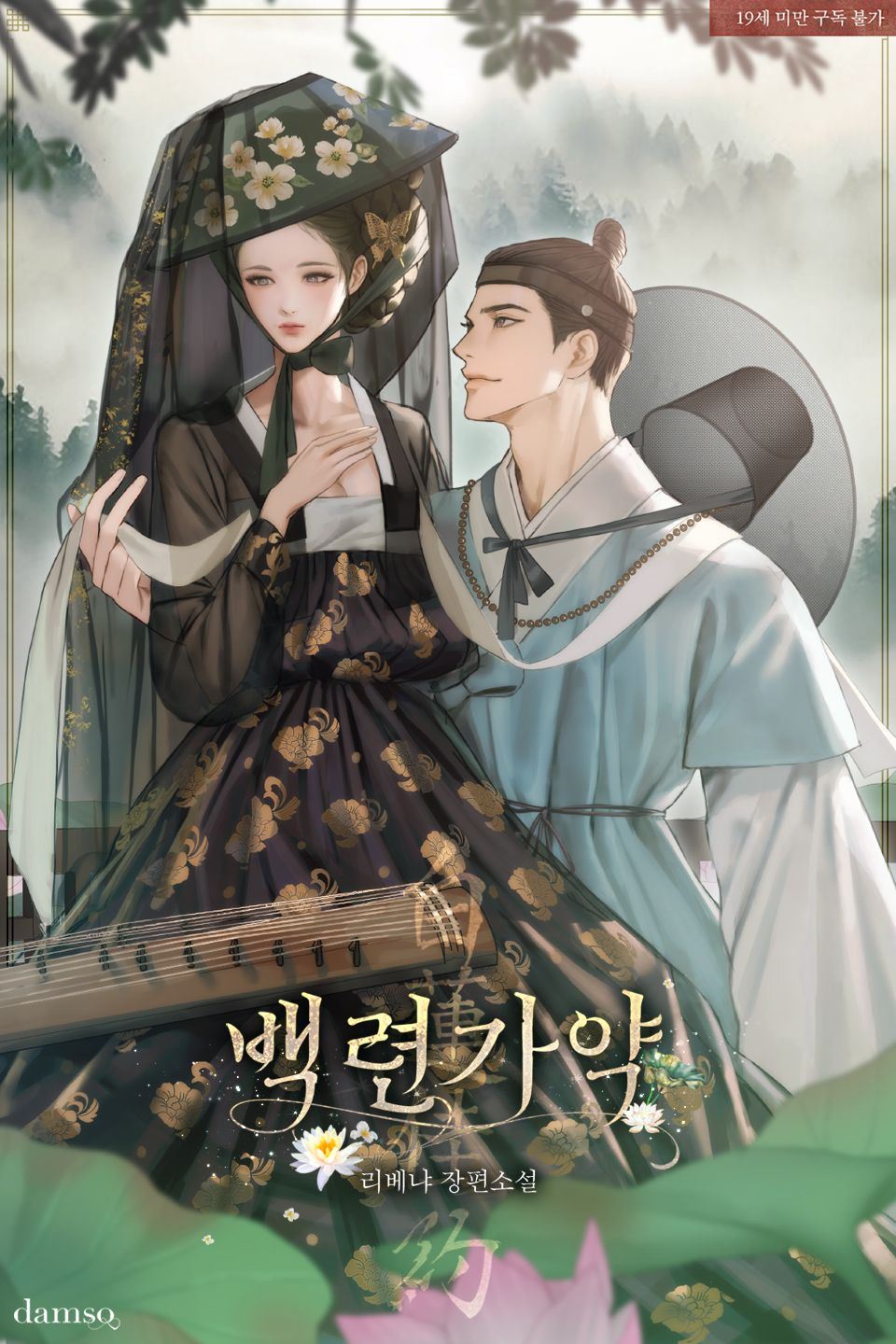
Han Seollyeon is the daughter of Han Sangheon, a noble censor who was executed five years ago on fabricated charges of treason. The conspiracy against her father was orchestrated by a faction of corrupt officials led by Kwon Ikseon, the Minister of War and the King’s father-in-law, and Park Wonchul, the Pyongan Provincial Governor. Seollyeon’s mother committed suicide rather than submit to Governor Park, who had coveted her. Consequently, Seollyeon was stripped of her noble status and sold into the government courtesan registry in Pyongan Province. She lives under the name Nagyeong, enduring humiliation while secretly planning revenge against the men who destroyed her family. Her loyal maid, Meoru, and her mother’s sister have stayed by her side, sharing in her suffering.

The story begins on the fourth day of the fourth month, during the lantern festival. Park Wonchul hosts a banquet to celebrate Nagyeong’s coming-of-age ceremony, intending for himself and six other officials, including Minister Kwon, to defile her in turn. Seollyeon enters the banquet disguised as a submissive courtesan, but beneath her mask lies a woman armed with a silver dagger and a heart full of poison. She has laced the wine with arsenic, intending to kill all seven men and then take her own life. As she serves the poisoned wine, she confronts Kwon Ikseon, who taunts her about her fallen status, unaware of her true identity or her lethal intent. The atmosphere is thick with lust and malice as the men debate who should take her first.

Just as Park Wonchul drags Seollyeon to a side room to violate her, Baek Seungjo bursts into the banquet. Seungjo was once Seollyeon’s betrothed, the son of her father’s close friend, but he betrayed her father by giving false testimony against him to save his own life and advance his career. Five years of silence and resentment have passed between them. Seungjo, now the Chief Royal Secretary, claims he is traveling incognito due to political fatigue. Seeing an opportunity to test Seungjo’s loyalty, Minister Kwon yields Seollyeon to him, expecting Seungjo to join the debauchery. Seungjo takes Seollyeon to the adjacent room, but instead of violating her, he discovers the poison in her wine and the dagger in her stocking. He binds her wrists and forces her to reveal the remaining poison, which she hides in a perfume case bound to her chest.

In the darkness, Seungjo interrogates Seollyeon without revealing that he knows her true identity. He accuses her of attempted murder, and she counters by accusing the interpreter in the room, using the opportunity to deflect suspicion while secretly hoping he will kill her rather than hand her over to her enemies. Seungjo ultimately chooses to protect her, binding her to prevent further suicide attempts and then untying her when dawn breaks. He fabricates a story that they spent the night together, cutting his thumb to leave blood on the bedding to convince any investigators. He returns her hairpin, which she mistakenly believes was a gift from him, though it turns out to belong to another courtesan in Hanyang named Aewol. Seungjo orders her to return to the courtesan house and warns her not to attempt suicide again.

Back at the banquet, Minister Kwon and Governor Park are furious that Seungjo interrupted their plan. Kwon suspects Seungjo’s true motives and decides to use Seollyeon as bait to determine if Seungjo is still loyal to their faction or if he harbors lingering feelings for the traitor’s daughter. Seungjo, aware of the danger, offers to stay in Pyongan Province to recover, effectively trapping himself within the enemies’ territory. He requests Seollyeon as his personal attendant, claiming he feels guilty for treating her poorly. Park Wonchul agrees, seeing it as a chance to keep his prize close. Seollyeon is forced to serve Seungjo, who protects her from further abuse while secretly investigating the conspiracy that ruined her family. The narrative concludes with Seollyeon grappling with the revelation that the hairpin she cherished was not a token of Seungjo’s love, deepening her confusion about his true intentions and her path toward vengeance.

Latest Release
DateGroupRelease
2026-10-03dusk blossoms c42
2026-10-03dusk blossoms c41
2026-10-03dusk blossoms c40
2026-10-03dusk blossoms c39
2026-10-03dusk blossoms c38
2026-10-03dusk blossoms c37
2026-10-03dusk blossoms c36
2026-10-03dusk blossoms c35
2026-10-03dusk blossoms c34
2026-10-03dusk blossoms c33
2026-10-03dusk blossoms c32
2026-10-03dusk blossoms c31

Community Reviews

Rating(0 / 5.0, 38votes)
5 stars
0(0%)
4 stars
0(0%)
3 stars
0(0%)
2 stars
0(0%)
1 stars
0(0%)

Popular reviews

... Read More
The book opens with Nagyeong about to eat scorched rice water—literally the poorest, most desperate food—and she's so humiliated she can't bear for Baek Seungjo to see her eating it. This image repeats throughout the chapter like a motif: food as dignity, eating as vulnerability, the moment when survival strips away pretense. She swallows the croaker she hasn't even finished chewing. She wipes her mouth as though she ate nothing. She's performing normalcy while internally screaming. And then Baek Seungjo FEEDS her tofu—'A piece of steaming tofu came through my lips while I was deep in thought'—and watches her with a smile that says he finds it unbearably endearing. He's reversing the dynamic. She was hiding her poverty from him; now he's deliberately giving her something to eat, watching her accept it without manners, and finding beauty in exactly what she tried to conceal. The mineral spring water errand, the wild ginseng request, the medicinal herbs—all of these revolve around the body, around sickness and healing, around what it costs to maintain appearance when you're falling apart. And Park Wonchul's final assessment of her—that she chose to act as though she and Baek Seungjo were strangers because she'd 'rather die than let the man who abandoned her see how far she had fallen'—this is the thesis statement of the entire novel. Pride as armor. The question is whether that armor will protect her or crush her.
... Read More
Okay so I need to talk about this fortune teller scene because IT'S THE KEY TO EVERYTHING and I'm pretty sure the author dropped it here as a deliberate narrative landmine. "Though the lotus root is severed, the threads inside remain connected." Udan saryeon. Say it once and it echoes through the entire rest of the story. Because looking back? The narration itself says it: "The connection had indeed been severed and then rejoined." It's not foreshadowing—it's basically a chapter heading for their entire relationship arc. What's brilliant about the plot construction here is how the author layers the present shopping trip with the childhood memory of when Seungjo first caught her at the marketplace watching the namsadangpae. Two parallel scenes of him finding her, two versions of the same dynamic—him all rigid propriety on the surface, but his eyes absolutely glued to that tightrope walker. The reader is supposed to connect the dots: this man who scolded her for mingling with "riffraff" was himself transfixed by the same spectacle. He's not as above all this as he pretends. The plot twist nobody's talking about isn't some big reveal—it's the quiet one. He told her he was "lending" her all those jewels. Not buying. LENDING. Which means when he leaves, everything comes back. She's wearing someone else's wealth on her body like a costume. The entire shopping sequence is basically him performing generosity while carefully maintaining the legal fiction that she owns nothing. That's not romance. That's control dressed up as chivalry. And she knows it, which is why her mind is "working itself ragged" throughout the whole day. The narrative structure here—present day shopping intercut with childhood memories—also mirrors how the protagonist processes trauma: not linearly, but in triggered flashes. She sees the confectionery stall, and suddenly she's a child again, remembering her parents. She hears his voice, and she's back on that street being scolded. The plot doesn't move straight ahead; it spirals.
... Read More
Okay, can we just talk about how Seollyeon literally walked into the worst possible room and decided to try to murder someone while half-naked under a silk blanket? The plot twisting here is INSANE. She comes in pretending she doesn't hate Baek Seungjo, and then immediately after arriving in that room, she pulls out ARSENIC. Like, full commitment. Not a warning dose, not a threat—she poured every last bit into the wine because she wanted them ALL dead. But of course, Seungjo is already three steps ahead. The moment he goes "What you put in the wine"—my heart literally stopped. How?! HOW did he know?! And then the explanation: white powder residue on the spilled wine. That is the kind of detail that made me SCREAM at my phone. She's sitting there thinking she's the smartest person in the room and he takes apart her entire plan before she even finishes the sentence. But then—AND THIS IS THE REAL PLOT TWIST—he doesn't hand her over. He doesn't call the guards. He binds her wrists, searches her completely (which sounds one way but isn't), finds the poison, and then... puts it in his own chest. And tucks her under a blanket and goes to SLEEP next to her. What is WRONG with this man. What. Is. He. Doing. I'm convinced Seungjo knew exactly who she was the entire time. He dragged her into the NEXT room—Han Sangheon's daughter, his former fiancée, the woman whose family he betrayed. The irony is so thick I can't breathe. And yet here he is, protecting her from the other men outside instead of turning her in. This is not a straightforward revenge plot anymore. Something is rotting underneath all of this, and I need to know what.
... Read More
I want to talk about stakes because this chapter raises them to a level that is genuinely terrifying. Let's break down the conflict layers, because there are SO MANY: External conflict: Nagyeong vs. Kwon Ikseon and his entire network. These are the men who framed her father, executed him, confiscated their family's status, and sold her into the gisaeng house. They are literally the most powerful people in the province — the Minister of War, the Provincial Governor, military commanders. She is ONE WOMAN with a dagger in her stocking and poison in a wine jug. By all reasonable metrics, she should lose. That's what makes the tension so unbearable. Internal conflict: She has to perform submission while harboring murder. Every smile she gives is a lie. Every cup she pours is a death sentence. The psychological toll of maintaining that dual consciousness is what the text explores most honestly. When Baek Seungjo's name drops and she physically drops the bottle — that's the crack in the armor. The conflict between who she has to BE and who she IS threatens to unravel everything. Moral conflict: She's planned to die. Not just kill her enemies and live with the consequences, but die alongside them. The question hanging over the entire chapter is: is this justice or suicide? She asks it herself — "What use was there in surviving?" That's not a rhetorical question. That's a genuine philosophical crisis, and it makes the stakes infinitely more complex. The secondary stakes with Meoru add emotional urgency. If Nagyeong fails, her loyal maid dies too. Nagyeong knows this. That's why she tries to send Meoru away — not just to protect her, but because Meoru's survival is the one outcome Nagyeong allows herself to want. And the suspense structure is brilliant. The poison is already in the wine. We KNOW what's going to happen. The tension isn't "will she succeed?" — it's "what will happen in the moments before the poison takes effect?" Will she be discovered? Will she lose her nerve? Will someone drink before she can administer the full dose? The author turns anticipation into agony. The military commander Jang Hyo being absent is another pressure point. He's supposed to be there. He's supposed to be part of the plan. His absence means something has gone wrong, or something is about to go wrong, and we have no idea what. That unknown variable is pure suspense fuel. By the end of this chapter, I was sitting there with my heart rate actually elevated. The stakes aren't just high — they're total. Life, death, honor, love, loyalty, revenge — everything is compressed into one night, one room, one poisoned jug of wine. There is no off ramp. There never was.
... Read More
The dialogue in this book is INSANE and I'm obsessed. Every single exchange between Nagyeong and Baek Seungjo operates on at least two levels and usually three. Take this exchange when he asks her to take his arm and she refuses: He says 'Any proper courtesan ought to take a man's arm and liven the mood'—which is表面上 a command from a master to his courtesan. But she responds 'As you yourself said, my lord, I am a lowly servant. How could I dare walk shoulder to shoulder with you?' And boom—she weaponizes his own framing against him. She's technically obeying his earlier declaration that she's just a servant, but she's also pointing out the absurdity of the position he's put her in. He laughs and taps her forehead with his fan saying 'Your tongue certainly never runs dry'—and that's the closest thing to affection he's going to give her in public. Meanwhile, the narration constantly undercuts what the characters are saying. When Park Wonchul asks 'Did that girl behave like a cold fish in bed last night as well?' and Baek Seungjo replies with that perfectly composed 'One night could hardly be enough to change that,' the narrative immediately tells us: she felt stripped bare. The gap between what's spoken and what's felt is where the entire book lives. And Deoksoe? His dialogue is pure comedic relief but also essential exposition delivery—'I was born and raised in this provincial office. Allow me to serve as your guide' while internally panicking because he faked the mineral spring water errand. Master of deflection.
... Read More
There's a moment in these chapters where the narrator simply notes that "the sweet smell that drifted on the breeze made my resolve waver before I knew it, and I turned my head." That's it. That's the whole sentence. And it perfectly captures how this world operates—through sensory intrusion, not logical decision. The marketplace in this novel isn't just a backdrop. It's an active force. The author describes it with this gorgeous physicality: the glistening yakkwa, the bright-hued yugwa, the taffy melting in children's hands, the confectionery stall swarming with people. Every detail is saturated with color and scent and sound. And then Seungjo—who "absolutely despised anything noisy and chaotic"—is dragged through it all, looking "like an ox dragged to the marketplace against its will." The contrast between the vibrant, messy, living market and Seungjo's rigid, ordered, lifeless demeanor is the visual thesis of the entire story. He is order. She is chaos. He is the provincial office. She is the wall she climbs to sneak out. And yet—the market DRAWNS her in the way it draws him in too, despite himself. Remember: his eyes followed the tightrope walker. His stiff scholar's face couldn't hide it. The marketplace got to him even when he tried to resist. What strikes me most is how the author uses clothing as environmental storytelling. The sseugaechima—the silk veil she pulls over her head with Meoru's help. The thin veil of mist-like silk he buys her at the first shop. The way she smooths it and "steals glances at him" while he pretends not to look. Fabric becomes a screen, a barrier, a canvas for everything they can't say out loud. And the jewelry shop! The shop owner who "pounced on the opportunity like a starving beast that had spotted prey after a long winter"—that single simile does more worldbuilding than paragraphs of description. We understand the economy, the social hierarchy, the desperation of artisans serving the elite, all through one man's greed. The world feels ALIVE because everyone in it has hunger.
See all reviews

Custom lists

See all custom Lists