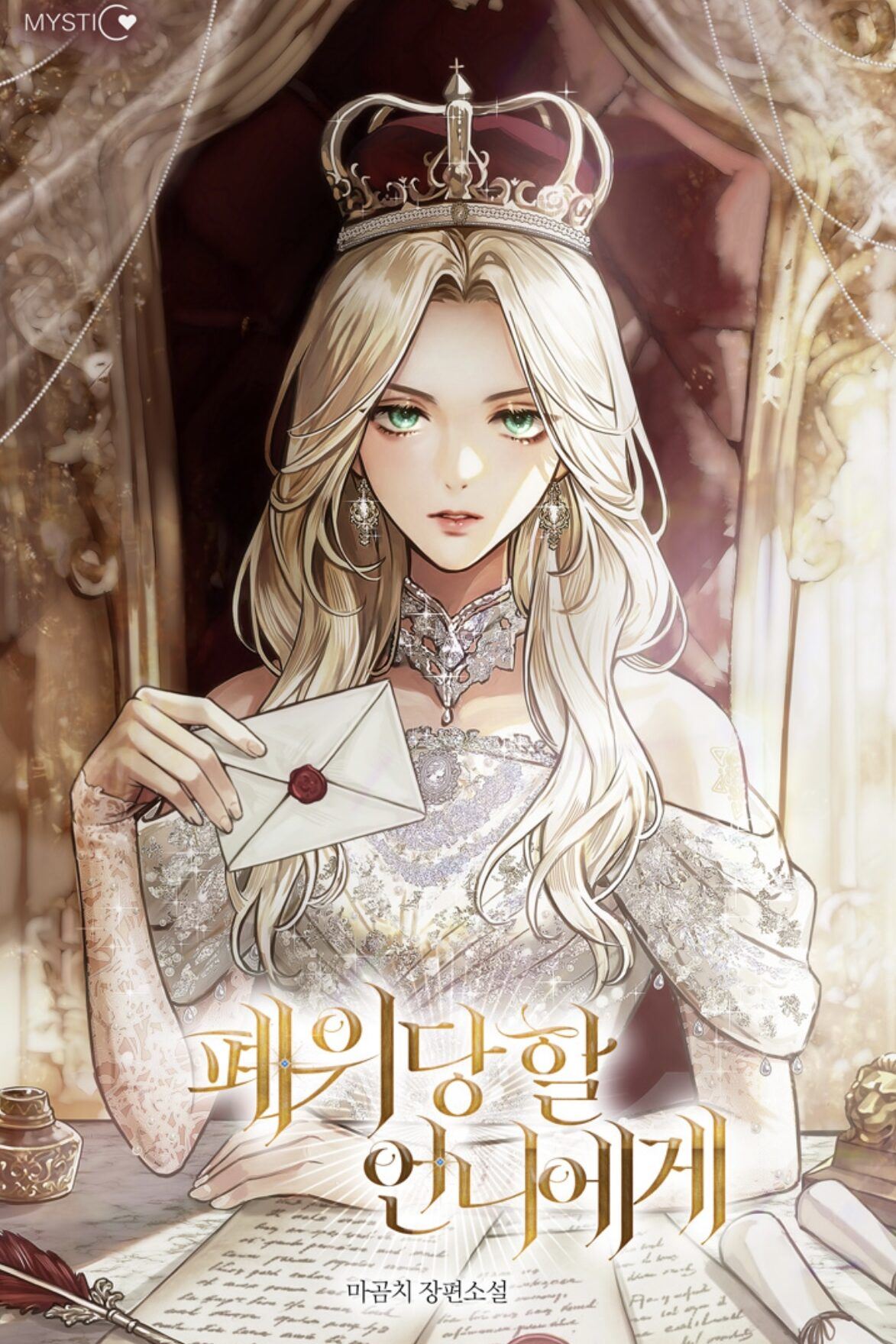
A False Salvation for the Lady
+Add to Custom List
Genres:
Novel Info
  • Author:
  • Status:Ongoing

Summary

... Read More

Cordelia Duquesne, born a countess in the declining Hadrian Empire, lost everything when her family was ruined by a botched coal mine investment. At twenty-four, she married Lucas Duquesne, a charismatic businessman from the New Continent who rescued her from destitution. Five years after leaving him, Cordelia lives in obscurity in a western city, raising their son while checking daily for news of Lucas, whose bounty has grown enormous despite no treason charges. She carries resentment for his deception but prioritizes her child’s safety above all.

The story shifts when Cordelia spots Lucas at her son’s school recital, watching with pride as he recites poetry. He confronts her directly, calling her his wife, revealing he never stopped monitoring her life. This reunion forces Cordelia to confront the reality that Lucas remains a powerful, wanted man whose influence stretches everywhere. Her attempt to escape into a quiet life has been an illusion.

Flashbacks reveal the truth behind their marriage. Cordelia originally followed suspicions planted by Louisa Vanderbilt, a rival socialite, to Lucas’s office on their first wedding anniversary. There, she overheard him and his associates mocking her fallen family. Lucas admitted he orchestrated the bankruptcy of the Hastings estate because he needed a noble wife to legitimize his status, and Cordelia, broken and desperate, was the cheapest option. He viewed her not as a partner but as an acquisition.

Devastated, Cordelia fled the office and later confronted Lucas at home. He showed no remorse, stating he would never let her go because she served his purposes. Cordelia realized that divorcing him was legally impossible and socially dangerous. To protect herself and any future child, she began secretly purchasing birth control pills from an unlicensed medical provider, Caroline Smith, while preparing to leave Lucas entirely.

Cordelia attended a mandatory family dinner at Lucas’s father Richard’s mansion, where the power dynamics of the Duquesne empire were laid bare. Richard, a self-made mobster, welcomed Cordelia with false warmth, eager for a grandchild to secure the family legacy. Lucas openly mocked his rival Randolph and mocked Cordelia’s moral outrage, reminding her she had no dowry to leverage. During the dinner, Alicia, Randolph’s wife, confronted Cordelia, jealous of the favor Cordelia received from Richard. Cordelia agreed to organize Richard’s upcoming birthday banquet, seeing it as a chance to expand her own network independently.

After the dinner, Richard pulled Lucas aside to discuss the ongoing deal: Lucas’s marriage to Cordelia was the final step in securing the noble title Richard craved. Richard reminded Lucas that he had risen from the slums of Hell’s Realm to become the face of the Duquesne empire, and Cordelia was merely the key to unlocking aristocratic legitimacy. Lucas remained coldly ambitious, viewing his wife’s pain as irrelevant to his goals.

Cordelia returned home empty-handed regarding emotional closure but determined in her resolve. She understood that Lucas would never change and that staying meant complicity in his crimes and potential motherhood in a toxic environment. Her plan to flee was no longer just about escape but about survival and reclaiming her autonomy from a man who saw her as a tool. The bounty on Lucas’s head loomed larger as Cordelia prepared to vanish, leaving behind the pink diamond ring and the life built on lies.

The narrative establishes a tense standoff between Cordelia’s quiet resistance and Lucas’s predatory control. While Lucas continues his ruthless ascent in the New Continent business world, Cordelia moves in the shadows, gathering resources and preparing for a night escape. The story explores the contrast between the glittering East Coast high society and the brutal underworld that funded it, with Cordelia caught in the middle, transitioning from a deceived noblewoman to a calculated survivor plotting her freedom.

Latest Release
DateGroupRelease
2026-10-03dusk blossoms c94
2026-10-03dusk blossoms c93
2026-10-03dusk blossoms c92
2026-10-03dusk blossoms c91
2026-10-03dusk blossoms c90
2026-10-03dusk blossoms c89
2026-10-03dusk blossoms c88
2026-10-03dusk blossoms c87
2026-10-03dusk blossoms c86
2026-10-03dusk blossoms c85
2026-10-03dusk blossoms c84
2026-10-03dusk blossoms c83

Community Reviews

Rating(0 / 5.0, 44votes)
5 stars
0(0%)
4 stars
0(0%)
3 stars
0(0%)
2 stars
0(0%)
1 stars
0(0%)

Popular reviews

... Read More
Okay so Alicia is actually such a fascinating character, right? I kept wanting to slap her but also... I get why she is the way she is? Like, she is clearly insecure AF, but then again, look at what she had to work with. She married into this family, gave all her connections to Richard, and still Cordelia comes in and gets ALL the favoritism. That dinner scene when Alicia finally snaps - 'It was me who gave Richard those connections!' - and even SHE knows that is an exaggeration?? The girl is so desperate she is lying to herself. And Cordelia? She actually called Alicia out like 'I apologize if my late arrival disrupted any preparations' - that is SO polite but also like... you can tell the ice in her voice. These two women have this weird dynamic where Alicia hates Cordelia but also kind of relies on her for household stuff. And then Cordelia just agrees to plan the birthday party like 'fine' - I knew she was planning something though, she probably wants to widen the guest list to build her own power base. Classic Cordelia, always playing the long game while pretending to be passive.
... Read More
I literally had to pause after reading about the Morganite earrings because the emotional weight packed into that scene was insane. Cordelia has never liked showing off jewelry. Her wedding ring — that gaudy, deceitful pink diamond Lucas gave her — has been sitting on her finger like a brand. And yet she chooses THESE earrings. Soft, peach-toned, not flashy. Something sincere. "She would rather have something sincere, even if it was less valuable, than that gaudy, deceitful pink diamond he had given her." That single sentence contains an entire emotional history. Every time she looks at those earrings, she's reminded of what she chose instead of Lucas's version of love. Every time Lucas notices them and his mood improves, she's reminded that he sees everything but understands nothing. And then there's the scene with Lucas at Lewis Island. He's standing there looking at immigrants — people who came with nothing, just hope — and he feels nothing but disgust. The narration tells us: "He never wanted to live again as someone yearning for a love destined to fall apart. That's why Lucas would forget everything." Forget everything. That's the tragic core of this whole marriage. Lucas doesn't just want to control Cordelia — he wants to erase the part of himself that once loved her genuinely. He's punishing both of them for a vulnerability he can't survive. The most heartbreaking moment though? When Lucas sees Cordelia's ears turn pink and his expression darkens. He knows she's embarrassed, he knows she's resisting, and instead of comforting her, he takes pleasure in it. That's not a man who wants a wife. That's a man who wants a possession that won't disappoint him.
... Read More
I need to talk about Lucas because WOW. This is one of those characters who is genuinely terrifying and I cannot look away. Let me be clear — I have never wanted to punch a fictional character harder in my entire reading life. The man is polite. He is charming. He has a "devilishly crooked smile" and speaks with wit and charisma. He swept a broken woman off her feet, erased her debts, built her a beautiful home decorated with her homeland's wildflowers. And NONE of it was real. "You were the most pitiful and the cheapest." — That line came out of his mouth completely casually. Not angry, not defensive, just stating it like he was commenting on the weather. The fact that he called her the 'Hadrian Rose' and then reduced it to a stock market metaphor — 'better to buy at rock-bottom value' — is so cruel it made me physically angry. But here's what's genuinely fascinating about him: he's not a cartoon villain. The author gave him nuance. He DID thank Cordelia's former fiancé. He says he's glad he proposed to her. These are twisted, manipulative statements, yes, but they reveal something interesting — Lucas genuinely believes he made a good decision. He's not sadistic about it. He's... satisfied. Like a collector who finally acquired the rarest piece. And Cordelia? Oh god, Cordelia. The way she holds herself together during the confrontation — "Not a single tear in a moment like this" — that's not strength, that's shock. That's twenty-four years of discipline kicking in because her entire identity just got revoked. She was raised as the sole daughter of the Hastings family, educated under strict discipline, taught to be composed. Even as her world burns, she's performing the role of a noblewoman. The dynamic between them is so toxic that it's almost impressive. Every memory she cherishes gets systematically invalidated by his words. The dance invitation. The way he pressed his lips to her hand. "Come to me just as you are, Cordelia. Only you, nothing more." Those weren't promises of love. They were the words of someone securing an asset. I also want to mention the father-in-law — that self-made magnate who craved nobility like it was oxygen. He's not in this scene directly but his influence shapes everything. Lucas needed a title, the FIL needed legitimacy. Cordelia was the bridge between them, and she never even knew she was being sold.
... Read More
This batch is doing something really clever with parallel plotting. On one side you've got Cordelia in her gilded cage, trying to figure out where to hide if she ever needs to escape. On the other side you've got Lucas knee-deep in blood in Hell's Realm, cleaning up messes and thinking about how far he's come. The Grand West initiative keeps coming up like a ticking clock. First it's the radio broadcast Cordelia hears while rubbing her temples. Then it's the invitation to the university gala celebrating the policy's first anniversary. It's not just background — it's a potential exit route she's quietly mapping out in her head. "The more she knew, the better she could prepare." That line hit me hard because it tells you everything about Cordelia's mindset now. She's not passively accepting her situation anymore. She's gathering intelligence like a spy. Meanwhile Lucas is thinking completely different things about the same world. He sees poverty and calls it disgusting. He remembers arriving at Lewis Island as a teenager with nothing but dreams, and now he looks at those same lines of ragged immigrants and feels nothing but revulsion. The tragedy is that he built all this power specifically to never be helpless again — and in doing so, he's become the kind of man who would trap a woman just to prove he has control. The party invitation with "spouses welcome" is the perfect narrative trap. Lucas is essentially dragging Cordelia into his world whether she wants to or not. And she goes anyway, not because she's submitting, but because she sees an opportunity. Smart woman.
... Read More
I need to talk about how the author ratchets up the stakes in these chapters because it is NO JOKE. Let me count what Cordelia has already lost in this arc: her family's fortune, her family's estate, her social standing (debt collectors at the door), her fiancé (the duke), her trust in her husband, and whatever innocent happiness she had about having a child one day. And Lucas? He's not even sweating. 'Nothing has to change, my dear.' The asymmetry of suffering is the whole conflict here. But the external stakes are just as brutal. Lucas is playing a game where a single misstep means financial ruin—or worse. Remember, this is the New Continent where 'bullets moved faster than legislation, and it was always simpler to kill than to debate.' The gun he fired earlier, the blood on Henry's face, the entire scheme built on fraudulent claims and whispered rumors—this is a world where one wrong move gets you buried. Internally, Cordelia is fighting a war between her heart and her survival instinct. She still loves Lucas—that's the tragic core. Every rational thought screams that having a child in this marriage would be 'madness,' but the marital expectations press in from all sides. She's trapped between love and self-preservation with nowhere to run. The悬念 is suffocating in the best way. Lucas thinks he's one step closer to succession. Cordelia is steeling herself for a countermove. And we know from the genre that she WILL find a way—but the question is what price she'll pay, and whether anything of who she was can survive it. The ending of this batch with her heading to the department store feels like the calm before the storm, the moment before she stops being the victim and becomes the strategist. What is she planning? I can't wait to find out.
... Read More
Okay so this entire section is basically the moment where the rug gets yanked out from under Cordelia, and honestly? The pacing is absolutely ruthless. Let me trace the architecture of what happens here because it's genuinely well-crafted. First, we get the confrontation scene—Cordelia discovers the truth about Lucas's involvement in her family's ruin. But here's the thing that makes it work: Lucas doesn't just admit it. He doesn't even seem guilty. He's sitting there, pleasant as can be, like he just remembered to pick up milk. The dialogue exchange where she asks 'What do you plan to do now, Lucas?' and he responds with this casual 'I have no intention of letting you go' is chef's kiss for villain energy. Then the chapter pivots to Lucas's perspective at the billiards club, and this is where the plot gets layered. We learn through William and the other men's reactions that Lucas isn't some mustache-twirling bad guy—he's strategically brilliant, someone who calculated every move. The flashback to his university days, how he forced aristocrats to kneel through sheer force of will, adds crucial backstory that reframes everything. But the real narrative bomb drops at the end when he thinks about Cordelia's reaction and decides to reveal the truth anyway. 'After all, he had already destroyed House Hastings.' This is classic escalation—the stakes just jumped from 'maybe divorce' to 'oh god he's playing 4D chess while she's still trying to process checkmate.' My one question: will Cordelia figure out his endgame before he figures out hers? Because the story is setting up this beautiful cat-and-mouse dynamic, and I am HERE for it.
See all reviews

Custom lists

See all custom Lists