Your Grace, Why Can’t We Get Married? - Reviews

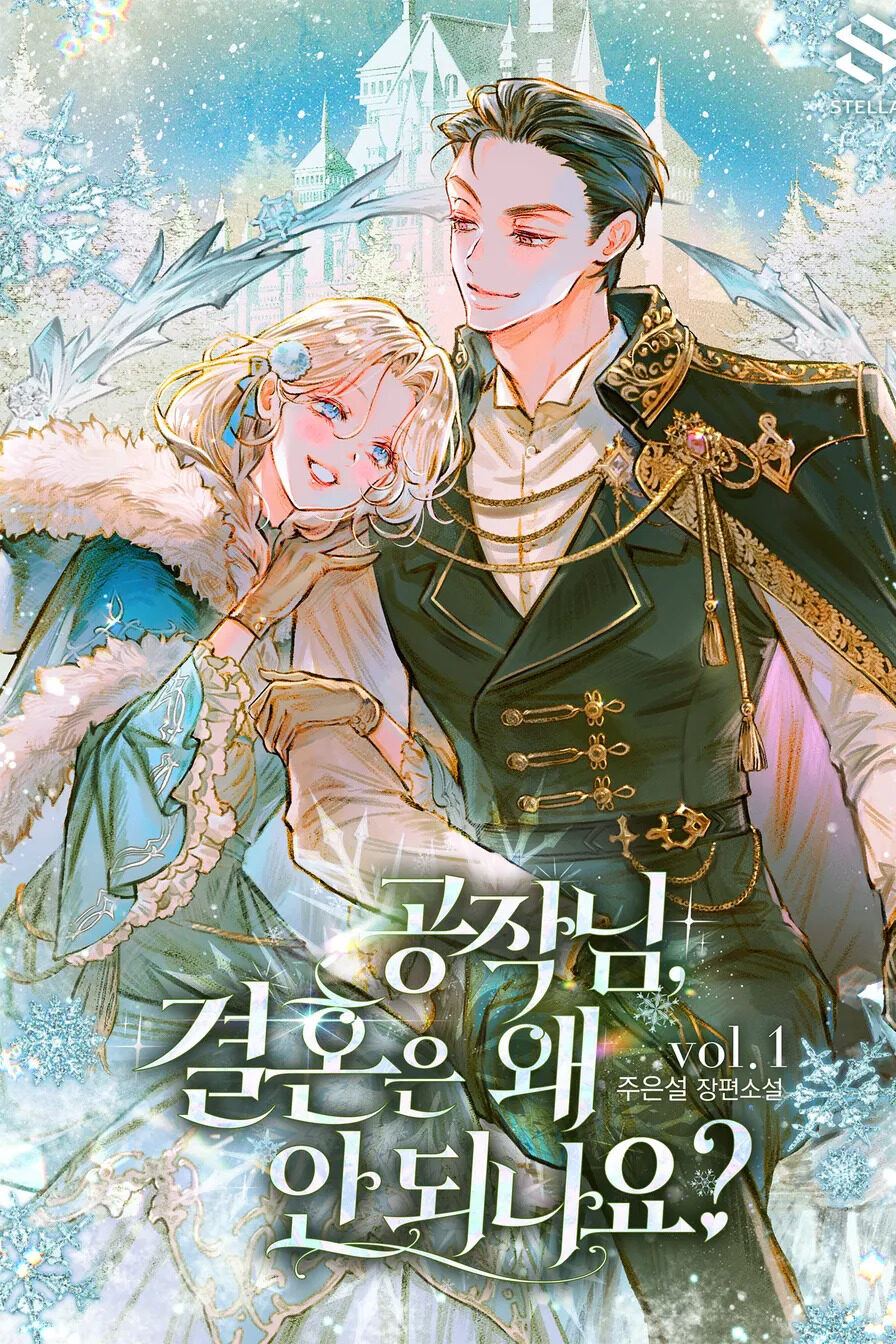
Your Grace, Why Can’t We Get Married?
+Add to Custom List
Sort
Add review
... Read More
"Marriage is impossible. But I will allow you to remain in this castle for the time being." I need to analyze this specific exchange because it perfectly captures the entire dynamic of these two characters in five seconds of dialogue. Astan's voice is all clipped sentences and deflection. He says things like "It's a secret" and "There is no marriage in my life" and when Gloria asks why, he just—doesn't answer. He's like a fortified castle with a single drawbridge that he keeps raising and lowering dramatically. His dialogue has this rough edge to it, but underneath every brusque line there's something else. Like when he says "You'll catch a cold. Get dressed." which sounds like an order but is actually him throwing her a coat. Gloria's voice is the complete opposite—she talks around things, she pleads, she hopes aloud. "Please don't say that. Please think it over again." She's persistent in a way that feels almost dangerous for someone in her position. And yet her dialogue isn't whiny, it's determined. There's a steel thread running through all those "please" statements. Their conversations together are like two people speaking different dialects of the same language. He says one thing, she hears another. He offers ointment and she hears care. She asks if he dislikes her and he hears desperation. The misunderstanding is the whole engine of this story. "You're wearing the same bracelet as Logan. That must be the two of your…" And Astan's explosive reaction to being associated with Logan? "Of all things, what a terrible thing to say." The way dialogue reveals character without the characters realizing it—masterful.
... Read More
Okay can we just talk about how good Logan is at reading Astan?? The guy shows up at dawn with a sword drawn, sees his boss in distress, and instead of panicking he just... calmly asks about the full moon while also dropping absolute truth bombs like 'she was a woman who had nothing to do with you. Not anymore.' CHARGED. I love that their dynamic is basically brotherly banter masking genuine care. Logan calling himself the 'other half' and complaining about wearing an identical bracelet is peak best friend energy. And Astan's internal reaction—'I should never have given that fellow a bracelet'—is hilarious because you CAN'T unsee things once they're pointed out. Also the late night scene where Gloria is tracing patterns in snow? Astan fastening her cloak hook, letting her link arms with him, watching her rub her cheek against his shoulder—that level of physical restraint from a man who clearly wants to reach out but won't? The way everyone around him notices before he does is both sweet and tragic.
... Read More
I need to talk about the stakes because this novel is stacking them like a jenga tower and I am genuinely afraid it's going to fall on everyone. On one side you have Gloria's mystery—what happened to her? Who gave her those whip marks? Was it really a man? Astan asks and she confirms with a nod and his reaction is basically the sweetest toxic traitor energy: "If it was a man, then I can beat him without holding back." I laughed and also sobbed simultaneously. But on Astan's side, there's this looming secret. "That woman does not know my secret." "My curse will end with me." WHAT CURSE. What does that mean. Is it literal? Is it figurative? Is he going to die? Is he dangerous? I've been here since Chapter 7 and I have SO MANY QUESTIONS and the author is just sitting there sipping tea. The internal conflict for both of them is equally brutal. Gloria is terrified he'll reject her now that he's seen her scars. Astan is terrified of dragging someone into whatever curse-plague-curse he's carrying. They're both pushing each other away while simultaneously refusing to let go. And Madame Meriwether drops this line at the end—"He's the sort who won't even make eye contact with someone he dislikes"—which somehow makes it worse because now Gloria is wondering if she's being tolerated or wanted and the reader is screaming. The stakes feel real because everyone has something to lose and nobody is being careless about it.
... Read More
"Astan, who had shouted sharply, suddenly paused and cut himself off. Wait a moment, didn't he just say 'families'?" This line made me choke on my drink. The author's use of dialogue to reveal character without a single narration tag is chef's kiss. Let's talk about Astan's voice first. He's sharp, he's dismissive, but he has this dry wit that slips out when he's most annoyed. "I've heard all kinds of strange things in my life, but this is a first" — that's not just a line, that's a personality. He's the kind of man who would rather fight a monster than have this conversation, and the reader feels every ounce of his reluctant amusement. Gloria's dialogue is where the real magic happens. She speaks with this casual confidence that reads as either incredible boldness or genuine ignorance of social norms. Take this exchange: "Are you married?" "No." "That's a relief. If you've ever been widowed or divorced, please tell me honestly. I don't like learning those things through someone else." She says this with a bright smile. A BRIGHT SMILE. While discussing her prospective husband's marital history as if she's ordering tea. The humor here is so perfectly calibrated — it's funny, but it also reveals that Gloria has already done her homework and is just making sure there are no hidden complications. Logan's dialogue provides great contrast. His lines are physical and reactive — "Eek!" and the description of him falling onto his backside. He exists to be the audience surrogate, the one person reacting to how unhinged this entire situation is. The author also uses formatting brilliantly. Gloria's final line "I'd rather deal with Sikun" comes after a long stretch of direct dialogue between Astan and Gloria, and it hits like a punchline because we finally get Astan's inner voice breaking through. The dialogue-to-narration ratio is so carefully controlled throughout these chapters that every line earns its place.
... Read More
The dialogue in these chapters is doing a lot of heavy lifting, mostly through what people DON'T say. Astan and Gloria's early exchange is surprisingly sharp for two people who clearly don't understand each other yet. Her: "You're not going to do something dangerous, are you?" Him: "What sort of dangerous thing?" Her: "A duel, or a war, or something like that." Him: "Ha. Just how far does this little Miss's imagination reach?" He's deflecting. She's worried. And both of them know it. The joke lands because it's armor. But the real masterclass is in the silence. Logan's response when Gloria asks about Astan—"His Grace is……"—and then Madame Meriwether cutting it off. Colin blocking her at the door. The head maid steering Logan away. Nobody says the word. Nobody confirms what she already suspects. The dialogue here is basically everyone performing normalcy while desperately avoiding the truth. And then Logan finally speaks, and his voice changes completely. No more deflection. No more half-truths. "It's a curse." And then the long explanation about Emperor Adolf, two hundred years of war, poisoned food, flaming arrows, children born as monsters. The shift from casual servant dialogue to this grim historical narration is jarring in the best way. It's like the whole castle was holding its breath and finally exhaled. Gloria's lines are always direct, sometimes frantic, but never vague. "Where is His Grace?" "Please tell me honestly what happened." She doesn't dance around things, which makes her stand out against everyone else who's trying to protect her by lying. The narrative voice itself is interesting too—shifting between external observation and Gloria's inner monologue, sometimes blurring the line. When she's praying "Please. Let him return safely" and then later thinking "And if, by any chance, I don't return…"—those italicized thoughts feel like the author letting us hear the raw version of what the characters can't say out loud.
... Read More
Let me just say it upfront: this entire passage is obsessed with cold. Not as a setting detail — as a theme. The castle is freezing. The soup is icy. The bread is stone-hard. Astan's breath is described as "cold as ice" when he leans in to wipe Gloria's mouth. Even his emotional availability is sub-zero. And yet the central symbolic act of the chapter is him giving away his only source of warmth. It's almost too on-the-nose, and yet it works because the author keeps layering it. The wet firewood Logan stuffed into the fireplace — that's not just comic relief. It's symbolic of Astan's interior state: he has fuel (passion, warmth, capacity for feeling) but it's been doused by past trauma and poor handling. Nothing catches. Everything smokes. Then there's the pink dress. Ten years old. Stored away. Worn by a fiancée whose engagement was broken due to "unavoidable circumstances." Astan immediately thinks Gloria would choose that dress if she didn't know the history. But she doesn't choose it — because Liz finds something else, and then Gloria is caught half-dressed in a slip when he bursts in. The dress that represents his past loss is never offered, never tried on, never completed. It stays in the closet, just like his grief stays locked away. The book titles are also doing heavy lifting here. Gloria is reading "101 Ways to Become a Virtuous Duchess" — a manual for performing womanhood, for being acceptable, for surviving in a world that measures her worth by her compliance. Astan reads "Proper Conduct for a Gentleman" — a manual for performing masculinity, for being in control, for never showing weakness. They're both studying how to be what the world expects, and neither of them is being genuine. Until the coat moment, when Astan stops performing and just acts. And until Gloria decides to stop performing virtue and starts performing strategy. The prophecy — one year left. A ticking clock. This adds another layer: the cold isn't just atmospheric, it's temporal. Winter is coming, and with it, a deadline. The symbolism of cold as mortality, as urgency, as the pressure of finite time — it's all woven through every scene.
... Read More
What I love about the dialogue here is how distinct every character sounds. Logan has this confident, slightly sarcastic edge—'You aren't exactly a very creative man, are you?' and 'Hold on to her' delivered with zero hesitation. He's the truth-teller who gets away with it because he's family-adjacent. Astan's dialogue is all clipped, defensive, full of deflections—'Whether she's upset or not is none of my concern' immediately followed by obviously caring behavior. The contrast between what he says and what he does IS the comedy and the tragedy. Gloria's voice is softer but not weak—'If there's something you want to say, please just say it' is direct when it matters. And Madame Meriwether's gentle exposition about Astan's childhood is warm without being heavy-handed. The author lets dialogue carry subtext without ever making it pretentious. Even the narrative voice has this dry, wry quality that matches Astan's internal monologue perfectly.

Leave a comment

You must be logged in to leave comments. or
