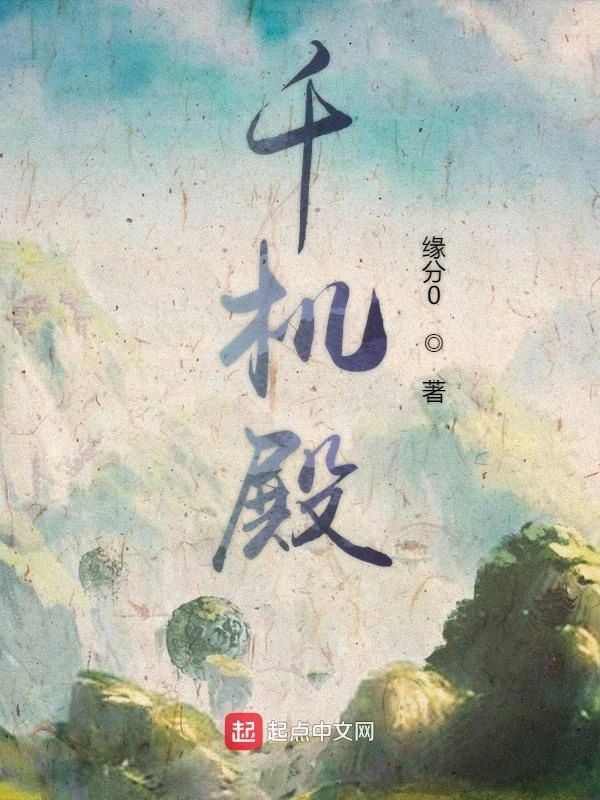
The Hall of a Thousand Schemes
+Add to Custom List
Genres:
Tags:
Novel Info

Summary

... Read More

Ning Ye, a transmigrator from another world who lost his memories, awakens in the Cloud Forest of Ink Province. He is discovered by Qing Lin, a disciple of the declining Heavenly Mystery Sect, while posing as a woodcutter. Over the course of a year, the two form a close friendship centered on wine and conversation. Ning Ye harbors a secret: he carries the Thousand Mysteries Hall, a supreme ancient artifact that grants him immense potential, along with the Kunlun Mirror, a divine item capable of窥探 past events. When Qing Lin returns gravely injured, Ning Ye saves his life rather than killing him to claim thesect's trust, a choice that convinces Xin Ranzi, the sect leader, to accept him as the ninth disciple.

Three years pass, and Ning Ye becomes known for his unorthodox research into restrictions and mechanisms, neglecting his personal cultivation breakthrough. He remains at the Visceral Manifestation Realm despite receiving top-tier resources. Ning Ye utilizes the Kunlun Mirror not for divination, but as a surveillance tool via Moon Shadow Cold Sand, gathering intelligence on his sectmates. His cautious nature stems from a vision he saw one year prior: he foresaw that if he advanced to the Resplendent Wheel Realm, the Heavenly Mystery Sect would face immediate destruction. Believing he could alter fate by staying weak, he refuses to break through, a decision that frustrates his senior brothers, particularly the hot-tempered Zhao Longguang.

The tranquility shatters during the Annual Ancestral Sacrifice Ceremony. Three major powers—the Vast Heaven Sect, the Great Yin Sect, and the Black and White Divine Palace—launch a coordinated assault on the mountain. They are disguised initially as the Demon Sect to frame them, but their true identities are revealed during the battle. The attack is precise and overwhelming, indicating a traitor within the Heavenly Mystery Sect has exposed their vulnerabilities. The mountain protection array fails to activate, and the elders are slaughtered one by one. Xin Ranzi realizes the sect cannot survive and makes a desperate choice.

Xin Ranzi seals Ning Ye, Qing Lin, and his daughter Xin Xiaoye in a secret escape route accessible only by the Heavenly Mystery Staff. He hands the staff and the sect's legacy to Ning Ye, declaring him the new Sect Leader before turning back to face his enemies alone. As they flee through the secret passage, Ning Ye reveals the tragic truth to the bewildered Xin Xiaoye and Qing Lin. The "one life in nine deaths" prophecy Ning Ye saw was not about saving the sect, but about saving three specific individuals. The traitor among them leaked the location of the Thousand Mysteries Hall to the enemy forces. Xin Ranzi, unable to identify the betrayer, could only trust the three people he knew were innocent: his daughter, his loyal senior disciple Qing Lin, and Ning Ye, the artifact's master.

Escaping the burning ruins of their home, the trio emerges into a world where the Heavenly Mystery Sect no longer exists. Ning Ye is now burdened with the responsibility of reviving their fallen clan while hunting the traitor who caused their destruction. The Kunlun Mirror remains his primary tool, but its energy is depleted after the initial crossing between worlds. The story concludes with Ning Ye, Qing Lin, and Xin Xiaoye standing as the last remnants of a glorious lineage, forced to navigate a hostile realm dominated by the sects that orchestrated the massacre. Ning Ye's refusal to cultivate aggressively has left him vulnerable, and he must now balance the pursuit of vengeance with the urgent need to grow strong enough to challenge the powers that erased his home.

Latest Release
DateGroupRelease
2026-10-01dawn translations c180
2026-10-01dawn translations c179
2026-10-01dawn translations c178
2026-10-01dawn translations c177
2026-10-01dawn translations c176
2026-10-01dawn translations c175
2026-10-01dawn translations c174
2026-10-01dawn translations c173
2026-10-01dawn translations c172
2026-10-01dawn translations c171
2026-10-01dawn translations c170
2026-10-01dawn translations c169

Community Reviews

Rating(0 / 5.0, 24votes)
5 stars
0(0%)
4 stars
0(0%)
3 stars
0(0%)
2 stars
0(0%)
1 stars
0(0%)

Popular reviews

... Read More
Okay the fish demon fight was intense but you know what actually raised the stakes for me? The very end. Zhao Longguang just killed this massive demon, won the fight, and then his face CHANGES. 'Get back!' He shoves Xin Xiaoye aside and a splash of black liquid hits the tree behind her — instantly withering it. One drop of that poison could have killed her. Up until that point, the conflict felt manageable. We knew Zhao Longguang was strong, we knew the demon was dangerous, but the fight itself played out like a demonstration of skill. Then THAT moment. The poison. The sudden realization that even after winning, there was still something lurking. And he protected his junior sister without even thinking about it. What's fascinating is how the stakes operate on two levels. On the surface, it's a sect vs. demon conflict — clear, simple, visceral. But underneath, there's this constant tension about what Ning Ye is now part of. He just joined the Heavenly Mystery Sect. He's the Ninth Disciple with a sacred treasure. How long before someone decides HE is the threat? Qing Lin left a wound that hasn't fully healed. The world Ning Ye entered isn't safe, and the book keeps reminding me of that in the smallest details — a hissing snake, a withered tree, a poison that kills without warning. Every victory in this story comes with a shadow. And that's exactly what makes me want to keep reading. Because I need to know: what happens when the next poison splash isn't aimed at someone else, but at Ning Ye himself?
... Read More
Let me just say this scene description: 'Yellow sand blended with fresh blood, and wails harmonized with the cries of slaughter.' That is CINEMATIC. I could literally see this in my head like a wide-angle shot—red dust in the air, bodies falling, the whole valley turned into this apocalyptic color palette of yellow and red. The author didn't just describe a battle, they described a mood. And then theUndead Soldiers themselves are such a cool concept. They're not the fast terrifying kind—the text says 'the real Undead Soldiers were few in number and sluggish in their movements,' which is why a hundred thousand seekers haven't been wiped out yet. But the ILLUSIONARY ones? Those are the dangerous ones. Ning Ye has to distinguish between real and fake, and the text shows this beautifully: 'Three Undead Soldiers rushed toward him, but he ignored them completely and passed straight through. All three were illusions.' He walks through phantom soldiers like they're nothing while the real danger cuts him from behind. The most haunting visual though? When the sun sets and everything stops. 'With a Whoosh!, the phantom soldiers dissipated into dust and smoke, while even the physical undead soldiers collapsed into piles of bones.' This sudden silence after all that chaos—no more wind, no more sand, just bones. It's almost peaceful. And then the cheers erupt. The contrast between dead silence and sudden joy is Chef's kiss. Also the detail about the magic formation providing infinite mana? That's worldbuilding genius because it changes the whole dynamic of the fight. These seekers aren't limited by their own energy—they're limited by skill and courage. It makes the battlefield feel different from your typical cultivation trial.
... Read More
This batch does something I really appreciate — it starts almost COMEDIC and ends on pure dread. We open with Ning Ye cheerfully explaining his world-shattering assassination technique to senior brothers who are alternately amused and exasperated. Then there's the whole slapstick bit with Xin Xiaoye chasing Ning Ye through the sect after he covered her in rainbow fart, a Fragrant Dust Pig snorting indignantly, Lin Yufeng admiring himself in a mirror — it's light, it's fun, it's everyday sect life. The reader settles in. You think this is just a slice-of-life cultivation comedy. Then Ning Ye sneaks out at NIGHT with blue sand. The mood shifts immediately. The Kunlun Mirror reveal — peering into his senior brothers' private moments, the master catching him and slapping his head, the tension between orthodox and unorthodox approaches — suddenly we're in spy thriller territory. The comedy evaporates. Ning Ye's internal monologue about how cultivators' thinking is too rigid, how he'll never explain himself to them — that's isolation creeping in. And then the Ancestral Sacrifice Ceremony. The bells toll. The mist curls. Everything feels solemn and ceremonial. But Ning Ye is frowning, calculating, feeling a BAD FEELING that grows STRONGER. He shouts about the rod. The master ignores him. The rod flies up, tumbles — and it does not hit... The chapter literally cuts off mid-sentence. THE ROD DID NOT HIT. What does that mean? What was supposed to happen? Is it a disaster or salvation? I immediately opened the next chapter. The structural brilliance here is that the author uses genre WHIPLASH as a pacing tool. Comedy → intrigue → dread → cliffhanger, all within the same batch. Each tonal shift is earned, not jarring. The ceremony scene especially masters slow-build tension — the ritual proceeds normally while one character's anxiety climbs like a thermometer.
... Read More
There's a theme running through this entire passage that I think deserves attention, and it's about the danger of underestimating people based on how they appear. The hunchbacked old man is the literal embodiment of this. He presents himself as a harmless, frightened mortal—a nobody who apologizes and kowtows. But his hump hides a swarm of demonic bees, and his feigned weakness is a trap. The sect members initially dismiss him because he looks like an ordinary old man. Even Zhao Longguang, the strongest among them, doesn't suspect anything until it's almost too late. But Ning Ye—the 'weakest' at Visceral Manifestation Peak—sees through it immediately. And here's the beautiful inversion: the story keeps telling us Ning Ye is the least powerful disciple, the apprentice-level one whom everyone needs to protect. Yet he's also the smartest, the most prepared, and the one who delivers the killing blow. The old man's own words validate this: 'Not even at the Resplendent Wheel Realm, yet you dare to provoke me. It's the same as handing me a weakness.' He reduces Ning Ye to a symbol of fragility, and that assumption costs him his life. I also can't ignore the symbolism of the poison pill Shan Rou extracts from the snake. It's literally a condensed essence of a demonic creature—something dangerous taken from the very thing that threatens them and repurposed as a weapon. Ning Ye uses it preemptively, not in direct combat but through deception. The story seems to be saying: power isn't just about brute strength or cultivation realms. It's about perception, preparation, and understanding your opponent's assumptions better than they understand themselves. And then there's the Fragrant Dust Pig, which I can't help but read as a symbol of Ning Ye's entire approach to conflict—absurd on the surface, unexpected, and completely disarming. Sometimes the best way to undermine someone's grand threat is to make them look ridiculous.
... Read More
There's a line that's been stuck in my head since I read it: 'I do not know others, and I do not even know myself.' Ning Ye says this to Xin Ranzi and it hit me like a truck. Because really, what is he saying? He's being asked a hypothetical — would you have revealed the Hall otherwise? — and instead of giving a confident answer, he admits he doesn't know. That's rare in fiction. Most protagonists would immediately say 'yes, I would have' or 'no, I wouldn't' and the story would move on. But Ning Ye just... stops. He sits with the uncertainty. And then there's the Kunlun Mirror. Of course there is. The Heaven Inquiry Art — a technique of divination, supposedly able to know past and future. But the text explicitly says it can't reveal everything, 'otherwise the ancient Heavenly Mystery Sect would not have met its destruction.' There's a whole philosophy hidden in that one line: knowing everything doesn't save you. In fact, maybe it destroys you. The mirror chose Ning Ye, not because he's the smartest or the most powerful, but because of something else entirely. What is the Heavenly Mystery Sect actually hunting for here? A restored sect? A powerful art? Or is there something deeper — a question about fate versus choice that the whole story keeps circling around? The mirror reflects, the art inquires, but Ning Ye's answer to Xin Ranzi suggests that maybe the most important thing isn't knowing the future, but choosing who you are in the present. I need to keep reading to see if this thread pays off.
... Read More
Let me just say this book doesn't apologize for its pacing choices and honestly I respect it. You've got this huge emotional beat — Ning Ye spares Qing Lin, tends to him for seven days, Qing Lin disappears, comes back — and then the text just says: Time flew by, and in the blink of an eye, three years had passed. THREE YEARS. In one sentence. And somehow it works. Because the story had just done what it needed to do. Ning Ye had proven himself to Xin Ranzi, gotten accepted, and the narrative was moving into a new chapter. So instead of padding out those three years with filler, the author just... skips ahead. Bold move. I won't lie, sometimes skipping time makes me anxious — what if I missed something? — but here it felt right, like the story was breathing. Then we land in Yanhua Marsh and the pacing flips again. We go from this quiet, reflective moment into this fast, chaotic battle scene. Zhao Longguang one-hitting the fish demon, then the snake appearing out of nowhere, then the sword light cutting it in half — it's all happening so fast your head's spinning. The author uses short, punchy sentences during the fight and then suddenly slows down with descriptive passages. That push-and-pull rhythm is what kept me turning pages. Not every chapter needs to be a whirlwind. Sometimes the quiet parts are the ones that make the action hit harder.
See all reviews

Custom lists

See all custom Lists