Summary

... Read More
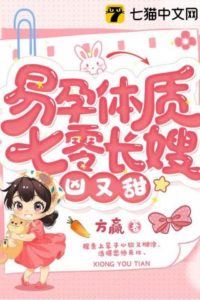
Chen Jiao, a survivor of the apocalypse who died in a final explosion to protect her supplies, awakens in the body of a woman with the same name in a historical famine era. The original owner was known for her vicious personality, having abused her mother-in-law Wu Guilan and her twin children, Lu Lingyang and Lu Yaling. She also squandered the family's resources on Chen Haoyu, a manipulative educated youth, and his friend Zhang Fangfang. Upon regaining consciousness, Chen Jiao discovers she has retained her wood-type abilities and a spatial dimension containing food, water, and supplies from her previous life. She immediately begins to reform her image, cooking nutritious meals for her family and attempting to build trust with the terrified mother-in-law and her suspicious son. Lu Lingyang, a four-year-old boy with the ability to hear Chen Jiao's inner thoughts, remains deeply hostile toward her. He believes her sudden kindness is a ploy to fatten the children up before selling them to Chen Haoyu, who desires a luxury watch. Chen Jiao, aware of his suspicions through her own internal monologue, decides to prove her sincerity through actions rather than words. She confronts Chen Haoyu and Zhang Fangfang in public, exposing their exploitation of the original owner by producing handwritten IOUs that Chen Haoyu had foolishly written to appear noble. The village women, incensed by the educated youth's greed, force the couple to repay the debts within three days. The family's situation shifts dramatically when a military vehicle arrives, bringing news that Chen Jiao's husband, Lu Zhengxu, has returned from a mission in a vegetative state after sustaining severe head injuries. The military provides the family with three thousand yuan in savings, five hundred yuan from comrades, and a monthly allowance, securing their financial future. Chen Jiao decides to stay and care for Lu Zhengxu, hoping to use her medical knowledge and spiritual energy to heal him. Her in-laws, particularly the third uncle, attempt to shirk their responsibilities, claiming poverty, but the second uncle and the village leader support Chen Jiao. As she settles into her new role, Chen Jiao plans to prepare for the upcoming college entrance examination, aiming to build a stable and independent life for herself and the children, while navigating the complex dynamics of her new family and the lingering distrust of her stepson.
Latest Release
DateGroupRelease
2026-08-11shanghai fantasy c75
2026-08-11shanghai fantasy c74
2026-08-11shanghai fantasy c73
2026-08-11shanghai fantasy c72
2026-08-11shanghai fantasy c71
2026-08-11shanghai fantasy c70
2026-08-11shanghai fantasy c69
2026-08-11shanghai fantasy c68
2026-08-11shanghai fantasy c67
2026-08-11shanghai fantasy c66
2026-08-11shanghai fantasy c65
2026-08-11shanghai fantasy c64

Community Reviews

Rating(3.9 / 5.0, 18votes)
5 stars
4(22%)
4 stars
8(44%)
3 stars
6(33%)
2 stars
0(0%)
1 stars
0(0%)

Popular reviews

... Read More
Can we just talk about Lu Lingyang for a second because this kid has more personality in two lines than most characters get in twenty chapters? The author gives him this one line — 'Has this woman really changed for the better or is she plotting something?' — and suddenly you're obsessed. He's a little boy and he's already running conspiracy theories about his stepmother. The scene where he stands in front of his sister blocking her from going to the city because 'This evil woman is still intent on doing evil. She just wants to take my sister into the city and sell her!' I literally laughed out loud. The narrative voice even comments 'If this little guy were a cat, I'm afraid all the hair on his body would stand up at this moment.' That's not just dialogue, that's the narrator having fun with us. And Wu Guilan's voice is so distinct — 'Women need to have more flesh. More flesh makes you look rich and brings good luck to your husband.' This is a completely different generation of thinking, and the dialogue makes it feel authentic, not preachy. Chen Jiao's line 'I will still give you some energy to express my apology. When you wake up, don't say that I bullied you!' while massaging her unconscious husband — the internal monologue mixed with spoken dialogue is brilliant. She's talking to a comatose man like he's a roommate she owes money to. The humor comes from the situation, not from jokes. Even Ma Cuilian gets a voice — 'The leaves don't turn yellow in one day, and people's hearts don't turn cold in one day.' That's the kind of line that makes you pause and appreciate the writing.
... Read More
'It is the time when the autumn heat is showing its full force. It is so hot that you will sweat even if you lie still.' This single sentence does so much work. It's not just setting the temperature — it's creating a physical atmosphere that mirrors the emotional suffocation of the scene. Everyone is trapped in this house, this moment, this disaster, and the heat makes it worse. You can feel the sweat, the stickiness, the discomfort of lying in bed unable to move while people argue around you. The detail about electricity arriving in Dajiang Village 'this year' but no money to buy a fan because industrial tickets are required — this is worldbuilding through absence. We're not being told everything about the era, we're getting it in fragments: the scarcity, the bureaucracy, the way even basic comfort is out of reach. It's the kind of detail that makes you believe in the world without needing a single exposition paragraph. I also love the domestic choreography of the wiping scene. Wu Guilan can't bring herself to help with the private area, so she excuses herself with the children. Chen Jiao is left alone with Zhengxu, blushing, gathering courage, twisting a handkerchief. The author handles this with such matter-of-fact tenderness — it's not sexualized, it's just human. A woman caring for a man she's not close to, in the most practical way possible. The kitchen scene where Chen Jiao is beating rice and Wu Guilan is watching her with a pained expression — that image of two women in a dim kitchen, one who's used to plenty and one who's always been short, both trying to figure out how to feed a family that's falling apart, is almost cinematic. The yard with chickens being fed, vegetables being cut — these small domestic details ground the bigger drama. This isn't a story that takes place in a vacuum. It's happening in a real village, with real constraints, and the worldbuilding makes every conflict feel heavier because we understand exactly what's at stake. No fan. No money. No easy way out.

... Read More
The stakes in this section operate on at least five different levels, and the author is playing them all simultaneously like a pianist with all ten fingers. Level one: Will Zhengxu wake up? Chen Jiao discovers the blood clot, tests her powers, and gets a disappointing result — only a few tiny pieces break off. The stakes here are life and death, consciousness and coma, a son and a husband coming home to a family that may never get him back. But the author undercuts the urgency by having Chen Jiao think: 'Fortunately, his supernatural powers were discounted, otherwise Lu Zhengxu had not woken up after being treated in the military hospital for such a long time, and he woke up as soon as he was sent back, which would inevitably arouse suspicion.' So the weakened powers are almost a narrative safety valve — they prevent the story from resolving too quickly while also raising the question of whether Chen Jiao will ever be able to do enough. Level two: Will the family survive financially? Three thousand yuan saved, yes, but the text reminds us that 'paying doctors and taking medicine is a bottomless pit.' Wu Guilan's internal calculation about saving the meat for tomorrow — that's the sound of a woman doing math on survival. Level three: Will Chen Jiao's past catch up with her? Second Uncle Lu explicitly warns Wu Guilan: 'Don't let it end up like what happened four years ago.' The money was given away. The educated youth were pleased. The family suffered. And now Chen Jiao is in control again, and the family is suspicious. The past is a ghost that won't stop haunting the present. Level four: Will Lu Lingyang's suspicion destroy whatever fragile trust is building between him and Chen Jiao? He can read her thoughts. He thinks she's planning something bad. Every interaction between them is charged with this dramatic irony — he's defending his father from the one person who might actually save him. Level five: What happens if the village finds out Zhengxu is a 'living dead'? The text opens with the news spreading quickly. In a rural community where labor is everything, having someone who can't work and can't contribute is a social death sentence. The stigma is real and immediate. The tension here isn't built through action sequences or cliffhangers — it's built through the accumulation of threats. Every character is standing on a fault line, and the author keeps adding weight. I'm not sure what explodes first, but I know it's going to be devastating.
... Read More
The dialogue in this section is genuinely funny and sharp. Chen Jiao has this incredible ability to destroy people with a smile. Her comeback to Su Ling on the tractor is perfection: 'Yes, my tonnage is indeed a bit large. But unlike Su Zhiqing, who was as thin as a bamboo pole, he didn't need to take a car at all. All he needed was a gust of wind and Su Zhiqing could take off and soar up to 90,000 miles.' I literally laughed out loud. That's not just a insult — that's creative, witty, and delivered with a smile. And then she goes full predator mode on the aunts. The way she asks about their family members' health conditions with this fake sweetness — 'Aunt Zhu, I remember your youngest son's brain is not working well, right?' — she's weaponizing their own gossip against them. The narrative voice is also doing a lot of work here. The internal monologue where Chen Jiao complains about the original owner's brain being 'kicked by a donkey' is hilarious. And the comparison to Wang Baochuan digging wild vegetables for her husband — that's a cultural reference that lands perfectly for Chinese readers. Even the side characters have distinct voices. Wu Guilan sounds like a worried but well-meaning mother-in-law. The aunts sound like exactly the kind of nosy rural women who think they have a right to discuss someone's husband's medical condition. Su Ling has this awkward honesty that makes her feel real. The author isn't just writing dialogue — they're writing CHARACTER through dialogue.
... Read More
Okay so I need to talk about this one scene because it literally stopped me in my tracks. Wu Guilan sitting on a tree stump by the stove eating this black sludge from the rice jar. The author doesn't even need to describe much — just 'the grain powder in the rice jar whose raw materials could not be identified.' That's it. That one phrase tells you everything about the poverty in this setting. You can practically smell the smoke, feel the cold kitchen, see that stained mouth being wiped away in shame. And then the kids appear at the door saying 'Grandma, if you don't want to eat, we won't eat either' — Nannan saying 'Nannan also eats black porridge with grandma.' My heart actually cracked a little. This is 1970s rural China and the author makes you FEEL the era without dumping exposition on you. Later when Chen Jiao wants to buy an electric fan, Wu Guilan's reaction is everything — she's never even thought about owning one. These small worldbuilding details are so much better than pages of historical context. The house itself — three rooms, blue bricks and tiles (a sign they had some money back when Zhengxu returned four years ago), the sleeping arrangements problem — all of this paints a vivid picture of a family trying to hold things together. The scene where Chen Jiao is massaging Zhengxu and the morning light is 'gradually turning light from the previous dusk' — you can feel the passage of time, the exhaustion, the quiet intimacy of that moment. This author knows how to use setting as emotional shorthand.
... Read More
Okay so this section is where the plot really starts to separate the wheat from the chaff, and honestly it's brutal. Uncle Lu's confrontation with his brother Lu Liming over who's going to take care of Zhengxu — that whole scene is a masterclass in how family loyalty dissolves the moment it becomes inconvenient. The way Lu Wensong just walks out, saying 'If there's none, then there's none. Who cares?' — that's not just cold, that's a line that the whole family dynamic won't recover from. But what really hooked me is Chen Jiao's move. She doesn't fight for the family's help. She does the opposite — she volunteers to stay home and not work, which sounds generous but is actually a power play. She's securing her position, controlling the narrative, and proving she's not going anywhere. Meanwhile, she's secretly probing Zhengxu's brain with supernatural energy and discovering that blood clot. That's two plot threads running in parallel — the external family drama and the internal mystery of whether she can actually save him. The author also drops this bombshell about four years ago: Wu Guilan gave Chen Jiao all the money Zhengxu brought home, and Chen Jiao spent it on educated youth. That's a massive revelation that reframes everything. It explains why the family is so suspicious of her now. The past is coming back to bite. I'm also fascinated by the subplot with Lu Lingyang reading Chen Jiao's mind. He thinks she's up to something sinister, but we know she's actually trying to heal him. That dramatic irony is delicious — every time he glares at her, the reader wants to scream 'Just let her help!' The pacing here is tight. Family conflict, supernatural discovery, financial tension, child's suspicion — it's all layered together without feeling overcrowded. The only thing I'd question is whether the supernatural power being 'discounted' is a smart narrative choice or a convenient excuse. If she can barely affect the blood clot, what's the actual stakes of using her powers? The author seems to be building toward a moment where Chen Jiao has to push past her limits, and I'm here for it.
See all reviews

Characters

See all characters

Custom lists

See all custom Lists