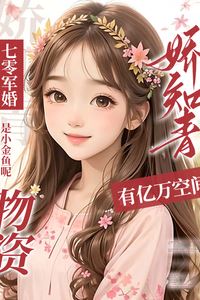
“70s Military Marriage: The Delicate Educated Youth Has Billions in Spatial Resources”
Novel Info

Summary

... Read More

In 2055, a sudden aurora triggers a global apocalypse filled with zombies and chaos. On the third day, ordinary office worker Wen Xiaoxi awakens with a unique spatial ability that grants her unlimited storage capacity and teleportation, though she is limited to only four round-trip teleports per year. Recognizing the critical importance of supplies for survival, she prioritizes stockpiling resources over helping others. Using a search engine, she identifies the Nanbeiwan No.1 Warehouse Supermarket as the largest retail facility in the world, spanning millions of square meters with vast quantities of goods. To execute her plan without identification, she dons an Ultraman costume and teleports to the supermarket in the United States. She successfully transfers the entire inventory, including food, machinery, and vehicles, into her spatial dimension before disappearing. She repeats this process by teleporting to a massive livestock farm in Australia, collecting thousands of animals, fresh water from a lake, and feed, ensuring she has a sustainable food source. She also raids a gem trading market in a small country rich in minerals, gathering hundreds of warehouses filled with diamonds, jade, and gold. Her final major haul includes a luxurious ten-thousand-square-meter manor villa. With her space now containing a supermarket, a pasture, a lake, and a mansion, she prepares to wait out the apocalypse in comfort.

While enjoying a glass of expensive wine under the moonlight, Wen Xiaoxi is struck by lightning and dies instantly. She awakens in a new body in a parallel historical setting, specifically in the year 1975 in a rural Chinese village. She discovers she has transmigrated into the body of a cannon fodder character from a novel titled "A Spoiled Young Intellectual Goes Down to the Countryside in the Seventies." The original owner of the body was a shallow, love-obsessed girl who died after being humiliated by the novel's male lead and female lead. The original character had jumped into a river in a fit of despair and developed a high fever, leaving her near death. Wen Xiaoxi realizes her spatial ability survived the transmigration, providing her with an immense advantage in this resource-scarce era. She immediately uses medicine from her space to cure her fever and begins to assess her situation. She learns that her reputation is ruined due to rumors that she tried to steal the male lead from the female lead. Determined to survive and live comfortably, she decides to rewrite her fate by shedding her previous foolish persona.

Wen Xiaoxi confronts the original novel's main characters, including the arrogant male lead Han Wen and his cold female lead Ouyang Qing. When they visit her under the guise of concern, she openly mocks them and slaps Han Wen multiple times, publicly repaying a past favor and severing ties with him. This shocking behavior earns her a reputation for being insane, which she uses as a shield to deter further harassment. She also physically disciplines Chen Yuan, a petty rival who had bullied her in the original story, establishing herself as someone not to be trifled with. To protect herself from village ruffians and gossip, she seeks a husband. She identifies Song Chengchuan, a tall, handsome, and stoic soldier who is the brother of the girl who saved her from the river. Song Chengchuan is under pressure from his mother to marry, but he refuses because his dangerous military missions make him fear for a wife's safety. Wen Xiaoxi approaches him with a proposal for a negotiated marriage. She offers to be his wife in name only, promising to care for his mother and sister while he is away, in exchange for his protection and a stable social status.

Song Chengchuan initially dismisses her as unstable but reads her letter carefully. He recognizes the practical benefits of her proposal, particularly her willingness to support his family. He agrees to the arrangement, though he remains reserved and cold in his interactions. Wen Xiaoxi moves forward with the plan, using her space to provide food and gifts to win over Song Chengchuan's younger sister, Song Jiaojiao. She also uses her resources to improve her standing in the village, giving brown sugar to the village chief's wife to mitigate negative rumors. As she integrates into this new life, she balances her duties as a sent-down intellectual with her secret life of luxury within her spatial dimension. She enjoys modern food, exercises, and maintains her health while navigating the complex social dynamics of the 1970s countryside. The story follows her efforts to build a secure future with Song Chengchuan, using her apocalyptic supplies to thrive in a historical setting where such resources are virtually nonexistent.

Latest Release
DateGroupRelease
2026-08-11shanghai fantasy c4
2026-08-11shanghai fantasy c3
2026-08-11shanghai fantasy c2
2026-08-11shanghai fantasy c1

Community Reviews

Rating(4.5 / 5.0, 4votes)
5 stars
2(50%)
4 stars
2(50%)
3 stars
0(0%)
2 stars
0(0%)
1 stars
0(0%)

Popular reviews

... Read More
Okay so let's talk about Song Chengchuan for a sec because this guy is genuinely one of the most interesting male leads I've read in a while. On the surface he's the classic overbearing protector type — shows up, grabs Han Wen's arm, throws two perfect punches, and suddenly everyone's life is fixed. Classic. But then the author immediately undercuts that cool moment by having him shyly hand her a handmade cloth doll that looks like a dog and saying his sister made it. And the doll literally has uneven ears and squinting eyes. And he's EMBARRASSED about it. The contrast between the action hero who freezes a fist one centimeter from someone's face and this guy who can't even explain a craft project without rubbing his forehead is hilarious and also deeply endearing. It tells you everything about who he is — he's tough but not arrogant, protective but not controlling, and he actually cares about social niceties like gift reciprocity. The line "Jiaojiao said that gifts should be reciprocated" is such a casual way to introduce a whole subplot about his sister's feelings. He's not just a weapon with a face, he's a person who carries his family's emotional labor in his pockets. And then there's the hair clips. Green ones. "Their green color made them slightly tricky to wear." Wen Xiaoxi internally sighs at the sibling gift-giving talents of the Cheng family but says thank you anyway. This small moment of mutual performance — both pretending the gifts are more amazing than they are — is actually the most realistic romantic beat in the entire chapter. They're not lovey-dovey, they're not even particularly intimate yet, but there's this quiet understanding that they're trying. That's the foundation, not the punches.
... Read More
I need to talk about the cloth doll. The absolutely ridiculous, lopsided, goldfish-faced, dog-looking cloth doll that Jiaojiao made. Because this is the moment that got me. Not the nunchaku fight. Not the feces warfare. The doll. Wen Xiaoxi has a storage space filled with "countless delicate and expensive dolls." She could have any doll in the world. And she chooses to like THIS one. She pinches its ear and says thank you. She calls it cute even though it looks nothing like her. The text literally says: "No matter how she looked at the doll, it looked like a dog—how could it be her?" And she still smiles and says it's kind of cute. That is such a specific kind of tenderness. It's not about the object, it's about the fact that someone made it for her. That her future sister-in-law cried and insisted Song Chengchuan bring it. That this boy who just beat someone up with two punches is now standing there awkwardly explaining why the doll's ears aren't actually dog ears. The whole scene is built on this quiet, unspoken thing between them — they don't need grand declarations or dramatic confessions. They need to exchange handmade crafts and green hair clips and call it a day. "I hope you like it." That's it. That's the entire romantic confession. And she does like it. Not because it's beautiful, but because it's theirs. I genuinely felt something in my chest reading this. The author doesn't overplay it, doesn't add music or dramatic lighting, just lets two people stand in a backyard and exchange objects that mean everything because of what they represent. That's how you write romance that actually lands.
... Read More
The pacing in these chapters is genuinely masterful and I don't say that lightly. Let me walk through why. Chapter 21 opens with an action sequence — nunchaku, fist frozen at one centimeter, the whole nine yards. It's punchy, fast, and resolves quickly. Han Wen gets thrown into pig farm labor. Done. Then the chapter pivots HARD into a domestic scene with gift-giving and engagement gossip. This is the kind of tonal whiplash that usually makes readers uncomfortable, but here it works because the emotional energy from the fight carries into the quieter moment. You're still buzzing from the action when suddenly you're reading about hair clips. It's jarring in the best way. Then Chapter 22 drops the engagement announcement like a bomb — villagers gossiping, rumors flying, everyone waiting for scandal. This is the calm before the storm, and the author uses it brilliantly as a breather. You get worldbuilding (the Song family history, the split, the abuse), you get character moments (Wen Xiaoxi working in fields, relaxing in her space), and then BAM — Aunt Wang shows up with news that Song's mother and daughter are being bullied. The transition from peaceful village life to crisis happens in a single paragraph. No warning. Just: someone is in danger, go. Chapter 23 is where the pacing becomes almost cinematic. Wen Xiaoxi climbs a wall, sees the scene, calculates her options, spots the manure scoop, and the author drops this line: "Spear dipped in feces—who gets stabbed, gets it!" And then the action unfolds in rapid-fire beats — Jinbao gets face-planted, Old Lady Song gets the full treatment, Sister-in-law gets broom-swatted. The chapter ends mid-conflict with Sister-in-law grabbing a broom and screaming. Cliffhanger. You have to read the next chapter immediately. The author understands something most writers don't: tension isn't about making everything intense. It's about knowing when to breathe and when to strangle the reader. These chapters do both.
... Read More
I keep thinking about the manure scoop. Not because it's funny — though it absolutely is — but because it's one of the most thematically loaded objects in the entire novel. Let me explain. The Song family's cruelty is built on hierarchy and shame. The grandmother uses her authority to control who her grandson marries. The eldest daughter-in-law weaponizes reputation — "who knows what the village would say? Her reputation would be ruined!" — as a threat. Jinbao is valued only as a marriage prospect with dowry potential. Everyone in that courtyard is using social standing as a weapon, and the women at the bottom of that hierarchy are the ones suffering. Song's mother is kneeling and crying. Jiaojiao is unconscious on the ground. And then Wen Xiaoxi shows up with a feces-covered shovel. What's brilliant about this is that she doesn't fight their weapon with a better weapon. She fights it with the one thing that hierarchy can't protect you from: literal shit. The grandmother threatens disownment, and Wen Xiaoxi responds by smearing excrement on her face. The daughter-in-law swings a broom, and gets coated in waste. The system of shame and reputation that holds this family together collapses the moment someone stops caring about looking respectable. There's also the symbolism of the toilet itself — the dry toilet in the corner, the place where the family's waste accumulates, untreated and unacknowledged. Wen Xiaoxi takes what they threw away and makes it into a weapon. It's almost poetic. The marginalized, the discarded, the ignored — that's where real power lives. And then there's the doll. The handmade, ugly, lopsided doll that represents genuine care in a world full of transactional relationships. The grandmother sees marriage as dowry and bicycles. Jiaojiao sees it as something to protect with her body. Wen Xiaoxi sees it as... well, she sees it as complicated, but she's learning. The doll is the antithesis of the manure scoop — one is made with love, the other with disgust. And both are weapons in their own way.
See all reviews

Characters

See all characters

Custom lists

See all custom Lists