Summary

... Read More
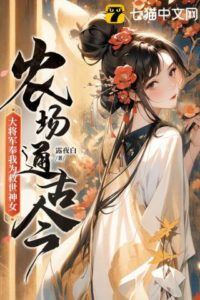
Ruan Qiqi, a twenty-six-year-old woman from the twenty-first century, dies after being crushed during a supermarket rush for rice in March 1971. Her soul is mistakenly harvested by incompetent underworld officials who intended to take a sixty-two-year-old woman. With her original body cremated and reincarnation delayed by five years, Ruan Qiqi causes chaos in the underworld until the King of Hell grants her a deal: she may possess a spatial dimension filled with modern supplies, nine resurrection pills, and the ability to communicate with plants, provided she inhabits the body of a dying girl named Ruan Qiqi in the past. The original host was a poor rural girl from Ruanjiawan who had just been abandoned by her fiancé, He Jianjun, for Commander Lu’s granddaughter, Liu Hongling. After being deceived into visiting the military district, the original girl was drugged and assaulted by Liu Hongling’s brother, Liu Hongbo, and a group of hooligans. Humiliated by rumors spread through the village, she committed suicide, leaving behind three requests for the new occupant: avenge her, save a good man named Lu Ye who would later die from injuries sustained protecting her, and gain admission to the Workers’, Peasants’, and Soldiers’ University. Ruan Qiqi arrives at the Tanzhou Military District three days after her transmigration, just as the original girl’s fate was sealed. She confronts He Jianjun and Liu Hongling in Commander Lu’s office, where she dramatically attempts suicide by hanging to force the authorities to address her grievance. Lu Ye, the deputy battalion commander and Commander Lu’s estranged son, recognizes her as a fellow outsider and aids her. Ruan Qiqi publicly beats He Jianjun for his betrayal and demands the return of three times the betrothal gift, totaling nine hundred yuan, citing a written contract. She also exposes Liu Hongling’s pregnancy, causing chaos within the Lu family and leading to Liu Hongbo’s public humiliation after he attempts to drug Ruan Qiqi in a restaurant. Ruan Qiqi turns the tables by swapping the drugged soda, resulting in Liu Hongbo and his accomplices being caught in compromising positions, an incident that spreads through the city and damages the Lu family’s reputation. As Ruan Qiqi settles into the military guesthouse, she discovers her golden finger: a massive supermarket and storage space containing unlimited food, medicine, and goods from the modern era. She also learns she can communicate with plants, specifically a ginkgo tree outside her window, who reveals the location of hidden gold bars. This spatial ability provides her with the financial means to improve her life and support her family. Meanwhile, her relationship with Lu Ye deepens. Both are individuals who feel alienated from their surroundings due to their unconventional minds. Lu Ye, who was abandoned as a child and raised by various families before joining the army, finds in Ruan Qiqi someone who understands his isolation without judgment. They spend time together, climbing Yuelu Mountain and taking photographs, marking a shift from mutual utility to genuine companionship. The core conflict revolves around Ruan Qiqi’s determination to dismantle the lives of those who destroyed the original host while navigating the rigid social and political structures of 1970s China. She faces opposition from the Lu family, particularly Commander Lu, who is torn between his duty to his granddaughter and his reputation, and Mo Qiufeng, the political commissar and Lu Ye’s stepfather, who harbors secrets about Lu Ye’s past. Ruan Qiqi’s actions threaten the power dynamics within the military district, as she refuses to be intimidated by Liu Hongling’s status or He Jianjun’s ambitions. Her ultimate goal is to secure justice for the original host, ensure Lu Ye’s survival, and achieve her own educational aspirations, all while leveraging her supernatural advantages to outmaneuver her enemies in an era where such powers are unseen and ununderstood.

Latest Release
DateGroupRelease
2026-08-11shanghai fantasy c1

Community Reviews

Rating(3.9 / 5.0, 23votes)
5 stars
8(35%)
4 stars
6(26%)
3 stars
7(30%)
2 stars
2(9%)
1 stars
0(0%)

Popular reviews

... Read More
I need to talk about the sensory details in this passage because the author really knows how to paint a scene. The image of Lu Desheng smashing that enamel pot and tea splashing everywhere, with Ruan Qiqi pulling Lu Ye behind Lu Chuncao — and then tea leaves stuck to Lu Chuncao's trouser legs — is so specific and so funny. I could literally see this in my head like a film scene. The enamel pot detail alone tells me so much about the era and the household's material situation. The whole room feels claustrophobic, like a pressure cooker. You've got this rigid family hierarchy being systematically dismantled in real time, and the setting — Lu Desheng's chair, the handrails he grips until his veins bulge, the table where everything gets destroyed — it all grounds the drama in something physical and tangible. The author doesn't need fancy descriptions; a few precise details do the job. And the atmosphere! It starts tense, with everyone's expressions changing except Lu Ye's, then escalates into full chaos. The contrast between Ruan Qiqi's soft, delicate voice and the violence she's committing is almost surreal. 'Her voice was as soft and delicate as her, but what she did was so cruel that it made people's scalps numb.' That line gave me chills. It's this perfect encapsulation of the era's contradictions — polite surfaces hiding ruthless underneath.
... Read More
There's something so vivid about the ferry scene that I keep coming back to. The Xiangjiang Bridge hadn't been built yet—they're crossing on a ferry for four cents a person, and the text tells us Juzizhou Bridge wouldn't come until 1972. This little detail grounds the whole story in a specific time and place in a way that feels authentic, not researched. You can almost smell the river water and hear the oars splashing. I love how Ruan Qiqi navigates this world. She's from a later era and knows what's coming, but she's still limited by the politics of the present. When she asks a stranger to move so she can take a photo, she has to quote revolutionary rhetoric to get him to comply. The young man literally stands at attention and recites back a quote before moving. That's such a sharp observation about how ideology permeated everyday life—you couldn't even lean on a railing without political performance. And then there's Hexi, the 'town of Xuanwan,' with its three universities—Hunan University, University of Technology, Normal University. The text notes that locals pronounce 'Xu' as 'Ying' but actually say 'Rong,' which is such a specific, lived-in detail. This isn't a generic Chinese town; it's a place with linguistic quirks and commercial history. Ruan Qiqi's regret about not attending Hunan University hits harder because the author has made this place feel real and attainable. The worldbuilding here does double duty—it's atmospheric AND it's plotting her character's future desires. Every setting choice serves the story.
... Read More
The stakes in this passage are incredibly high, and not just because fingers are getting broken. On the surface, it's a family argument — but underneath, it's about survival, identity, and power. Ruan Qiqi has entered this hostile environment as an outsider, and every word she speaks is a calculated move. When she snaps Lu Chuncao's finger, she's not just defending herself — she's establishing that she will not be pushed around. The stakes are clear: submit and be crushed, or fight and risk everything. Lu Ye's declaration of marriage is equally high-stakes. He's defying his father, his family's expectations, and decades of ingrained obedience in one move. And his willingness to become a live-in son-in-law — to literally change his surname to Ruan — shows how completely he's rejected the family that rejected him. The emotional stakes here are enormous: he's choosing a woman who sees him over a family that never did. But the deepest conflict is internal. Ruan Qiqi's realization about her own parents creates this quiet but powerful shift. She's been carrying guilt and resentment about her mental hospitalization, and seeing Lu Desheng's cruelty makes her reframe her entire past. Her parents weren't monsters — they were flawed people who did their best. This internal resolution gives her the emotional ammunition to keep fighting. And honestly, that's what makes the conflict so compelling: it's not just external drama, it's personal transformation happening in real time.
... Read More
The pacing here is absolutely relentless and I love it. We go from a verbal confrontation to physical violence to a marriage announcement to a full family history exposé to an enamel pot being smashed, all within what feels like maybe twenty pages. And somehow it never feels rushed. How? Well, the author uses these incredible little beats — Ruan Qiqi wiping her hands, Lu Ye's gloating smile, Lin Manyun's face changing from secret delight to frozen embarrassment — to let each moment breathe before moving to the next. The structure is basically a series of escalations. First the finger snap (shock value). Then the marriage announcement (relationship shift). Then the backstory about Lu Ye's childhood (emotional depth). Then Ruan Qiqi's comparison to her own parents (character development). Then the final pot-smashing climax (catharsis). Each beat builds on the last, and the reader never gets a moment to catch their breath. What's clever is the rhythm of the dialogue. Ruan Qiqi and Lu Ye end up 'singing in unison' — this double-act routine where they're verbally destroying the old man together. That's a great structural pivot because it shifts the power dynamic completely. By the time Lu Desheng smashes the pot, he's already lost control of the conversation. The author knows exactly when to let the tension simmer and when to let it explode.
... Read More
I need to talk about this scene where Lu Ye finally opens up about his past because WOW. I went from laughing at the office chaos to absolutely heartbroken in three seconds flat. He just casually drops that he was sent away from family to family like he was some piece of luggage, begging for food by age three, and he says it with this calm, almost detached tone. That's what made it hit so hard. 'Neither good nor bad'—he's talking about the people who passed him around like he was a burden. And then Ruan Qiqi's response? 'Wild creatures are the excellent species selected by nature! Congratulations, you are an excellent person certified by nature!' I actually gasped. It's such a perfect moment because she doesn't pity him, she reframes his suffering as proof of his strength. And the image of him laughing with tears coming out? That's the kind of emotional release that stays with you. But here's what really got me—the father. 'When I was one year old, my mother married Mo Qiufeng. When I was two years old, my father married a stepmother.' The implication that his real father died while he was being passed around, and he never even knew him, is devastating. And yet Lu Ye carries this with such quiet dignity. It makes every rude thing he says to his grandfather make sense now. The man who sent him away to 'foster care' during wartime is now sitting in judgment of everyone else's problems, and Lu Ye has zero respect for that hypocrisy. And Ruan Qiqi's reaction to all this—she doesn't try to fix it, she just sits with him and then suggests climbing a mountain. Simple, present, real. That's the kind of emotional intelligence that makes their dynamic so good.
... Read More
Okay so this whole confrontation scene is absolutely peak fiction. Ruan Qiqi walks in here looking for 900 yuan and ends up dropping a pregnancy bombshell on Liu Hongling like it's nothing. The way she sets that trap is so satisfying—she just casually says 'you're three months pregnant' and watches the whole room implode. Liu Hongling's immediate denial is classic, but then she walks right into the verbal trap when Ruan Qiqi says 'so you've only slept with He Jianjun' and Hongling practically screams her guilt. The author really knows how to make a protagonist win through sheer wit. And He Jianjun's face when his own mother's words come back to haunt him? Chef's kiss. But honestly what really made me sit up straight was the Lu Desheng moment—this old man who's been sitting in judgment the whole time finally snaps and physically throws He Jianjun across the room. I love that the authority figure here actually sides with the underdog, even if it's messy. The plot doesn't let up at all. One conflict explodes into another and then suddenly we're dealing with a miscarriage scare and hospital runs. It's chaotic in the best way. Also the Lu Ye subplot about his mother is a whole different flavor of tension—his family history is layered and complicated, and it completely reframes why he acts the way he does around his grandfather.
See all reviews

Characters

See all characters

Custom lists

See all custom Lists