Summary

... Read More
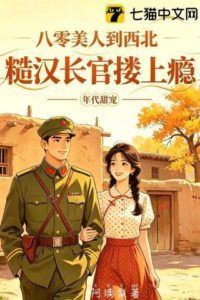
Ye Muhan, a survivor of a ten-year post-apocalyptic zombie outbreak, awakens to find herself transmigrated into the body of an eighteen-year-old orphan named Ye Muhan in 1970s China. The original owner, known as Da Ya, had died of starvation after being relentlessly bullied and exploited by her greedy relatives, particularly her Second Uncle Ye Yong, Second Aunt Liu Yan, and cousin Ye Chunxia. Upon regaining consciousness, Ye Muhan immediately retaliates against Ye Chunxia, displaying combat skills far beyond the frail girl's capabilities. As memories flood her mind, she learns of her tragic past and resolves to live this new life with justice and strength. She discovers that her dimensional space and spiritual spring from the apocalypse have accompanied her, granting her access to billions of supplies and healing water. Her situation is complicated by the arrival of Jiang Wang, a handsome and stoic soldier who claims to be her arranged fiancé. The engagement was set by their fathers, who were comrades-in-arms. Ye Muhan initially wishes to reject the marriage to remain independent, but Jiang Wang’s presence offers protection against her abusive relatives. After a confrontation where Liu Yan and Ye Chunxia attempt to intimidate her, Ye Muhan uses a stun gun from her space to subdue Ye Chunxia’s brother and slaps Liu Yan, shocking the village. She then orchestrates a public scene, feigning victimhood to turn the community against the Ye Yong family. With Jiang Wang’s support, she successfully petitions the team leader to sever ties with her relatives and forces them to return stolen money and goods. Ye Muhan then confronts Wang Jianjun, an educated youth who previously exploited Da Ya’s affection and resources, demanding repayment for stolen food and money. She also encounters Zheng Xuehua, Wang’s new partner, and asserts her dominance. After these conflicts, Ye Muhan stays at a local guesthouse, where she encounters a suspicious man with lewd intentions. Meanwhile, she begins to rebuild her life, using her future knowledge and space supplies to improve her circumstances while maintaining a low profile. Jiang Wang remains a steady ally, offering financial support and protection as Ye Muhan navigates the political and social complexities of the 1970s rural setting.
Latest Release
DateGroupRelease
2026-08-11shanghai fantasy c41
2026-08-11shanghai fantasy c40
2026-08-11shanghai fantasy c39
2026-08-11shanghai fantasy c38
2026-08-11shanghai fantasy c37
2026-08-11shanghai fantasy c36
2026-08-11shanghai fantasy c35
2026-08-11shanghai fantasy c34
2026-08-11shanghai fantasy c33
2026-08-11shanghai fantasy c32
2026-08-11shanghai fantasy c31
2026-08-11shanghai fantasy c30

Community Reviews

Rating(3.8 / 5.0, 19votes)
5 stars
3(16%)
4 stars
9(47%)
3 stars
7(37%)
2 stars
0(0%)
1 stars
0(0%)

Popular reviews

... Read More
I need to talk about how this story PACES itself because it's honestly kind of impressive. It opens with Ye Han's backstory—apocalypse survivor, orphan, spiritual spring space—and within a few paragraphs she's already rejecting an engagement and planning a heist. No filler, no wasted exposition. The author just drops you in and says 'go.' The night raid sequence is where the pacing really shines. She leaves home, circles the brigade four or five times to make sure she's not being followed, climbs the wall with a ladder she pulls from her space, loots the pigpen, the kitchen, the bedrooms—each room a new beat, each action building on the last. The smelly socks moment is the comedic peak of the whole thing, and it lands perfectly because it comes after a series of serious, tense actions. She's not just stealing, she's taunting them in their sleep. And then she leaves the same way she came, circles back, and sleeps like nothing happened. The next morning, the scream echoes through the village and the authorities show up. Boom. Done. But the real pacing masterstroke is the ending of this batch. Ye Han is on the ground, struggling with two heavy bags, and a deep voice says her name. She looks up and it's Jiang Wang. The chapter just... stops there. Not a full cliffhanger, not a dramatic confrontation, just this sudden collision of two plot threads that were moving separately. It's the kind of ending that makes you immediately open the next chapter because you NEED to know what happens next. The author knows exactly how to hold your attention.

... Read More
OK so let me just say this out loud — Zheng Xuehua is absolutely vile and I cannot believe the author wrote her this way because she made me so ANGRY. The woman literally fabricates evidence, drags a group of villagers to Ye Han's house at BREAKFAST time, and kicks down doors like she's some kind of revolutionary guard. The scene where they all show up at Ye Han's door — Li Erhe, Fang Zhiqiang, Sun Jinggui, Zheng Xuehua, Wang Jianjun, and a whole crowd of onlookers — this is peak 1970s China paranoia and the author captures it perfectly. Everyone is SO eager to accuse someone. The villagers aren't even mad at Ye Han, they're just there to watch the drama unfold. "Most people were gloating." GLOATING. Over accusing an innocent person. And the stakes here are NOT theoretical. In this time period, being associated with the "stinky ninth" isn't just social suicide — it's your life destroyed. Ye Han knows this. The narrative makes it clear: "In serious cases, she might even be criticized along with them." The threat is real and immediate. But the BEST part is Wang Xiaobao's choice. He could have cracked under pressure, confirmed Zheng Xuehua's lie, and Ye Han would have been done for. Instead he says no. Clear and direct. And Grandma Meng backs him up. I literally exhaled for the first time in that whole chapter. Zheng Xuehua's face when he denies everything? Priceless. "Impossible, I clearly saw you go to Ye Xuanhan's house" — yeah but you didn't actually see anything, did you?? The fact that she has ZERO evidence and still brings an army to someone's doorstep tells you everything about her character.
... Read More
Okay so I need to talk about Jiang Wang because honestly he is everything. Like, Ye Hanhan faints into his arms and instead of just being awkward or putting her down immediately, he literally carries her all the way to the barefoot doctor, notices her clothes are wet, and asks if the doctor has extra clothes to borrow. He even offers to PAY for it. This man is built different. And the best part? When he tells her 'You can only deceive them for a while, there are so many eyes watching, so you have to do the whole show'—he KNEW she was faking the whole time. He didn't expose her. He played along. That's not just being nice, that's being strategically supportive in a way that shows he actually understands her situation. Then later when Ye Yong's family is being terrible and Captain Li is hesitating, Jiang Wang just steps up and says 'I am not a member of your Huaihua Brigade, but Ye Hanhan is my fiancée, and I have the responsibility to protect her.' Bro really just threatened the entire village leadership with a complaint to the commune and it WORKED. He didn't need to be from the brigade to have that kind of impact. It's giving 'I may not belong here but I will absolutely ruin your day if you hurt her.' What I love is that Ye Hanhan herself is surprised by all of this. The text says she thought 'If I refuse the engagement, he has no responsibility or obligation to help me, and he doesn't need to get into trouble for me. But now...' That moment of realization—that someone is choosing to stand with her when she thought she was alone—is such a powerful character beat. Their dynamic isn't just romantic tension, it's genuinely mutual respect building in real time. She's playing 4D chess with her uncle's family and he's quietly making sure the board doesn't flip over while she's doing it. I'm obsessed.
... Read More
Okay so let's talk about Jiang Wang for a sec because this guy is... honestly kind of interesting? Ye Han flat-out rejects him, says no to the engagement, and his reaction isn't what I expected at all. He doesn't get angry or try to manipulate her—he just says 'I'll explain to my father' and walks away. That's... actually respectful? In a genre where male leads usually respond to rejection with either rage or possessive obsession, Jiang Wang just takes it like a normal human being. Then he leaves her all his money and coupons anyway, saying her father's comrade's daughter is his responsibility too. Which is either genuinely noble or a very smooth long-game move. I can't tell which and honestly I'm torn. Then he shows up AGAIN at the supply and marketing cooperative right when she's on the ground struggling with two bags of groceries. Of course he does. The timing is so cinematic it's almost annoying. But here's what got me—the salesperson's reaction when Ye Han says the bicycle ticket came from her 'fiancé.' That flicker of jealousy in the clerk's eyes? Ye Han weaponized their assumed relationship like a charm. She's already learned to play the social game in this era. And then there's the whole second uncle situation. Stealing back everything her father's family stole from Daya, stuffing smelly socks in their mouths while they sleep—this is petty revenge at its finest. Ye Han isn't a saint, she's getting even, and I respect that. She's not here to be nice. She's here to survive and make sure the people who wronged her family feel it. That moment where she pinches her nose and takes the torn socks anyway because they smell too bad for her space? That's such a specific, human detail. She's ruthless but she still has standards.
... Read More
Okay so first of all, can we talk about how Jiang Wang proposed? The guy straight-up asks Ye Hanhan to marry him after THREE DAYS. Three. Days. And her response is absolutely legendary — she pinches his chin and tells him to find someone else to bear his children and do the housework. I literally screamed reading that. This woman is not playing. But here's the thing that actually made me pause — when he backs off and asks instead if she can "try to get along with him," something shifts. He goes from this bold, almost overwhelming proposal to this incredibly tender, hesitant ask. And the snowflake landing on his nose? Come on, author, don't do this to me. What I love most is that Jiang Wang isn't some generic romance lead. He's rational. The text literally says "Jiang Wang is a rational person" and he spends the whole morning proving Ye Hanhan's innocence before even thinking about his own feelings. That's commitment to her safety before his own agenda. That's rare. And then the money scene — he gives her his entire savings, tells her she's his and his money is her money, and she's over here suspicious as hell wondering if he's love-brained. She doesn't trust him yet, and honestly? Fair. Three days. But that kiss at the end — she initiates it. She bites his lip. She's testing him, sure, but she's also starting to let herself want this. The dynamic between them is so fun because she's always the one setting boundaries and he's the one respectfully, almost adorably, trying to understand them.
... Read More
I'm going to be honest — I usually skim dialogue in novels because so many authors make everyone sound the same. But this book? The voices are distinct enough that I could tell who was speaking without looking at the tags. Jiang Wang's dialogue is short, clipped, loaded with subtext. "Don't do this again in the future." "Take care of yourself, I'll come again next time." He says very little but every line carries weight. His silence speaks louder than most characters' monologues. Ye Han's voice is playful and sharp in equal measure. Her internal thoughts are funny — "I should keep him as my mistress and cook for him every meal" — but her spoken words are careful, measured. She knows when to stay quiet and when to strike back. The contrast between her inner voice and outer voice is where the character lives. Zheng Xuehua's dialogue is all shrieking certainty. "You're lying!" "Impossible, I clearly saw you go to Ye Xuanhan's house!" She never hesitates, never qualifies anything. That's the voice of someone who has built her identity on being right about other people's wrongdoings. And Grandma Meng — oh, Grandma Meng is the quiet powerhouse. "No, I have to leave quickly. Xiaoye, please close the door quickly and pretend that we have never been here." One sentence and she protects her grandson, protects Ye Han, and exits the scene. No drama, no explanation. Just competence. The narrative voice itself is interesting too — it's close third person, mostly anchored in Ye Han's perspective, but it slips into her thoughts naturally without announcing them. Feels like reading someone's actual stream of consciousness rather than a crafted narration.
See all reviews

Characters

See all characters

Custom lists

See all custom Lists