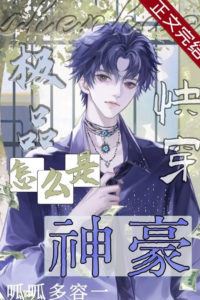
Even if the top star has a bad temper, he still has to listen to his older sister
+Add to Custom List
Genres:
Novel Info
  • Author:
  • 衿久
  • Status:Ongoing

Summary

... Read More

Shang Que is a renowned actress who maintains a sharp, independent public image, while her younger brother Ji Jingchuan is a top-tier idol known for his rebellious temperament and frequent public feuds with her. Their relationship is strained by years of separation after their parents' divorce, resulting in a dynamic defined by constant online hostility and bickering rather than genuine animosity. The narrative begins when Shang Que is forcibly redirected to a mysterious digital document titled "Starlight Shines: The Sweet Love of the Top Star’s Ex." This text describes a fictionalized version of the entertainment industry where Ji Jingchuan is the villain who sabotages the romance between two protagonists, Lu Zhixu and Ning Sheng, on a variety show called "Friendship Boat." The story predicts his total downfall, public hatred, and eventual death under the wheels of a fan's car, ending with a desperate plea for his sister's help.

Terrified by the vividness of the prophecy, Shang Que discovers the document vanishes, leaving only a lingering sense of dread. When her agent informs her that she has been cast on "Friendship Boat" alongside Ji Jingchuan, she accepts the invitation to intervene and alter the predicted tragic fate. Simultaneously, Ji Jingchuan is contacted by a "Villain Counterattack System" that reveals he is a character in a novel destined for a miserable end. The system warns that after his death, Shang Que will also be killed while seeking justice for him. Enraged by the threat to his sister, Ji Jingchuan vows to change his destiny, though he stubbornly denies any emotional attachment to her despite his protective instincts.

Upon arriving at the variety show, the cast is divided into teams, pairing the feuding siblings together and the romantic leads together. The initial interactions are chaotic, marked by Ji Jingchuan's refusal to cooperate and Shang Que's witty, mocking responses. During a rowing competition, Ji Jingchuan reveals he cannot swim and nearly drowns, forcing Shang Que to rescue him. This incident shifts the public perception of their relationship, revealing a underlying dependency and care that contradicts their hostile public personas. Ji Jingchuan, embarrassed but grateful, begins to cook for her, using the skill as a subtle way to show affection while maintaining his arrogant exterior.

As the show progresses, the "Friendship Tests" force the cast to confront their relationships. Shang Que and Ji Jingchuan consistently sabotage each other's chances of winning by revealing embarrassing childhood nicknames, yet their seamless teamwork in competition suggests a deep, unspoken bond. Meanwhile, other cast members like the tsundere Lin Jinyi and the naive Jiang Yizhe form their own dynamics, with Lin Jinyi accidentally engaging in fanfiction trends that mirror the novel's plot. The system continues to guide Ji Jingchuan, who struggles to balance his natural hostility with the need to avoid the villainous actions that lead to his doom.

The core conflict centers on the tension between the predetermined narrative of the novel and the characters' free will. Shang Que actively works to prevent the scandals that ruin Ji Jingchuan's reputation, while he attempts to distance himself from the role of the antagonist without losing his identity. The story explores how their public feud masks a genuine sibling bond, with both characters using aggression as a language of care. As the variety show unfolds, the boundaries between the fictional narrative and reality begin to blur, forcing both siblings to confront their past trauma and their current feelings for one another.

The narrative direction moves toward a reconciliation of their fractured relationship. Shang Que's interventions on the show start to deviate from the novel's plot, causing ripples that confuse the system and alter the predicted outcomes. Ji Jingchuan's protective nature becomes increasingly evident as he shields Shang Que from public scrutiny, while she learns to appreciate his efforts beyond his abrasive exterior. The story sets the stage for a broader resolution where they must expose the true forces manipulating their lives, moving from a cycle of mutual destruction to a partnership aimed at reclaiming their autonomy and saving each other from the tragic endings foretold by the mysterious novel.

Latest Release
DateGroupRelease
2026-08-11shanghai fantasy c43
2026-08-11shanghai fantasy c42
2026-08-11shanghai fantasy c41
2026-08-11shanghai fantasy c40
2026-08-11shanghai fantasy c39
2026-08-11shanghai fantasy c38
2026-08-11shanghai fantasy c37
2026-08-11shanghai fantasy c36
2026-08-11shanghai fantasy c35
2026-08-11shanghai fantasy c34
2026-08-11shanghai fantasy c33
2026-08-11shanghai fantasy c32

Community Reviews

Rating(3.6 / 5.0, 27votes)
5 stars
7(26%)
4 stars
5(19%)
3 stars
11(41%)
2 stars
4(15%)
1 stars
0(0%)

Popular reviews

... Read More
Okay so the team assignment part is honestly the funniest plot device I've seen in a while. The director basically looked at these four people and went 'you two absolutely hate each other, you two are a fake CP, and you two are strangers' and just paired them up on purpose. I love when shows do that—it's like the plot itself is trolling everyone. But the real highlight has to be the rowing scene. The director yells 'last place holds hands and makes a heart pose' and suddenly Shang Que and Ji Jingchuan—who were literally just trying to sink each other's boat—start paddling like their lives depend on it. The shift from enemies to hyper-competitive teammates in literally two seconds is chef's kiss. And then the collision? Perfectly choreographed chaos. Lu Zhixu and Shang Que both yell at the same time ('Ning Sheng, watch out!' / 'Ji Jingchuan, stop!') and then four people go splashing into the water like it was planned. I also love how the plot keeps peeling back these little reveals. Like, Lin Jinyi is supposedly mad at Shang Que for some fanfic thing, but then Shang Que casually flips it and makes Lin Jinyi admit she's a fan on live TV. That's not just a subplot—that's character assassination with a smile. And Jiang Yizhe falling into the water because he tried to 'save' Shang Que? That's the kind of chaotic chain-reaction plotting that makes a variety show arc feel alive. Nothing is linear here. Everyone's motivations are tangled up and it's glorious.
... Read More
Let's talk about Ji Jingchuan for a second because this man is a walking red flag wrapped in good looks and I am HERE for it. The moment he shows up slouched on his suitcase, arms crossed, looking like he'd rather be literally anywhere else, you know he's not having a good time. And then Shang Que casually tells everyone 'he can't swim' and he immediately explodes. The elementary school swimming competition story is the funniest character beat in this entire chapter—he basically waded through an 80cm pool and got third place, and he's been riding that high ever since. Meanwhile he spent THREE YEARS trying to learn to swim properly. The man is a walking contradiction. But the real gem is how he treats Shang Que. He's aggressively defensive of her in the most passive-aggressive way possible. When Jiang Yizhe offers to save Shang Que if she falls in the water, Ji Jingchuan snaps 'Who needs you to save her?! Shang Que is with me!' and then immediately tries to act like it was no big deal. That's not hostility, bestie. That's jealousy dressed up as anger. And Shang Que? She sees right through it. She's constantly poking the bear, knowing exactly which buttons to press. Their dynamic is like two cats in a bag—swiping at each other but somehow never actually trying to hurt the other one. The fact that they sync up INSTANTLY when the director threatens them with a heart pose photo tells you everything. They've been doing this dance for two years and they know each other's moves better than anyone else on that show.
... Read More
Let me just say this—whatever writer came up with the 'Who's Really Friends' game format deserves a raise. Like a actual raise. Because every single question they asked was specifically designed to force these two to either reveal something vulnerable or double down on their hostility. And honestly? Both outcomes are delicious. The first question was about contact methods. Jiang Yizhe tried to game the system by asking if being in the same super-topic counts. The director immediately shut that down—no group chats, only direct one-on-one contact. And then the bomb dropped: Ji Jingchuan and Shang Que don't even follow each other on Weibo. TWO YEARS of online fighting and they have zero direct contact channels. That is a plot point that hits different. Then the photo question. Lin Jinyi and Jiang Yizhe have a photo from their punishment pose. Lu Zhixu and Ning Sheng don't. And Shang Que and Ji Jingchuan? 'Pass.' 'No need.' Like they don't even have a single image of each other. This is the kind of detail that tells you everything about a relationship without anyone saying it out loud. The hot pot question was where I actually laughed out loud. Ji Jingchuan tries to claim they had hot pot 'this morning' and then has to backtrack because the noodles were from instant hot pot. Meanwhile Shang Que is just sitting there watching him build his own trap. The director is losing his mind trying to keep up. And then the climax—both of them simultaneously say 'Ji Jingchuan!' and 'Shang Que!' when asked who gets to drink the bitter melon. They didn't even coordinate. It was instinct. Their first thought when given power was to make the other person suffer. That is not hatred. That is... something else entirely. The second game with the cream cannons was just the cherry on top. Shang Que deliberately picks cilantro juice for him because she finds it disgusting, and when he gets sprayed she just admits 'I just thought cilantro juice was disgusting.' Pure malice. No filter. No strategy. Just honesty wrapped in cruelty. Every plot beat in these chapters is serving the central question: what ARE these two to each other? And the answer keeps getting more complicated.
... Read More
There's this recurring theme in the chapters about food and taste that I think is doing a lot of symbolic work, and I want to unpack it because it's honestly brilliant. Ji Jingchuan cooking is the first major symbol. He makes this elaborate seafood noodle dish with lobster and crab and a perfect runny egg yolk. But when he makes one for himself, it's 'poorly cooked.' This isn't just a character detail—it's a metaphor for how he shows up for her versus how he shows up for himself. He can create something beautiful for her, but he can't be bothered to create something good for his own consumption. Or maybe he's intentionally making his worse so she'll notice the difference. Either way, food is his love language and he speaks it fluently while pretending to be hostile. The bitter melon juice is another powerful symbol. Bitter melon is literally called 'bitter' for a reason. It's an acquired taste that most people hate. And these two are competing to make each other drink it. But here's the thing—Shang Que reveals she used to make celery and cilantro juice daily. She doesn't just tolerate bitter things; she actively seeks them out. This suggests that suffering is somehow familiar to her, or maybe that she finds comfort in things that hurt. Ji Jingchuan's green face as he chugs the juice is almost comic, but it's also tragic—he's punishing himself to make a point, to prove he can endure something she can't. The cilantro juice incident is the same pattern. Shang Que deliberately picks the most disgusting option for him, and when he gets sprayed she admits it with zero remorse. But then he counters by revealing she likes 'freshly squeezed lemon juice. No water, no sugar!' and she downs it without blinking. They know each other's tastes better than anyone else in the room. This intimacy is weaponized, but it's still intimacy. The hot pot reference is interesting too. Ji Jingchuan claims they had hot pot 'this morning' but it was actually instant hot pot noodles. He's inflating their connection, making it sound more significant than it is. And Shang Que lets him have the moment without correcting him, even though she knows the truth. Is this kindness? Or is it just easier to let him have his delusion? And then there's the childhood nickname 'Fat Ball'—a name tied to her body, to her physical form, to a memory of her rolling down a hill. It's vulnerable, embarrassing, intimate. And she owns it. 'Yes.' One word. She doesn't fight him on it. This suggests that with him, she doesn't need to perform. She can just be the fat ball who rolled down the hill, and he'll remember it and use it against her and also... keep it. Store it. Treasures are often hidden in insults. The recurring motif of taste—sweet, bitter, sour, disgusting—maps onto their relationship perfectly. Nothing is simple. Everything is layered. And they're both willing to consume things they hate just to prove a point to each other.
... Read More
I want to talk about how this chapter controls its rhythm because honestly the pacing is immaculate. It starts slow—Shang Que arriving, the awkward Lin Jinyi encounter, the lazy villa atmosphere. Then the director's voice comes through the walkie-talkie and suddenly everyone's moving. The transition from the villa to the lake feels natural, not rushed. We get a little breather with the team announcement, then the race begins and BOOM—chaos. The author has this incredible ability to build tension through dialogue before releasing it with physical comedy. The rowing competition starts with Shang Que and Ji Jingchuan just... not cooperating. They're splashing each other, bickering, ignoring the actual race. The director has to invent a penalty (the heart pose) to motivate them, and that's the trigger. The moment they start paddling for real, the pace accelerates so fast. The boats converge, the collision happens, everyone goes in the water—it's a domino effect that unfolds in real time and you can't look away. What's clever is that the author never lets the chaos settle. Right when you'd expect a moment of panic or concern after everyone falls in, Shang Que surfaces and immediately spots Ji Jingchuan struggling. The emotional beat replaces the action beat seamlessly. And then it ends on that fragment—'Help... glub glub...'—which is basically a cliffhanger disguised as a splash. The structure here is: setup → escalation → peak chaos → emotional pivot → unresolved ending. textbook variety show episode pacing, and it works perfectly.
... Read More
Okay can we just appreciate the CINEMATIC quality of these chapters because the visual storytelling is actually insane. Let's start with the breakfast scene. You have this shot of Ji Jingchuan in the kitchen—surprise, he can cook—and there's this description of the noodles with lobster pieces arranged neatly around the edges, crab meat, and this golden runny egg yolk in the center. It's described so vividly you can literally see it. And then his bowl has a 'poorly cooked' egg. This visual contrast tells you everything: he can make something beautiful for her, but when he makes something for himself, it's an afterthought. Or maybe he's intentionally making it worse so she'll notice the difference. Either way, the visual detail is doing heavy lifting. Then there's the dining table scene during the game. The director with his cue cards, the staff bringing out these enormous glasses of bitter melon juice that are 'bigger than the nearby flower vase'—that's a visual joke that lands perfectly. Lin Jinyi's reaction 'I don't even drink this much water in a day!' is funny but it also establishes the stakes through physical comedy. The cream cannon scene is pure slapstick. Ji Jingchuan gets sprayed 'from head to toe' in white foam and has to wipe his face while protesting. Shang Que watching with zero reaction while he's covered in cream—that contrast is hilarious. The visual of these two in black suits placing colorful drinks on the table while the cast stares in confusion is also a great establishing moment. But my favorite visual moment is the chair scene. Ji Jingchuan rocking his chair making 'a loud screeching noise' and Shang Que asking if there's a thorn stabbing his butt. The sound design here is implied through text alone. You can hear that screech. You can see her皱眉. You can see him stop and say 'mind your own business' in a stiff tone. It's a whole scene told through sound and posture. And then the escalation—'Shang Que scraped her chair loudly, Ji Jingchuan slammed his cup onto the table, Shang Que immediately banged the table and stood up, and Ji Jingchuan climbed onto his chair.' This is choreography. This is two people turning a dining table into a battlefield with their bodies. The director having to physically intervene with 'Peace brings prosperity!' is the punchline. The variety show setting itself is also well-built. There's a sense of this being a real production with cameras, directors, staff, live comments flooding in. The meta-layer of the audience watching them watch each other adds this extra dimension where every gesture is performative and every silence is analyzed. It's a world where nothing is private and everything is content.
See all reviews

Characters

See all characters

Custom lists

See all custom Lists