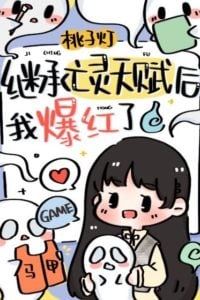
After Inheriting the Talent of the Undead, I Became Famous
Novel Info

Summary

... Read More
Shi Xi is an obscure actress struggling to find work in the entertainment industry, often relegated to minor roles. Her life changes when she receives a mysterious notification from a supernatural system after playing a new game. The system assigns her a novice task: dig up a corpse at the infamous No. 14 Pingning Road haunted house. The task comes with a penalty for failure—insomnia for a month. Upon arriving at the dilapidated building, Shi Xi encounters Jia Ming, a ghost-hunting livestreamer who is terrified by the atmosphere. Shi Xi reveals she is digging for a body because the deceased owner, a former Yue Opera actress named Lin Ying, asked her to help move her remains to a brighter cemetery. Jia Ming, initially skeptical, assists her in excavating the grave, where they discover a corpse wrapped in a body bag. The discovery prompts Jia Ming to call the police, ending the livestream in chaos as viewers realize the events are real rather than scripted. At the police station, Shi Xi explains her unusual circumstances, though the officers dismiss her story as an actor’s elaborate excuse. The victim is identified as Lin Ying, a celebrated actress who vanished fifteen years prior. Lin Ying’s elderly mentor arrives and thanks Shi Xi, revealing that Lin Ying’s soul has been lingering nearby. Shi Xi discovers she can see Lin Ying’s ghost, who expresses gratitude for the intervention. The system rewards Shi Xi with fifty percent of Lin Ying’s acting talent and assigns a new task: audition for a supporting role in the film "Àimù." Through the viral attention from the livestream, Shi Xi gains a significant online following, which leads to her receiving the audition opportunity. During the audition, she delivers a poignant performance that impresses the directors, but she ultimately loses the role to another actress. As punishment for the failed task, Shi Xi wakes up completely bald. Despite her misfortune, Shi Xi receives another opportunity to audition for the fantasy film "Phantom." During the process, she meets Tang Niannian, another actress. The directors, intrigued by Shi Xi’s unique appearance and presence, cast her in a cross-dressing role as a Buddhist monk named Wu Chen. Her performance alongside Tang Niannian is well-received. After the audition, Shi Xi works a part-time job at a teahouse, where she encounters the ghost of a young Taoist priest named Zhang Qingyu. Zhang Qingyu is trapped by a confinement array and begs for help. Shi Xi learns that he was murdered by a deceiver who transferred a death curse onto him. The system assigns her a new task to send Zhang Qingyu’s soul back to Wuyou Temple. Shi Xi and Zhang Qingyu travel to the temple, where they meet his senior brother, Zhang Qingxuan. Zhang Qingyu becomes distraught upon learning that his master has passed away, causing him to lose control and release dangerous Yin energy. Shi Xi manages to calm him by using a recording of the master’s voice and showing him the orchids he cherished. With Zhang Qingyu’s soul at peace, the system rewards Shi Xi with twenty percent of his magical talent. Meanwhile, Jia Ming, whose luck has been severely diminished by his encounters with ghosts, seeks help from Zhang Qingxuan and receives a protective amulet. Shi Xi’s popularity continues to grow due to fan-edited videos combining her ghost-hunting and teahouse personas. She is invited to participate in a supernatural escape room variety show with Jia Ming and Tang Niannian, marking her entry into a new phase of her career while continuing to navigate the supernatural tasks assigned by the system.
Latest Release
DateGroupRelease
2026-08-11shanghai fantasy c117
2026-08-11shanghai fantasy c116
2026-08-11shanghai fantasy c115
2026-08-11shanghai fantasy c114
2026-08-11shanghai fantasy c113
2026-08-11shanghai fantasy c112
2026-08-11shanghai fantasy c111
2026-08-11shanghai fantasy c110
2026-08-11shanghai fantasy c109
2026-08-11shanghai fantasy c108
2026-08-11shanghai fantasy c107
2026-08-11shanghai fantasy c106

Community Reviews

Rating(3.9 / 5.0, 27votes)
5 stars
11(41%)
4 stars
7(26%)
3 stars
4(15%)
2 stars
5(19%)
1 stars
0(0%)

Popular reviews

... Read More
The stakes in this batch shifted in a way that caught me off guard, and I want to talk about how the author handled it. On the surface, the immediate conflict is resolved — Zhang Qingyu is calmed, the temple crisis passes, Shi Xi completes the task. But then the story pivots to a different kind of tension: what happens when your secret life becomes public knowledge? Shi Xi goes from being a anonymous ghost hunter to a viral sensation with 150,000 followers. That's not just a plot convenience — it's a genuine escalation of stakes because now she has something to lose. Consider what's at risk. Before, if Shi Xi failed, she'd just die or get punished by the system. Now, she has an audience. She has people who believe in her, who are waiting for her next video, who are tracking her movements. The variety show invitation is both an opportunity and a threat — it's exposure, and exposure means people are watching her when she makes mistakes. The Phantom audition is still pending, and now there's public pressure attached to it. The system's new task for the variety show adds another layer of stakes with its punishment: "Can't laugh (one day)." That's a genuinely unpleasant consequence that shows the system isn't going easy on her just because she's popular. The stakes aren't just about survival anymore — they're about maintaining control of her own life while the world watches. Jia Ming's situation raises the personal stakes too. He's leaving home to start his own business, which means he's risking everything he has. His offer to give Shi Xi 500,000 yuan isn't just generosity — it's a person who has decided that this friendship is worth investing in, even when he has so little. If he fails at his business, he loses everything. If he succeeds, he has something to share. The conflict with Tang Niannian is smaller but still interesting. They're both auditioning for the same role, which creates natural tension. But the author handles it in a way that feels honest — Tang Niannian is genuinely friendly, not scheming. The conflict isn't between them; it's the situation itself. Who gets the role? What happens if one gets it and the other doesn't? That's a more mature way to handle rivalry. I also want to mention the underlying conflict of Shi Xi balancing two worlds. She's an actress trying to break into the industry, and she's also a ghost hunter who inherits supernatural talents. These two identities are pulling her in different directions, and the variety show is where they collide. The show wants her as a "corpse digger" persona, but she also wants to be taken seriously as an actor. Can she be both? Should she be? That's the conflict I'm most invested in following. The tension is building in the right directions. Not just external danger, but internal pressure, public scrutiny, and the weight of expectations. I'm hooked.

... Read More
Okay, so this batch had some genuinely satisfying plot resolution. The Wuyou Temple arc wraps up in a way that actually earns its emotional beats instead of just rushing through them. Let me talk about the orchid moment for a bit because I cannot stop thinking about it. Shi Xi tells Zhang Qingyu: "Your master is gone, but the orchids are still there, and Wuyou temple is still there." And then Zhang Qingxuan repeats it back to himself like a mantra. "The orchid is still there, which means hope is still there for them." I literally sat there and went wow. That line does so much work. It's not just comforting dialogue — it's the thematic anchor of the entire arc crystallizing into one image. The plot structure here is smart too. You've got the ghost crisis (Zhang Qingyu's negative energy episode), the resolution (Shi Xi using the loudspeaker with the master's voice — which is both funny and genuinely touching because it shows she's learning to think creatively), and then the aftermath where everyone gets closure. Zhang Qingxuan admits he's just as petty as everyone else, which is a hilarious and humanizing moment. He was ready to die for his junior brother, and instead of letting that guilt consume him, he decides to track down the real murderer. That's a plot thread they're clearly planting for later. Then the story pivots hard into Shi Xi's viral fame arc, which could have felt like a boring filler chapter but actually works because it raises the stakes for her acting career. The audition for Phantom is still looming, and now she has public attention on her — which means more pressure, more scrutiny, and potentially more opportunities. The variety show invitation is the bridge between her ghost-hunting life and her acting ambitions. I love how the plot keeps connecting these two worlds instead of treating them as separate storylines. The pacing is mostly solid. The transition from the temple to Shi Xi going home and sleeping for a day felt a little abrupt, but honestly, it made sense narratively — she was exhausted. The system giving her 20% of Zhang Qingyu's talent instead of the 50% she got from Lin Ying is an interesting detail. The system explains that full inheritance requires tests and fate improvement, otherwise there's risk of premature death. That's a built-in progression system that keeps me invested in reading further. One thing I want to flag: the variety show setup. The fact that the director added them as guests because their live broadcasts went viral shows the story is tracking with real-world internet culture in a way that feels natural, not forced. The escape room horror theme of the show mirrors what Shi Xi actually does for a living. It's a clever meta-layer. Overall, the plot in this batch feels like it's building toward something bigger without losing sight of character moments. The resolution of the temple arc is satisfying, and the new threads (the real murderer, the variety show, the Phantom audition) are all hooks I want to follow. I'm particularly curious about how the variety show episode will play out — especially with Tang Niannian there, who seems like she could become a recurring character. I also want to talk about something else that happened but I'll save it for another note...
... Read More
There are three symbolic elements in this batch that I want to sit with, and they're all connected to the idea of what we carry forward after loss. The orchid. This image appears at the perfect moment — when Zhang Qingyu is spiraling into negative energy, when the temple feels like it's ending, when everything seems lost. And Shi Xi says: "The orchids are still there, and Wuyou temple is still there." The orchid becomes a symbol of persistence. It doesn't matter that the master is gone — the thing he nurtured is still alive. Qingxuan repeats this to himself like a prayer, and it works. The orchid isn't just a plant; it's proof that love and care outlast the person who planted them. Then there's the bracelet with three silver bells. Zhang Qingxuan gives it to Shi Xi as a thank you gift, saying it can help her resolve three disasters. Bells in Chinese culture have protective significance — they're used to ward off negative energy, to mark sacred space, to call attention. Three bells for three disasters is a neat symbolic structure, but I think the deeper meaning is about connection. Qingxuan is giving her something that will literally ring when she needs help. It's a tangible link between them, a promise that he's still watching out for her even after she leaves the temple. And the loudspeaker. This is the element I find most interesting symbolically because it's so mundane. A Taoist temple using a megaphone to play the master's recorded voice to calm a possessed disciple — it's funny, yes, but it's also deeply meaningful. The master's voice survives him. His teachings, his presence, his authority — all of it lives on through technology. It's the same idea as the orchid but expressed through modern means. The master is gone, but his voice is still there. These three symbols — the orchid, the bells, the recorded voice — all orbit the same theme: how do we carry forward what we've lost? The story seems to be saying that nothing is truly gone as long as it's remembered, protected, or passed on. The temple survives. The master's voice survives. Qingxuan's guilt transforms into purpose. Shi Xi's inheritance of talent becomes a responsibility rather than just a power-up. There's also the recurring motif of watching and being watched. Lin Ying and Zhang Qingyu keeping watch over Shi Xi while she slept. The variety show cameras capturing everything. The fans watching her videos. It's almost like the story is asking: who are we performing for, and who are we performing for ourselves? Shi Xi's viral fame adds a new layer to this — she's now being watched by strangers, and that changes how she moves through the world. I keep thinking about that orchid. It's such a simple image but it holds so much meaning for the whole story.
... Read More
Can we talk about how good the dialogue is in this batch? Because there are lines that made me literally laugh out loud and lines that made me pause and re-read. Shi Xi's voice is consistently the best part. When she says to Zhang Qingxuan: "So you were ready to die for your junior disciple? I thought you were a spiritual master, but you're just as petty as the rest of us." That's Shi Xi at her most Shi Xi — blunt, observant, and somehow both rude and kind at the same time. She's calling him out but also giving him permission to be human. The line lands perfectly because it's true and it's delivered without any filter. Then Qingxuan's reply: "Don't worry, I won't be depressed anymore." Simple. Direct. No flowery language, no dramatic monologue. Just a person making a decision out loud. That's excellent character voice — knowing when to underwrite. The system's dialogue is also fun. "I have to say that you still have some talent for appeasing ghosts." That's snarky in a way that feels like an actual personality, not just a plot device. And "Performing talent +5%" / "Punishment: Can't laugh (one day)" — the punishment is genuinely cruel and funny at the same time. The system has developed a voice that's distinct from every other character. Jia Ming's text messages are a highlight. His naive second-generation rich energy comes through perfectly in messages like: "I plan to give you 500,000 first, and then pay you 500,000 in installments." The words reveal such an innocent, almost childlike understanding of money and gratitude. And Shi Xi's response — just counting the zeros and asking speechlessly "How much more do you want to give me?" — is perfect comedic timing in written form. Tang Niannian's dialogue is lighter, more casual, which fits her character as someone who's already established in the industry. "We haven't become colleagues in movies yet, but colleagues in variety shows first." That's a natural, slightly self-deprecating line that makes her feel real. The narrative voice overall has this great balance of warmth and wit. The author isn't trying to sound literary — they're telling a story with characters who feel like people you could actually meet. The humor comes from character, not from jokes inserted for comedy's sake. When Shi Xi says she wanted to refuse the teahouse videos but the manager offered a working meal for 3,999 yuan, that's not a punchline — it's just Shi Xi being Shi Xi, and it's funnier because of it. One thing I want to mention: the dialogue in the variety show intro feels a bit more expository. The program team explaining the show format and guest list is necessary but reads slightly more like information delivery than natural conversation. Not a dealbreaker, but noticeable. Overall though, the dialogue voice is strong and consistent. Each character sounds distinct, and the narrative tone matches the story's blend of supernatural thriller and found-family comedy.
... Read More
I keep thinking about the stamp motif in this chapter and what it represents. On the surface, it's a game mechanic — you get stamped, you fail, you have to come back. But the deeper meaning is so much richer. Those who were stamped thought they were safe once the level was cleared, but Lu Lanlan proves that the stamp follows you. It's not just about the game — it's about consequences that don't disappear when you think they do. The blood seal on her shirt that says "YOU ARE DEAD" is such a visceral symbol. It's not just a threat from the ghost, it's a mark of guilt. Lu Lanlan stole Shi Xi's opportunity, she was jealous, she targeted her, and now the supernatural force is literally marking her. There's also the symbolism of the live broadcast itself — the camera that fell to the ground and captured nothing, the audience watching a blank wall while terrifying sounds played out. The show became popular precisely because it was chaotic and uncontrolled, because it was real. The director losing his authority, the emergency plan being handed to a guest instead of the production team — all of this speaks to how the system failed these people and only individual courage saved them. And the ending with "game restart"? It suggests that none of this was ever truly over. The space-time intersection isn't closed, the stakes aren't resolved, and the stamp will keep following people. The story seems to be asking: what happens when the game never ends?
... Read More
The stakes in this chapter are absolutely brutal and the author never lets you forget it. Shi Xi gets her hands cut open by ghost hair — and she does it on purpose, borrowing Yin Qi and wrapping it around her bare hands to fight back. That is not a small injury, that is her choosing to hurt herself to protect other people. The doctor's line about tetanus and scars and not touching water makes it feel so real, so medical, so grounded despite the supernatural setting. And then Lu Lanlan finding that blood seal in her hotel room — she didn't even get stamped during the game but somehow the ghost still marked her. What does that mean? Is she going to be pulled back in? The suspense around the other players who failed is killing me. Brother Hu, the movie blogger, the actor, Jiaming — they all got stamped. The chat speculation that they will be "entangled" is terrifying. The conflict isn't just ghost vs humans anymore, it's the entire system collapsing. The director can't stop the broadcast, can't contact the outside world, can't even find the blood drawing room because the space itself is warping. When Shi Xi grabs at thin air and screams, and the doctor suddenly appears — that moment of control returning is so earned because the chaos had gotten so out of hand. Every character is vulnerable. Every decision matters. And the final line about the game restarting means none of this relief is permanent. I am genuinely terrified for what comes next.
See all reviews

Characters

See all characters

Custom lists

See all custom Lists