19th-Century Female Merchant
+Add to Custom List
Genres:
Novel Info
  • Author:
  • 存金
  • Status:Ongoing

Summary

... Read More

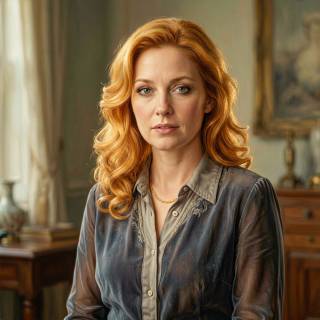
Mary Richman is a young woman who has transmigrated into the world of Pride and Prejudice, inhabiting the body of a minor gentry daughter living near Longbourn. While the Bennet family celebrates the marriages of their eldest daughters to wealthy men with incomes of £5,000 and £10,000 respectively, Mary remains focused on her own economic survival. She manages the family’s 200 acres of land with rigorous efficiency, running a profitable handmade soap business that yields a net annual profit of £238. Her father, Mr. Richman, has abandoned his farming duties to run a private bank in London, leaving Mrs. Richman to reside there permanently with the hope of producing a male heir. Mary, aware of her ordinary appearance and lack of social charm compared to her neighbors, intends to marry a suitable commoner who will allow her to continue managing the estate.

Mary’s routine is disrupted when she travels to London to deliver goods and collect payment for wheat sold to the army. Upon arriving at Richman Private Bank, she finds her mother in high spirits, eager to discuss Mary’s attendance at the upcoming wedding of Mr. Darcy in Derbyshire. Mrs. Richman insists that Mary, despite her self-perceived ordinariness, possesses practical virtues that wealthy families value. She urges Mary to secure a advantageous marriage to elevate the family’s status. Mary politely dismisses these ambitions, preferring a quiet life managing her land. However, the atmosphere in the bank is deceptive. Her parents press her to sign over financial documents, claiming it is for tax purposes, while her father avoids appearing in person. Mary complies, handing over the cheque from the army payment and signing the papers without suspicion.

As Mary departs London, her parents execute a desperate plan. Mr. Richman reveals that the bank has collapsed under the weight of debt and fraud. Rather than facing creditors, he and his wife decide to flee the country, leaving Mary behind to bear the brunt of the financial fallout. They believe that because the ancestral property at Longbourn was never mortgaged, the creditors cannot touch it, and they assume Mary’s competence will allow her to manage the crisis alone. They board a ship immediately, abandoning their daughter to the consequences of their bankruptcy.

On her journey back, Mary encounters a commotion on Cheapside Street. A tall, desperate man sprints past her carriage, clutching a loaf of bread. He is pursued by bakery workers who accuse him of theft. When the carriage stops, the bakery owner confronts Mary, claiming she instructed the man to buy bread but refused to pay. The situation escalates as the thief, in a fit of frustration or perhaps madness, bites into the bread and spits it out in disgust. This encounter marks the beginning of a series of unexpected events that will force Mary to navigate a world far more dangerous and complex than her soap business and wheat fields. The collapse of her family’s financial standing in London leaves her vulnerable, while the mysterious thief represents a connection to a larger, unseen conflict that threatens to upend her carefully calculated life.

The narrative shifts from a quiet domestic management story to one of survival and political intrigue. Mary’s transmigration has placed her in a position where her only asset is her land, but her parents’ actions have stripped her of her financial safety net. The bankruptcy of Richman Private Bank means she is no longer the daughter of a banker, but potentially a debtor’s daughter with no means of support other than her own labor. The incident with the thief suggests that her path will intersect with figures of higher social standing or criminal underworld elements, challenging her desire for an ordinary life. As she returns to Longbourn, she must confront the reality that her parents have sacrificed her stability for their own escape, forcing her to rely solely on her business acumen and resilience to rebuild her fortunes in a society that values wealth and lineage above all else.

Novel Items

More
Daily Item
A bar of soap from Jiang Tian's modern supplies. Considered precious in this era. Used for bathing Xie Chen and Jiang Er.
Item
Plump and fragrant wheat grains gathered from the wheat field by Mu Yu into five of the six baskets. Cheng Youyou plans to turn it into edible flour, which requires significant labor and resources.
Materials
A field of potato plants that Cheng Youyou digs up in the forest. Potatoes are excellent carbohydrates, easy to store and grow, and versatile in cooking. She unearths massive potatoes using both her bone knife and beast form claws.
Food
Real chicken eggs obtained by Xue Ming from his internship at N2. They are extremely rare, not sold on the market, and can only be acquired through black market or personal connections. Chu Xuan and Xue Ming plan to cook them at home.
Document
A £240 payment cheque from the army's quartermaster, which Mary brings to her parents in London. Mrs. Richman asks Mary to keep it to explain to tax officials where the money came from.
Document
A record of monthly expenses and income from Keane's stores over several months of cooperation with Haitang.
Latest Release
DateGroupRelease
2026-08-11shanghai fantasy c1

Community Reviews

Rating(3.8 / 5.0, 4votes)
5 stars
1(25%)
4 stars
1(25%)
3 stars
2(50%)
2 stars
0(0%)
1 stars
0(0%)

Popular reviews

... Read More
I need to stop and appreciate how vividly this world is built. The author doesn't just tell us Mary runs a business—they MAKE US LIVE THERE. The opening scene with the soap mixture in wooden barrels, gradually turning white, being poured into moulds with 48 sections each, scraped smooth and left to set for a month. I could SMELL this. I could feel the wooden barrel, the consistency of the mixture, the rhythm of years of repetition. And then the wheat fields—fifty acres, 1,250 bushels harvested, the trip to the mill costing £86, the army taking 800 bushels at 6 shillings each because 'there are no taxes and no additional risks.' This isn't background decoration. This is a fully realized economic ecosystem. The church taxes, the king's taxes, the bribes to tax officials, the mill fees. Every detail makes the world feel like it existed before Mary arrived and will continue after she leaves. The three-floor house is described with such specific room-by-room clarity—the sitting room, kitchen, maid's room, farmhand's room on the first floor; master bedroom, mistress's bedroom, Mary's room, two unused children's rooms on the second; the third floor 'originally unused, but now specially used for drying soap.' This is worldbuilding through architecture. The house itself tells us about the family structure, the lost son, the repurposed space. And then London—Cheapside Street, right next to Whitbread brewery, the contrast between 'an annual income of several hundred thousand pounds' and a bank that can't even survive. The social season ending, people 'busy making their living,' the thief running with bread. Every scene is painted with enough sensory detail to feel inhabited.
... Read More
Okay so I need to talk about how this author completely subverts the entire Pride and Prejudice framework from page one. We open with all the familiar setup—Jane marrying Bingley, Elizabeth about to marry Darcy, the £10,000 a year gossip—but then BAM, we're not in the Bennet household at all. We're with Mary Richman, a transmigration protagonist who's basically running her own economic empire while the original characters get married in the background like NPCs. The plot structure here is genuinely clever. On the surface it's a transmigration story, but the real narrative engine is Mary's family business—the soap, the wheat, the pigs, the chickens—and then the devastating reveal at the end that her parents have fled London because the bank is bankrupt. I literally did not see that coming. The author plants seeds throughout: Mr. Richman being 'busy,' not wanting to manage land, the complaints about tax officials and bribes. But I was so absorbed in the economic details that I didn't connect them to the impending disaster. And then the cliffhanger! A tall man stealing bread, running right in front of Mary's carriage, and the bakery workers accusing HER of telling him to buy bread without paying. The text ends with him spitting the bread onto the ground in disgust. Who is this man? Why is he stealing? And that final detail about spitting the bread—what does that mean? Is he disgusted by the bread itself, or by the situation? I need to know what happens next immediately.
... Read More
Let me just say—this author does NOT waste time. Chapter 1 opens with the Pride and Prejudice setup in two paragraphs and then immediately pivots to soap-making. No preamble, no 'let me explain the transmigration' exposition dump. We're IN the barrel, stirring, and we learn everything through action. The pacing is relentless but never rushed. Here's how it works: economic detail (soap, £6 per shelf) → family dynamics (maids, eggs, potatoes) → financial accounting (wheat, taxes, army contracts) → London trip → parental reveal → bank bankruptcy → cliffhanger with the thief. Five distinct movements in what feels like a single chapter, and each one transitions smoothly because they're all connected through Mary's movement—she's always going somewhere or doing something. The author's masterstroke is the information control. We know Mary is capable, we know her parents are in London, we know there are tax issues. But the bankruptcy reveal comes so suddenly that it recontextualizes everything that came before. The mother's complaints about tax officials? Not just grumbling—she was covering for the fact that the bank was already failing. The father being 'busy'? He was preparing to flee. Every earlier scene gains new meaning on reread. And that ending—'the tall man rudely bite into the bread, then immediately spit it onto the ground in disgust'—is a cliffhanger that operates on multiple levels. Is it the bread? Is it the situation? Is it something else? The chapter ends mid-action, and I am NOT ready to stop reading.
... Read More
'Oh, her poor daughter!' I literally felt my chest tighten when Mrs. Richman thought that. Because here's the thing—Mary is genuinely the most capable person in this entire family, and her parents only ever see her through the lens of what she can provide. The scene where Mary hands over the £240 cheque and her mother immediately says 'You are so much more capable than your father!' and then laments that Mary isn't a boy? That's not love. That's utilitarian appreciation. And Mary KNOWS this. She just accepts it. She says 'I'm just an ordinary person. I'll find an ordinary person to marry' and it's this quiet, devastating admission that she's been conditioned to believe her worth is purely economic. But then the twist—I couldn't breathe when I realized her parents were fleeing. They took her money, they used her earnings, and they just... left. 'Let's go. Now that we have the cheque and some supplies, we need to leave quickly!' And Mary, on her way home, has absolutely no idea. She's driving back thinking about nothing, while her parents are escaping with the financial fruits of her labor. The mother's line 'Although you aren't a boy, I love you just as much as your father does' after seeing the supplies—that's the kind of conditional love that wrecks me. It's not 'I love you, Mary.' It's 'I love you now that you've brought us food and money.' And Mary doesn't even seem to question it. She just... accepts it. That's the emotional core of this story and it's devastating.
See all reviews

Characters

See all characters

Custom lists

Oops…There is nothing here.