Summary

... Read More

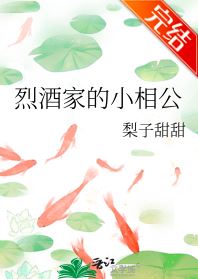
Rong Mei, a woman who died after twelve years of exhausting entrepreneurship in her previous life, transmigrates into the body of an eighteen-year-old mixed-race girl in rural China in 1985. The original host, Rong Mei, was the daughter of a Chinese father and a Russian mother, inheriting striking Slavic features and mesmerizing heterochromatic eyes. Heartbroken by a betrayal in her first love, she had impulsively agreed to marry Zhou Nanxu, a soldier she had never met, after seeing only his photograph. Upon arriving at the Zhou family home in Ertuozi Village, she finds herself in a hostile environment dominated by her abusive sister-in-law, Luo Xiuxiu, who has oppressed the widowed mother-in-law, Liu Rong, for four years. Rejecting her past life of overwork, Rong Mei adopts a philosophy of lying flat and prioritizing her own comfort. Her first act is to physically beat Luo Xiuxiu when she insults Liu Rong, establishing immediate dominance. Recognizing the toxic family dynamics, Rong Mei orchestrates a separation of the household, dividing assets and moving Liu Rong out to live with her, thereby liberating the older woman from years of servitude.

The narrative shifts focus to the husband, Zhou Nanxu, a disciplined and highly decorated deputy regimental commander in the military. Unaware of his mother’s actions, he receives a telegram containing only a question mark from his new wife, followed by letters revealing that Liu Rong has spent five hundred yuan to buy him a wife and that the family has been separated. Initially skeptical and concerned about the propriety of the arrangement, Zhou Nanxu is promoted to his new rank while grappling with the absurdity of the situation. Meanwhile, Rong Mei, unable to remain idle in the village, decides to travel to the military compound to find him. The journey is arduous, involving crowded trains and long bus rides, but she arrives at the garrison determined to secure her future. She is greeted by Deputy Political Commissar Guo Jiming, who is initially disappointed by her rustic appearance but is stunned when she reveals her true beauty. She is assigned a guest apartment within the compound.

The pivotal turning point occurs when Zhou Nanxu returns home and unexpectedly encounters Rong Mei in the bathroom. Struck by her extraordinary beauty and captivating eyes, he is momentarily disarmed. Their first interaction is awkward yet charged with immediate attraction. Zhou Nanxu informs her that they cannot legally marry because she is only eighteen, below the statutory age, and that they are not yet a legal couple. Instead of being distressed, Rong Mei directly asks him if he is willing to support her financially so she can live a life of leisure without working. This blunt confession of her desire to be a dependent wife catches him off guard. However, captivated by her appearance and demeanor, Zhou Nanxu agrees to her terms. The story concludes with the two beginning their cohabitation, setting the stage for a relationship built on mutual attraction and a unconventional arrangement, while the complexities of their respective families and military life remain to be navigated.

Latest Release
DateGroupRelease
2026-08-11shanghai fantasy c113
2026-08-11shanghai fantasy c112
2026-08-11shanghai fantasy c111
2026-08-11shanghai fantasy c110
2026-08-11shanghai fantasy c109
2026-08-11shanghai fantasy c108
2026-08-11shanghai fantasy c107
2026-08-11shanghai fantasy c106
2026-08-11shanghai fantasy c105
2026-08-11shanghai fantasy c104
2026-08-11shanghai fantasy c103
2026-08-11shanghai fantasy c102

Community Reviews

Rating(4.5 / 5.0, 4votes)
5 stars
2(50%)
4 stars
2(50%)
3 stars
0(0%)
2 stars
0(0%)
1 stars
0(0%)

Popular reviews

... Read More
I need to talk about the kitchen scene because the author absolutely cooked (pun intended). So Rong Mei is sprawled on the sofa reading a comic book—because of course she is, comfort over image—and she gets up for water. The thermos is on the dining table right next to the kitchen wall. She can SEE everything. And then she sees him. The way this is written is so deliberate. First the sound: "Sizzle——" You're already in the kitchen with her. Then the water in her mouth, the almost-spit-take. The narration builds this whole moment of her wanting to walk in and "hug his strong waist and abdomen" and then immediately pivots to her suppressing those thoughts by thinking about dismemberment cases. The tonal whiplash is incredible. And then she walks in, avoids his eyes, pretends to wash the cup, and he just appears beside her like a domestic god. The heat wave hitting her face. The water running. The casual intimacy of him telling her to just leave the cup. What I love about this scene is how the setting does all the work. The small apartment in the family compound, the kitchen visible from the living room, the thermos on the dining table—it's all so ordinary and domestic, which makes the romantic tension feel even more electric. This isn't some grand romantic gesture in a ballroom; it's a guy cooking without a shirt and a girl almost choking on water. It's real. It's warm. It feels like a memory. The department store scene too—comparing it to a vegetable market, the crowds, the energy of 80s/90s China shopping culture. The author makes the world feel lived-in, not just a backdrop for the romance.
... Read More
Can we talk about how Zhou Nanxu barely says anything and it's still the most romantic dialogue in the book? Let me just list some of his lines because they're all perfect: "I don't know that person named Cui Mengmeng." — He's explaining himself to her and the reader at the same time. So gentle. "It's good that you didn't misunderstand." — MURMURED. Said so quietly she doesn't even hear it. He's confessing his own anxiety about her thinking he cares about someone else, and he can't even say it out loud. "Rong Mei, I'm wearing a military uniform." — The most helpless, gentle sigh of a man who is trying to be reasonable and she is NOT having it. "Zhou Nanxu, have you gone crazy?!" — Her line, obviously. The narrator's response to this is just him not letting go. The dialogue here is basically: she yells, he holds tighter. Perfect. "I'll go to the vegetable market to buy some vegetables to take back. I'll cook at home today, I won't eat in the cafeteria." — This is a man whose love language is "let me buy groceries and cook for you" and I am WEAK. And Rong Mei's voice is so distinct—her internal monologue is chaotic, horny, self-deprecating, and hilarious. "She was starting to suspect that there was something wrong with her brain." After going from Lujiazui luxury apartments to being happy about a hot shower and a phone call. The contrast between who she was and who she's becoming is written into her dialogue so naturally. The author's narrative voice also has this wonderful dry humor woven in. The line about Zhou Nanxu's voice being "filled with indulgence and pampering" without him realizing it? That's the narrator winking at us.
... Read More
Okay, let me just say this out loud: Zhou Nanxu is the worst at playing it cool and I am HERE FOR IT. The whole department store sequence? Chef's kiss. He's this stoic military man, all discipline and duty, and Rong Mei just grabs his hand and suddenly he's losing his damn mind. The text literally says his ears turned red. His EARS. A grown man in uniform whose entire identity seems built on self-control, and he gets flustered because she touched his arm. But then—AND THIS IS THE PART THAT KILLED ME—he lets go, she slips her fingers between his, waves their clasped hands in front of his face like "are we lost?" and he COMPLETELY SURRENDERS. The narration says he knew he should criticize her, that it was inappropriate for a soldier, but he "couldn't bear to let go of the soft touch." Soft touch. SHE TOUCHED HIS HAND AND HE MELTED. And then when she pulls away because of the stares, because of his uniform, because she's being considerate—of COURSE she is—he just picks her hand back up and walks out. Domineering. Unapologetic. The fact that she then notices other people's ears are red and finds his "cuteness" instead of his intensity? That's the kind of romantic comedy energy I live for. Also the phone call subplot with her parents not answering? My heart. She's clearly worried and trying to hide it, and Zhou Nanxu is this quietly devoted boyfriend offering to let her use his office phone, his voice "filled with indulgence and pampering" without even realizing it. Men like this should not be allowed to exist. The contrast between Rong Mei's internal monologue (hot, flirty, chaotic) and Zhou Nanxu's (stoic, devoted, internally screaming) is absolutely delicious. I need more.
... Read More
There are two objects in this section that keep coming back to me, and I think they're doing a lot of thematic heavy lifting. The phone. Rong Mei calling her parents and no one answering. It's a simple plot point—she needs to check on her family, maybe she's worried they've gone to Russia—but it's also this quiet symbol of displacement. She's in a new city, in a new life, disconnected from the people who raised her. The phone booth on the street corner, the queue at the post office she avoids, the eventual solution of using his office phone—these are all about finding connection in a new place. And Zhou Nanxu offering that phone isn't just being helpful; it's him saying "your family matters to me, let me make it easier." Then there's the hand-holding. Or rather, the refusal and then the insistence of it. Rong Mei pulls away because of propriety, because of his uniform, because of what people will think. And Zhou Nanxu puts her hand right back in his and walks out anyway. This is the whole theme of the novel condensed into one gesture: love as an act of quiet rebellion. Not dramatic rebellion, not shouting in the streets, but just... holding someone's hand when the world says you shouldn't. The fact that he's a soldier, bound by rules and discipline, and he chooses her over propriety in that moment—it's deeply symbolic of what their relationship represents. The department store itself is also interesting. It's described as lively, crowded, almost chaotic—comparable to a vegetable market. It's the opposite of the sterile luxury apartments Rong Mei used to inhabit. This is real life, messy and loud and full of people. She's learning to find joy in it. The comic book she reads on the sofa, the snacks she buys, the way she sprawls comfortably—all of it is her becoming someone who can be happy in a simpler world. The old Rong Mei would never have found this kind of contentment. The new one does, and that transformation is the real story here.
See all reviews

Characters

See all characters

Custom lists

See all custom Lists