1970s Military Marriage: With My Pocket Space, I Took Revenge - Reviews

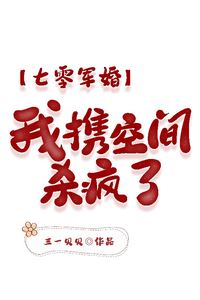
1970s Military Marriage: With My Pocket Space, I Took Revenge
+Add to Custom List
Sort
Add review
... Read More
I need to talk about Zhou Yunting because this man is a whole mood. On the surface he's all stoic commander energy—sharp brows, commanding presence, the works. But the moment Zheng Chunli showed up with those steamed buns, his face? Pure calculation. He remembered Zheng Chuncheng immediately. The man was a former company commander. But Liu Zhixia frowned, so suddenly he can't remember a damn thing. That's not just loyalty, that's strategic devotion. And the best part? Liu Zhixia isn't even jealous. She literally just doesn't want him deceived. She's standing there watching like a protective older sister, and he's over here treating her displeasure like a national emergency. Then he salutes her and says his loyalty belongs to her. Three pairs of eyes locking onto him like he's on trial. Commander Zhou and Old Master Zhou are NOT having any of Zheng Chunli's nonsense, and honestly? Same. The family dynamic is so wholesome. They all see through Zheng Chunli's scheme but instead of causing drama, it accidentally brings Liu Zhixia and Zhou Yunting closer. Meanwhile Sun Haomin is over there being a confused mess about Zheng Chunli's sudden distance, completely unaware she's reborn and has already written him off. The original male lead reduced to a footnote. I'm here for it.
... Read More
I've been thinking about the storage spaces and I can't unsee what they represent. Zheng Chunli's space is shrinking while Liu Zhixia's is expanding. This isn't random—it's the narrative itself deciding who deserves the protagonist's blessing. The original heroine thought she could just switch targets and inherit the story, but the story says no. The butterfly pendant detail haunted me though. The aunt's daughter disappeared, the pendant was supposed to go back to her, but instead it went to Zheng Chunli and her mother. 'My aunt's daughter disappeared long ago. Keeping it only brings sadness. It's better to put it to good use.' What a sanctimonious line. She justified theft with pragmatism. And now her space is literally disappearing because the narrative has judged her. Meanwhile Liu Zhixia's space is becoming a living ecosystem—mountains, forests, rice fields, birdsong. It's not just a warehouse, it's a world. There's something almost biblical about it. The Zhou family being sent to the countryside for political reeducation mirrors this theme of fall and redemption. The powerful become powerless, the powerless (or seemingly powerless) hold the real power. Old Master Zhou forgetting his embarrassment because 'she's his granddaughter-in-law'—family loyalty transcending political shame. That small moment says everything about what this story values.
... Read More
The setting shifts in this batch are really well done. Hongshan Village feels lived-in and warm—thatched houses, villagers who greet you with genuine respect, the village head's wife who won't stop talking about chronic illnesses and cures. There's a simplicity to this place that contrasts sharply with Beijing's intimidation factor. Old Master Zhou, who spent years in power and had people trembling before him, actually finds happiness in these sincere, unpretentious conversations. That's a powerful image. Then the scene moves to the Liu family's arrival in their car, which causes a sensation. The contrast between military uniforms and rural simplicity is striking. But the real atmospheric shift happens at Haishi Railway Station. It's morning, crowded, noisy—a place of transit and uncertainty. Liu Zhixia dozing half-asleep, someone bumping into her, the sudden violence of the theft and the counter-attack. The station becomes a battlefield without anyone else realizing it. And then Zhou Yunting appears with breakfast, completely calm, as if nothing extraordinary just happened. The juxtaposition of mundane (eating breakfast) and extraordinary (fighting skills on display) in the same space is really effective. The military district of Haishi is introduced as a new setting, and we're told it's huge, which suggests the world is about to expand significantly.
... Read More
I need to talk about the welcome ceremony scene because the atmosphere in this novel is absolutely *chef's kiss*. Let me paint it for you: vast military square, rows of soldiers sitting straight-backed, military wives clustered in groups with all that unspoken social tension simmering underneath. The author doesn't just describe a crowd—they describe a *ecosystem*. Every glance, every whisper, every shifted posture tells you about power dynamics, alliances, jealousy, ambition. This isn't background decoration; it's a living, breathing social battlefield. And then Liu Zhixia appears. The prose literally says: "In everyone's eyes, there was only that moving figure in green." The fallen leaf she touches is already embedded deep in the tree—a tiny detail that screams she's stronger than she looks. The breeze catches her short ear-length hair. She's wearing a modified military-green casual outfit that the female soldiers immediately recognize as having combat potential. The entire scene shifts from a stiff military ceremony to something electric the moment she steps into frame. The sparring match on stage is another visual masterpiece. Three men standing shoulder to shoulder, the crowd's energy surging, and Zhou Yunting removing his coat and rolling up his sleeves like he's about to do something mundane instead of absolutely demolish two officers. The contrast between the rigid, formal ceremony and the raw physicality of the fight creates this incredible texture. And then Liu Zhixia's entrance—her presence so overwhelming that Gong Xinyue, a trained military woman, looks "like a dim moon hidden in darkness" by comparison. The author doesn't need a thousand words to describe a scene. A few precise images and you're there.
... Read More
I'm not even going to pretend I'm not obsessed with the dialogue between these two men. Let's talk about Shen Hao first—because this guy is a gift to every novel. He's the comic relief, sure, but he's also the emotional barometer of the scene. "Old Zhou, it seems sister-in-law might prefer someone younger and more energetic…" He's teasing, but there's also genuine curiosity underneath. And then Zhou Yunting's response? The man who barely speaks ten words at a time during the entire ceremony just goes on a verbal rampage: "We're the same age. If young girls like younger men, then she's my wife." "We already have our marriage certificate. As for you, finding someone might be difficult..." This is the longest speech Shen Hao has ever heard him make, and the narrative literally calls it out. That's not just dialogue—that's character revelation through what a person *chooses* to say and when. Zhou Yunting doesn't get jealous openly. He doesn't announce his feelings. But cross the line about his wife and suddenly he's got a mouth on him. And Liu Zhixia's dialogue is equally sharp. When Gong Xinyue challenges her, Liu Zhixia doesn't rise to the bait with anger. She says, with what the narrator describes as "a hint of childish charm": "Would all the sisters-in-law be willing to treat my sparring match with Comrade Gong Xinyue as a performance?" She makes it seem like a favor to everyone, not a competition. But the narrator immediately undercuts it: "Of course, that was only if one ignored the cunning sparkle in her eyes." The dialogue here does triple duty—it reveals character, advances conflict, and entertains. Rare combination.
... Read More
The dialogue in this batch is interesting because so much of the real conversation happens beneath the surface. When Liu Zhixia's mother asks whether she likes Zhou Yunting, the daughter's answer is carefully evasive: 'He's a soldier, his character is good, I'm not dissatisfied.' But her mother immediately calls her out: 'You only admire him. You don't actually like him yet, do you?' That's sharp maternal intuition. Then there's the scene where Zhou Yunting overhears this conversation. He says nothing. He just stands there and processes it. Later, when he hands Liu Zhixia breakfast at the station, he says gently: 'Zhixia, are you hungry? Eat some breakfast first.' That's it. No mention of what he heard, no confrontation, just this small act of care. The dialogue between Shen Hao and Zhou Yunting is also telling. Shen Hao says: 'Do you really have to put on that unpleasant expression?' and Zhou Yunting's response is to ignore him completely and focus on Liu Zhixia. The narrative voice itself has a nice rhythm—sometimes lyrical ('Three days passed in the blink of an eye'), sometimes blunt and direct. Liu Zhixia's internal monologue is particularly sharp: 'Not suitable... Not suitable...' repeated like a mantra. The author lets silence speak as loudly as words.
... Read More
The relationship between Liu Zhixia and Zhou Yunting is fascinating because of what's NOT said. Outside the door, Liu Zhixia overhears her mother asking if she actually likes Zhou Yunting, and Liu Zhixia's internal response is brutally honest: she admires him, she doesn't dislike him, but she's not ready to commit. She sees him as a soldier who has the country in his heart, not a family man. And here's the thing—Zhou Yunting hears this. He stands right outside the door and processes it. His reaction afterward is remarkable: he doesn't get angry, he doesn't confront her. He just... goes back to being cold and unreadable. But the narration hints at something underneath: a trace of helpless affection. Meanwhile, Liu Zhixia is equally guarded. She explicitly notes that he maintains distance during their interactions, and she actually prefers it this way. She doesn't want to change the dynamic. This is two people who are married on paper but emotionally circling each other like cats. Then you have Tian Yunyun, the childhood sweetheart who followed Zhou Yunting's career for years, only to realize she's lost before the race even started. She couldn't bring herself to leave her family like Liu Zhixia did. That's not jealousy—that's a fundamental difference in who they are. And Shen Hao? He's the rival who envies Zhou Yunting even as he competes with him. The relationship web here is dense and layered.
... Read More
There's a rich symbolic layer running through these chapters. Liu Zhixia is called Divine Doctor, but we're slowly learning she's also a hidden warrior. The village sees one side of her—her healing abilities, her kindness, her willingness to help ordinary people. But the station scene reveals the other side: combat skill, quick thinking, the ability to read people and situations instantly. This duality is the core theme. She's both healer and fighter, both gentle and fierce. The marriage itself is symbolic—two people who are legally bound but emotionally separate, navigating duty and desire. Zhou Yunting's cold exterior versus his gentle treatment of Liu Zhixia when he thinks no one is watching (or when he thinks she's just a sleepy traveler) shows the tension between his public persona and private self. Tian Yunyun represents another kind of symbolism: she's the woman who stayed, who followed but never committed fully, who couldn't leave her family behind. She's everything Liu Zhixia isn't, and yet she's also everything Liu Zhixia could have been if she'd chosen differently. The wallet theft is almost incidental—it's really about power, control, and who gets to define the narrative. Shen Hao's line 'I truly have begun to envy Zhou Yunting' is the chapter's thematic anchor: even the rival recognizes that what Zhou Yunting has with Liu Zhixia is something rare and valuable.
... Read More
The pacing in these chapters is absolutely ruthless and I respect it. We open with Old Master Zhou feeling embarrassed about being outworked by a young girl, then immediately pivot to Sun Haomin trying to manipulate Zheng Chunli, then Zheng Chunli's entire backstory dump about her previous life marriage disaster, then Liu Zhixia's internal monologue about the heroine's halo, then the space transformation scene, then Zheng Chunli's failed approach, then Zhou Yunting's loyalty declaration, then Liu Zhixia's supply run at night, then the Zhou family discovering what she actually bought. That is a LOT of ground covered and none of it feels rushed. The author knows exactly when to slow down—like the entire scene where Zhou Yunting is waiting outside in the dark, scared, and Liu Zhixia appears like some kind of night ninja carrying two hundred jin of supplies. That moment breathes. But then we cut to the Wu family in the capital and suddenly there's political stakes breathing down everyone's neck. The chapter transitions are sharp but never jarring. And that ending with Zhou Yunting asking where she got all those supplies? Perfect cliffhanger. I immediately wanted to read the next chapter. The author also does something clever with perspective shifts—we're in Liu Zhixia's head, then Zheng Chunli's, then Zhou Yunting's, then the Wu family's. It makes the world feel bigger than just the countryside setting without slowing the main narrative.
... Read More
Okay so let me just say this plot twist hit me like a freight train. Zheng Chunli—she's the original heroine, right? The one who was supposed to ride the male lead to the top—gets reborn and decides to switch targets to Zhou Yunting instead. But here's the thing that made me actually sit up straight: Liu Zhixia isn't just some random girl. She's also got a storage space, and it's actively competing with Zheng Chunli's. I re-read that scene where their auras repelled each other and I literally gasped. Zheng Chunli's space is shrinking while Liu Zhixia's is expanding—mountains rising, forests growing, golden rice fields. This isn't just a romance rebirth story, it's a supernatural turf war disguised as one. And the Wu family subplot in the capital? Old Master Wu thinking the Zhou family is finished? That's a ticking time bomb. The author is layering political danger on top of supernatural competition on top of romantic rivalry. I love it when a story doesn't just do one thing well. The scene where Zhou Yunting deliberately says he doesn't remember Zheng Chuncheng was chef's kiss—he saw through her immediately and chose Liu Zhixia's feelings over military courtesy. That's not just plot progression, that's character-defining.
... Read More
What I love about this section is that there are literally five different conflicts happening simultaneously and they're all feeding each other. Let me map this out because it's brilliant. First, the obvious one: Zhou Yunting vs. Zhang Lei and Qian Chunjiang. These guys have a grudge. Zhou Yunting was "parachuted in through connections" and took the deputy regimental position that belonged to Qian Chunjiang. The sparring match isn't a friendly exhibition—it's a power play. They want to embarrass him publicly. But Zhou Yunting doesn't just win; he wins so effortlessly that it shatters their entire worldview. Zhang Lei realizes "what the leaders had told him before was not exaggerated at all." That moment of defeat changes the power dynamic in the entire unit. Second, Liu Zhixia vs. Gong Xinyue. This one is more layered. Gong Xinyue is driven by jealousy—both personal (Tian Yunyun's friend, the military flower who gets ignored) and professional (she's a trained soldier being upstaged by a "military wife"). But Liu Zhixia's stakes are different. She's not just fighting for pride; she's protecting her husband's reputation and her own position in a hostile social environment. When she deliberately hides her strength during the match, she's making a calculated choice about how much visibility she wants. That's a different kind of stakes—strategic rather than emotional. Third, the unspoken conflict between Liu Zhixia and Tian Yunyun. Tian Yunyun notices Liu Zhixia holding back. She sees through the performance. And yet she can't do anything about it. The uniform she wears "represented the faith she and Zhou Yunting shared"—but that shared history means nothing against someone who can physically and socially outmatch her in real time. And beneath all of this is the tension between Zhou Yunting and his own past. He's been transferred, his promotion path is uncertain, and his wife is the daughter of the military commander—a fact that makes everyone both respect and fear her. The welcome ceremony becomes a pressure cooker where every interaction is a test.
... Read More
Okay so let me just say—Zhou Yunting is the coldest, most composed man in this entire military district, right? And yet the second he spots Liu Zhixia arriving, the narrative basically spells out: "His heart pounded like a drum. His burning gaze. His tense body. Every single reaction revealed how unsettled he truly was." This man who sits through a military ceremony with a face like carved stone loses his entire composure because his wife is five minutes late. That's not just love, that's obsession wrapped in restraint. And then there's the Shen Hao moment. Absolute gold. "We're the same age. If young girls like younger men, then she's my wife." "We already have our marriage certificate. As for you, finding someone might be difficult..." Bro. Zhou Yunting, who barely speaks ten words at a time, just delivered the longest, most pointed verbal dismantling of his best friend's existence. And Shen Hao's reaction? He deliberately steps on Zhou Yunting's foot to snap him out of his daze. That's friendship. That's intimacy. These two men have history. But the real relationship masterpiece is how Liu Zhixia reads the room. She knows exactly who she is in this space—"The daughter of the military commander." She knows the military wives are sizing her up, calculating whether she's a threat or an ally. And she doesn't flinch. She sits there, steady, unaffected. Then she walks onto that stage and completely obliterates Gong Xinyue while pretending it's a close match. She's protecting something—maybe her husband's reputation, maybe her own position. The fact that Tian Yunyun notices she's holding back? That's the kind of detail that tells you Liu Zhixia operates on a different frequency than everyone around her. She's not just beautiful, she's strategically brilliant.

Leave a comment

You must be logged in to leave comments. or