Summary

... Read More

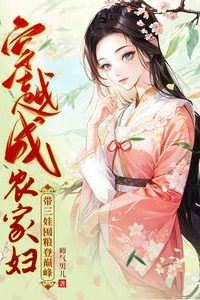
In 1973, at the Haicheng Steel Factory Family Compound, eighteen-year-old Zheng Qingning is violently pushed by her younger sister Zheng Jiaojiao, causing her to strike her head on a rock. As her fiancé, Ye Yunzhou, blames Zheng Qingning and demands she apologize to the weeping Zheng Jiaojiao, Zheng Qingning sees floating text revealing that she is a supporting character in a novel, destined to suffer while Zheng Jiaojiao is the heroine. Realizing her fate involves losing her job offer, her reputation, and eventually being sold to a disabled old man, she refuses to accept her role. Despite her head injury, she rushes to the post office and secures her acceptance letter for the military art troupe, collapsing from blood loss before being rescued by Nangong Ye, a battalion commander and Ye Yunzhou’s superior.

Waking in the hospital, Zheng Qingning learns from the floating text that Nangong Ye is a tragic figure who dies young and that her parents plan to ruin her purity to break her engagement to Ye Yunzhou. She discovers she is not her parents’ biological child and that a jade Guanyin pendant, hidden in their home, is the golden finger that grants Zheng Jiaojiao a luxurious space. Zheng Qingning steals the pendant, the household registration book, and some money, using the jade to enter the space herself. Inside, she finds a modern home equipped with food, technology, and a recording studio. She spends the night learning to use these amenities, improving her appearance and skills, while also reporting her family’s crimes, including embezzlement and abuse, to the authorities via an anonymous letter.

Zheng Qingning returns home and confronts her family, exposing Ye Yunzhou and Zheng Jiaojiao’s affair in front of the neighbors. She demands to sever ties with the Zheng family and agrees to a quick wedding banquet only to buy time. Meanwhile, Nangong Ye investigates the Zheng family’s corruption in Muzhuang Village alongside He Chunfeng, uncovering evidence of their tyranny and illegal activities. He Chunfeng arrests the village officials, including Zheng Qingning’s relatives, which threatens Zheng Qingning’s political background check for the art troupe. Nangong Ye, concerned for her future, ensures the investigation is handled with enough discretion to allow her to proceed with her career while still holding her family accountable.

As the wedding banquet approaches, Zheng Qingning continues to outmaneuver her family. She learns that Zheng Jiaojiao’s plan to have her defiled by the lame old man has been thwarted because Zheng Qingning is no longer vulnerable. Instead, Zheng Qingning uses the situation to further isolate her sister and fiancé, revealing their true natures to the community. Nangong Ye supports her by helping her secure travel arrangements to the military base, showing a growing interest in her well-being. Zheng Qingning, now confident and self-reliant, prepares to leave for the base, determined to build her own life as a superstar rather than remaining a victim. The story ends with her poised to start a new chapter, having reclaimed her agency and turned the tables on those who sought to destroy her.

Latest Release
DateGroupRelease
2026-08-11shanghai fantasy c54
2026-08-11shanghai fantasy c53
2026-08-11shanghai fantasy c52
2026-08-11shanghai fantasy c51
2026-08-11shanghai fantasy c50
2026-08-11shanghai fantasy c49
2026-08-11shanghai fantasy c48
2026-08-11shanghai fantasy c47
2026-08-11shanghai fantasy c46
2026-08-11shanghai fantasy c45
2026-08-11shanghai fantasy c44
2026-08-11shanghai fantasy c43

Community Reviews

Rating(4.2 / 5.0, 10votes)
5 stars
3(30%)
4 stars
6(60%)
3 stars
1(10%)
2 stars
0(0%)
1 stars
0(0%)

Popular reviews

... Read More
The investigation chapters gave me actual chills. Not because of violence or anything—well, there was violence in the backstory, but it was the quiet details that got under my skin. The old woman pointing at her grandson who's thirteen or fourteen and still wetting himself because the Zhengs beat him nearly to death. "He's alive, but now he's an imbecile." That sentence. Just sitting there. No dramatic music, no author commentary, just that devastating fact. And the way Nangong Ye and He Chunfeng move through the village—visiting household after household, each one worse than the last. Dead sons, mad daughters-in-law, families surviving on meager work points while the Zhengs take their meat and grain. The author doesn't describe the village itself much, which is actually brilliant. You don't need to know what the houses look like when every family you visit tells you the same story of exploitation. The worldbuilding is in the testimonies, not in landscape descriptions. Then there's the brigade office scene. The Zheng men waiting there, trying to play it cool, pretending they don't know why officials are visiting. Eldest Zheng's face twitching. The moment He Chunfeng picks up the phone and says "Detain Zhao"—I literally leaned forward in my chair. The power dynamic flips so fast. One second these local tyrants are acting like bosses, the next they're locked in a room with no escape. What I love about this section is how the physical spaces tell the story. The impoverished households, the brigade office, the Zheng family home with its single meat dish on the table—all of these spaces reinforce the hierarchy and the oppression. The Zheng family home especially, where Zheng Father hurls a stool at his own daughter. That domestic violence happening alongside the political corruption—it shows how the personal and the systemic are the same thing for people like Qingning.
... Read More
The stakes in this section are absolutely brutal and I love it. Let me count what Qingning stands to lose: her reputation (already ruined by Jiaojiao's schemes), her marriage (Yunzhou was supposed to be her way out), her family (who would rather see her dead than let her go), and her political future (the arts troupe application could be destroyed by the Zheng family's corruption). That's everything. And she's fighting all of it alone. But here's what makes the conflict so compelling—it's not just external. The real battle is inside Qingning's head. She's spent her whole life believing she's the problem, that if she just suffers quietly enough, things will get better. Every time she speaks up, every time she refuses to play her part, she's fighting not just her family but her own internalized oppression. When she says "I want to sever ties" and her father responds with "In your dreams!"—that's the core conflict in a single exchange. She wants freedom, they want control, and neither is backing down. The investigation subplot raises the stakes exponentially. If the Zheng family falls, Qingning's political future is ruined too. She needs them convicted but also needs to distance herself from them, and those two goals are in tension. The commentary even highlights this: "If the Zhengs are being investigated, then her family's turn must be next... What will happen to our girl?" And the ending of this section? Zheng Mother whispering to her husband about "tonight" and Zheng Father saying "double-check everything"—I'm terrified. Because in families like this, when they say "tonight" they mean something irreversible. The conflict isn't building to a climax, it's building to a point of no return. The suspense is perfect because we know Qingning is fighting on multiple fronts—her family, her fiancé, the political system, and her own trauma—and she's winning some battles but the war feels far from over.
... Read More
The pacing in these chapters is absolutely ruthless and I am here for it. Chapter 47 opens with Zheng Qingning screaming, fists clenched, ready to die. That's your hook—right in the first line. No warm-up, no gentle introduction, just pure explosive emotion. And then it doesn't let up. The family confrontation, the severance, the breakup letter, Jiaojiao's manipulation, Ye Yunzhou's internal panic—all of it flows like a river that keeps getting faster and faster. By the time Zheng Qingning walks out into the dark street, I had literally stopped breathing. But then—the author does something clever. Instead of keeping the volume at maximum, it drops. Nangong Ye appears. The scene becomes quiet, intimate, almost tender. He's asking about the report letter, she's breaking down, and there's this whole moment where he wants to hold her but doesn't. It's a breath of fresh air after the chaos, and it makes the emotional beats hit even harder because we get a moment to actually feel them instead of just being overwhelmed by them. Then we cut to the Zheng household—the father on the floor, the mother unconscious, the crippled old man with his bribe money. It's darkly comedic in a way that somehow makes the horror worse. And then Ye Yunzhou leaves, and Jiaojiao's internal monologue reveals her true nature: "It was all Zheng Qingning's fault. If she had just obediently drunk the drugged beverage..." CHILLS. Absolute chills. The next morning sequence is where the pacing really shines. Dawn, guesthouse checkout, newspaper office, tailor shop. It's a routine sequence but each stop advances the plot. The newspaper publication secures her safety. The tailor shop gives her a dress (and a ally in the shopkeeper). And the free dress? That's not just a nice moment—it's foreshadowing. She's going to need that dress for something. The chapter endings are masterful too. Each one leaves you with a question or a revelation that demands the next chapter. Jiaojiao's cold thoughts about keeping Zheng Qingning underfoot? Ye Yunzhou's distant gaze, seeing Qingning instead of Jiaojiao? Nangong Ye making a phone call about the jade pendant? I needed to know everything immediately. The only thing I'd say is that the internal monologue sections from the "on-screen text" perspective (the transmigrator's thoughts) sometimes slow things down, but they're also kind of fun because they give you this meta commentary on how the plot is unraveling.
... Read More
Okay, I need a minute. I just finished this chapter and my chest literally aches. The moment that wrecked me was Ye Yunzhou standing there in front of everyone, looking Zheng Qingning dead in the eye and saying, "I love Jiaojiao. I took her virginity, and I will take responsibility." Said it like it was some noble sacrifice, like he was the one being robbed here. The woman who loved him, who stood by him, who was supposed to be his future—and he just handed her over like a used tissue in front of fifty witnesses. But here's the thing that got me even more: Zheng Qingning's reaction. She didn't scream. She didn't collapse. She just stepped back like she'd been physically struck, and then her voice—God, her voice—when she said "Then what about me? How could you how dare you?" That stutter, that breakdown in the middle of a sentence, that was real. That was someone whose entire world just cracked. And Ye Yunzhou's internal monologue! "He had married Zheng Qingning because he couldn't bear to see the girl he loved suffer at home." Wait. So he DID love her. He married her out of love, and now he's abandoning her for the girl he didn't love, because of some forced situation? The man is a walking contradiction and he doesn't even realize it. Then there's the breakup letter scene. He writes it, and instead of giving her a clean ending, he goes full romantic: "If we can't be husband and wife, then let's be siblings. If you ever run into trouble, you can still come to me." BRO. SHE JUST WATCHED YOU MARRY ANOTHER WOMAN IN FRONT OF YOUR NEIGHBORS AND YOU'RE OFFERING HER A SIBLING PACKAGE DEAL? Her response—"No thanks. I have no interest in playing housemaid to someone else"—was so cold and so deserved. I literally clapped. But then Nangong Ye shows up and everything shifts. The way he looks at her, the way he says "You said you're not their daughter, do you have any proof?" There's this whole tenderness underneath his military-hard exterior that I was not ready for. And when he takes the jade Guanyin pendant from her and says "Leave this to me," I felt something in my chest. This man sees her. Really sees her, for the first time in this entire story. Meanwhile Zheng Jiaojiao is playing the victim card like a concert pianist, touching her stomach, using a possible pregnancy to lock down Ye Yunzhou. The audacity. The absolute audacity. And Ye Yunzhou—poor, deluded Ye Yunzhou—falls for it every single time. I'm not okay with any of this. I'm not okay.
... Read More
Can we talk about how well-written the dialogue is in this novel? Because I need to scream about it. Every character has a distinct voice and I can tell them apart without name tags. Zheng Qingning's lines are sharp, direct, sometimes broken with emotion but always cutting to the truth: "You all forced me into this! I have no way out anymore then let's all die together!" That's not polished speech—that's someone losing control, and it's perfect. Zheng Jiaojiao's dialogue is this masterclass in manipulation. Watch how she switches tones mid-conversation. To her mother: "Mom, agree to it! It's my fault... I can't drag Brother Ye down with me." Sweet, self-sacrificing, the perfect daughter. Then to Ye Yunzhou, clutching his arm: "Brother Ye, I ruined you. I'll go to the labor farm, I'll be paraded through the streets so long as you're safe, I don't care." And then five minutes later, after he's committed to marrying her, her internal monologue is pure venom. The gap between what she says and what she thinks is where the horror lives. Ye Yunzhou's dialogue is fascinating because it's full of self-deception. "I love Jiaojiao. I took her virginity, and I will take responsibility." He says this in front of everyone like he's the hero, like he's doing the right thing. But his internal thoughts tell a different story—he's panicking, he's thinking about his future, his uniform, his career. The disconnect between his spoken words and his actual motivations is the tragedy of this character. Nangong Ye barely speaks but every line counts. "You wrote the report letter about the Zheng family in Muzhuang Village, didn't you?" Just that. No accusation, no drama—just a statement delivered with the weight of someone who has interrogated countless criminals and can read a lie instantly. And his hoarse voice when he asks about proof? You can hear the exhaustion, the concern, the restraint all in one word. The shopkeeper! "Beautiful. This color suits you really well. Why don't you try it on properly?" So natural. So warm. She's a minor character but she sounds like a real person—a businesswoman who knows how to make a customer feel good and then rewards loyalty. And the neighbor aunties during the severance scene—"Once ties are cut, there's no going back" and "You're a girl how will you survive on your own?" That's the voice of a community, not individual characters, and it's used perfectly to create that sense of public judgment and social pressure. The dialogue never feels written. It feels overheard.
... Read More
Let me just say—the atmosphere in this novel is *chef's kiss*. The scene where Zheng Qingning cuts ties with her family in front of the entire housing compound? I could see it like a movie. The onlookers, the aunties and uncles, everyone leaning out of doorways, the formal document being written right there in the open, people placing their thumbprints. It felt so lived-in, so real. This isn't some generic setting—this is a tight-knit community where everyone knows everyone's business, where family drama is public spectacle, where a girl's reputation can be made or destroyed before breakfast. And the detail about the newspaper! Zheng Qingning going to the newspaper office first thing in the morning to publish the family severance notice. That's such a specific, grounded detail. In this era, if your family ties weren't publicly announced, you could still be implicated in their crimes. The stakes weren't just emotional—they were survival-level. The worldbuilding here is doing heavy lifting without ever feeling like an info-dump. Then there's the tailor shop scene. I love how the shopkeeper flatters her client until "even her wrinkles had faded." That line! The shopkeeper is such a vivid character in just a few paragraphs—busy, sharp-tongued, generous with her free dress, running a successful business on her own. You can hear her voice, you can picture her measuring tape around her neck. And the light green printed cotton dress? I can see it. I can see Zheng Qingning holding it against herself, the color making her skin appear several shades lighter. The author didn't need a hundred words to describe the dress—just that one detail about the color and the fabric, and suddenly I'm imagining the whole scene. The guesthouse at night, the dark street, Nangong Ye stepping out of the shadows—that moment had such cinematic quality. The contrast between the public chaos of the family severance and this quiet, tense encounter on a dark street. It felt like the story was exhaling after holding its breath. And the Zheng household after everyone leaves—the father on the floor groaning, the mother unconscious, the crippled old man counting his bribe money with yellow teeth and a perverted grin. It's grotesque and real and I couldn't look away. This world feels dangerous in a way that's not exaggerated—it's the quiet, bureaucratic danger of an era where one wrong move could send you to a labor farm.
See all reviews

Characters

See all characters

Custom lists

See all custom Lists