1960s Spicy Little Soldier Girl: Boldly Teases the Cold Commander’s Heart - Reviews

1960s Spicy Little Soldier Girl: Boldly Teases the Cold Commander’s Heart
+Add to Custom List
Sort
Add review
... Read More
Let's talk about Lin Yiqiao for a second because this girl is complicated in the best way possible. She's pretty, yes, but she's also aware of it and uses it strategically. She knows boys line up to bring her food, she knows she can rely on men—but she also knows that approach has limits. She wants freedom and dignity, not just survival. The relationship with her aunt Qian Ru is genuinely touching. There's this moment where Lin Yiqiao starts crying and simultaneously sweet-talking her aunt, and it's not manipulative in a bad way—it's survival. She's learned to read people, to make them want to help her. And Qian Ru sees through it and loves her anyway. But the uncle! Zhang Guoqiang is so interesting. He's lukewarm toward her, thinks she's a troublemaker, but there's something underneath that. When he agrees to let her bring him meals, it's not just politeness—I get the sense he's curious about her. And that moment when he tastes her braised fish and it's exactly to his liking? That's a small connection forming. Then there's the mysterious man in the jeep. The author gives us almost nothing about him except his physical presence and the way he looks away first. But that's enough. Lin Yiqiao's heart flutters, and I'm already obsessed with who he is.
... Read More
Okay, let me just say this: the author is a monster when it comes to pacing. You finish Chapter 14 thinking it's a straightforward rescue mission, right? Lin Yiqiao goes looking for Qi Jun, finds the command post empty, phone line cut—classic setup. Then she gets a local guide who turns out to be part of the ambush. Bang! Gunfire! And then they fall into a pit. A pit that turns out to be a hunting trap dug by commune members who are literally undermining socialism. The layers here are insane. First there's the immediate danger of the ambush, then the trap they fall into, then the revelation that the people around them can't be trusted. And the best part? Qi Jun drops the line 'they've already been dealt with' like it's nothing, like he walked into this on purpose. Spies. Right there in the commune. The plot doesn't just twist—it coils like a snake. What I loved most was how the author made us feel Lin Yiqiao's dread building: the empty command post, the beep-beep of the dead phone line, the local guide with sharp eyes who walked with a limp. Every detail was a breadcrumb. And then the pit scene? Two meters deep, no easy way out, and Qi Jun bleeding. The author could've resolved this quickly but instead stretched it out, made us sweat. How does a woman who just ate coarse grain steamed buns in the dining hall suddenly become a combat-rescue hero? That transition from 'I need to find him' to 'I'm leaping out of a pit like it's nothing' felt earned because the author gave us her motivation first. She's not doing this for glory—she's doing it because if she doesn't, they'll both be dead and she'll never forgive herself. Brilliant structure. The only thing I'd question is whether the spy reveal came too neatly, but honestly, the emotional payoff more than made up for it.
... Read More
Let's talk about Zhao Hui, because this ghost of a fiancée is the emotional spine of everything happening. She's dead, she's never appeared on page, and yet she controls every interaction between the living characters. When Zhao Xinxin shows up at the gate calling Qi Jun 'uncle,' and he responds with such practiced indifference—'I haven't heard of you'—you feel the weight of that silence. The author doesn't need to show us flashbacks or letters or tears. One line of dialogue does the emotional work of a thousand. And Lin Yiqiao's reaction to this information is where it gets really interesting. She doesn't flinch. She doesn't retreat. 'The more challenging a man was, the more he excited her.' That's not just ambition—that's a woman who recognizes that a man with a scarred heart is more interesting than one with an empty one. But here's what got me: when Qian Ru says, 'how could that lovely jade doll from childhood turn into a bad child?' and Lin Yiqiao thinks, 'Yes, how could a jade doll be bad? But a burden who couldn't get enough to eat wouldn't grow up without turning bad'—that's the emotional core of the entire story. This woman has been forced to harden herself to survive, and now she's using those survival skills for something she actually wants. The romantic tension isn't just about whether she'll win Qi Jun; it's about whether she'll allow herself to want something genuinely instead of strategically. And the scene where she practices dancing and catches his gaze from across the compound—that moment of connection without words, that silent recognition between two people who understand performance and desire—that's the most emotionally charged scene in these chapters, and it happens without a single line of dialogue.
... Read More
Lin Yiqiao is one of those characters who refuses to be simplified, and that's what makes her so fascinating. On the surface, she plays the role of the innocent, blushing girl—dimples appearing, eyes curving into crescents, cheeks flushing at the slightest provocation. But peel back one layer and you find a calculating strategist who sizes up men while pretending to be intimidated. 'She watched the man, feigning a touch of timid sincerity while secretly sizing him up'—this sentence alone tells you everything about her dual nature. She's not bad; she's adaptive. The author gives us glimpses of her inner monologue that completely contradict her outward performance, creating this delicious dramatic irony where we know she's playing a role even as other characters fall for it. And Qi Jun? He's her mirror in some ways—equally guarded, equally controlled. His brief handshake, his refusal to acknowledge status differences, his cold dismissal of Zhao Xinxin's family—all of it paints a man who has built walls and refuses to let anyone see what's behind them. But here's what I love: Lin Yiqiao isn't fooled by his stoicism. She reads him correctly. 'Men like him carried an air of arrogance. Wearing a mask of calmness while hiding pride deep within was a necessary skill for those in power.' She doesn't want to break him; she wants to be the one person worthy of seeing behind the mask. Their relationship hasn't even properly begun, and already the author has established a dynamic where both characters are playing chess, both are hiding something, and both are secretly fascinated by the other's game. That's not just chemistry—that's narrative gold.
... Read More
I need to talk about the dialogue in this book because it's genuinely excellent. The author doesn't just write conversations—they write power dynamics. Take this exchange between Lin Yiqiao and her uncle: "Then I'll trouble you, Yiyi," Zhang Guoqiang said. "No trouble at all, Uncle. Please don't be so formal with me." On the surface, it's polite. But read between the lines and you can feel the negotiation happening. He's testing her. She's proving herself. And the aunt is watching, smiling, hoping. The narrative voice is also doing a lot of work. It's close to Lin Yiqiao's perspective but never fully inside her head—we get her thoughts, but the author keeps a slight distance that makes her feel like a real person, not a puppet. When she thinks about the mysterious man's waist and thinks "He looks strong," it's funny and human and exactly the kind of observation a young woman would make. And the humor! The author doesn't take themselves too seriously. Lin Yiqiao's internal monologue about cooking—"Pride really does come before a fall—the next dish, stir-fried greens, turned into a disaster"—that's not just description, that's voice. That's an author who knows how to make you laugh while moving the story forward. The dialogue feels natural, distinctive, and full of subtext. Every conversation reveals something about the characters.
... Read More
What a brilliantly layered setup! The plot unfolds like a carefully orchestrated game of chess, and I am absolutely obsessed with how the author builds tension through strategic positioning rather than cheap drama. Lin Yiqiao's arrival in the capital isn't just a change of scenery—it's the opening move of a calculated campaign. She doesn't stumble into Qi Jun's orbit; she engineers every encounter. The lunchbox delivery, the deliberate walk past the training ground, the audition—each action is a pawn pushed forward with intention. And the author never lets us forget it. When Lin Yiqiao thinks, 'To win over a man, you must understand him thoroughly,' that's not just character voice—that's the plot itself declaring its thesis. The subplot with Zhao Xinxin is genius too. On the surface, it's a rival entering the frame, but really, it's a test of Qi Jun's emotional availability. His cold response—'I haven't heard of you'—tells us everything about the deceased white moonlight trope while simultaneously proving that Lin Yiqiao's assessment was correct: this man is a challenge worth pursuing. The military compound setting adds another layer of plot constraint—rules, gates, lockdowns—that force characters into proximity and conflict. The author understands that restriction breeds tension, and every locked gate Lin Yiqiao faces only sharpens her resolve. This isn't a story where things happen to the protagonist; this is a story where the protagonist makes things happen. And that's what keeps me turning pages.
... Read More
Okay so let me just say—this opening chapter is a masterclass in efficiency. The author doesn't waste a single sentence. We get Lin Yiqiao's entire backstory, her motivation, her plan, and her personality all packed into a train journey. That's not easy to do without it feeling like an info-dump, but somehow it works because the narrative keeps moving forward. The structure here is basically a classic 'departure' arc. She leaves her old life behind, arrives in a new world, and the very first thing that happens is she spots someone who's going to change everything. The man in the jeep—oh my god, the way the author describes that moment. His eyes meet hers, he looks away first. That's it. That's the hook. I was already invested. And then there's the whole military compound setup. Her uncle is hosting extra training sessions, which means the plot is about to get way more interesting. The author is clearly laying groundwork for a larger story—this isn't just a girl arriving in a new city, this is a girl walking into the heart of military power. The stakes are already rising. One thing I really appreciate: the plot doesn't feel rushed despite covering a lot of ground. The transition from train to compound to first day at her aunt's house flows naturally. Each scene earns its place. I'm genuinely curious where this is heading.
... Read More
I need to talk about the moment Lin Yiqiao sees the man in the jeep. Because this is the moment everything changes, and the author handles it with such restraint that it hits even harder. "The jeep's window was rolled halfway down, revealing a tall, sturdy upper body. Beneath the lowered brim of a green cap, the man was the first to look away." That's it. That's all the author gives us. No name, no description beyond height and build, no dialogue. Just a glance, and then he looks away first. And Lin Yiqiao's heart flutters. For the first time in the story, she's the one who's flustered. She's the one who can't read the situation. She's the one who's affected rather than affecting. This is the beginning of something, and I can feel it in my bones. The emotional tension between them is already there, even though they've barely spoken. The author understands that attraction doesn't need words—it needs moments, glances, the space between what's said and what's felt. And the family emotions are equally well-handled. Lin Yiqiao crying into her aunt's shoulder, the genuine gratitude mixed with relief, the bittersweet realization that her mother will never truly care about her—these moments are quiet but devastating. The author doesn't over-dramatize them. They just are, and that's what makes them powerful. I'm emotionally invested, and it only took seven chapters.
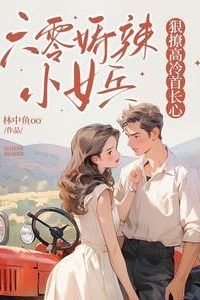
... Read More
I keep thinking about the pit. Not just the physical one they fall into, but the metaphorical pit this whole commune represents. Stone Mountain is isolated, cut off from the outside world. The dining hall is enormous but the food is coarse grain and vegetables—scarcity disguised as collectivist virtue. And then there are the hunting traps dug by commune members, undermining socialism from within. The irony is thick enough to cut with a knife. The commune that's supposed to protect them is literally setting traps for them. Lin Yiqiao calls it out directly: 'They're undermining socialism!' but the author is saying something deeper here. The real danger isn't the open enemy—it's the person standing next to you who smiles and offers to guide you into the mountains. The local guide with the limp and sharp eyes. He looks simple, honest, harmless. That's the whole point. Evil doesn't announce itself with a gunshot; it limps ahead of you and leads you into the dark. And then there's the phone line. Cut. The only connection to the outside world severed, leaving them isolated in the woods with no way to call for help. It's a perfect symbol for how the political climate of this era cut people off from each other, from truth, from safety. Even the uniform Lin Yiqiao straightens before eating—she's performing her identity, her loyalty, her role. But in the pit, none of that matters. Blood doesn't care about your class background. The author keeps returning to this idea that beneath all the political language and military ranks, what's real is human connection. Qi Jun's steady voice, Lin Yiqiao's bloody hands, the way she refuses to leave him. That's the thing the traps can't dig up.
... Read More
'Don't sleep. I'll tell you a secret.' 'I like you.' That's it. That's the confession. No grand declaration, no dramatic music swelling in the background—just two people in a dirt pit, blood on her hands, and her saying the thing she's probably been thinking for weeks. And then what does she do? She immediately backpedals like 'No, I still have to get out!' as if she can just unsay three words that hit like thunder. I lost my mind. The way Qi Jun chokes on water when she asks if she can pursue him after this is over—perfect. Absolutely perfect. He's been stoic and stern this whole time, and she just unravels him with one question and a flask of water. And the physical details! Her staring at his lips, him watching her move, the warmth between them even though they're freezing from blood loss. The author wrote 'the air around them growing noticeably warmer' and I'm not even sure if that's just the temperature or something else. Also, the hemostatic herb scene? She chews up some green plant and smears it on his wound like it's no big deal, then casually mentions she used to get into fights as a kid. No elaboration. Just dropped in there like a tiny character detail that makes you want to know everything about her. And Qi Jun's reaction—just a quiet 'You used to get into fights when you were little?' like he's genuinely curious. These two are so bad at being subtle it's adorable. The pit becomes this tiny world where all the pretense falls away. No ranks, no titles, just a man who's bleeding and a woman who refuses to leave him. When she jumps out and comes back like a 'little lion,' disheveled hair and pine scent and all—that's the most romantic image I've read all year.
... Read More
There's something about the way the author describes the capital that makes you feel like you're actually there. Let me give you the best example: when Lin Yiqiao steps off the train and thinks, 'Gone was the dampness of the Jiangnan region, replaced by the intense scent of sunlight, as if it could wash away the shadows and moisture clinging to her.' That's not just description—that's emotional geography. The dampness of her old life, the shadows, the moisture clinging to her—it's all physical and it's all psychological. The capital isn't just a new city, it's a cleansing. And the author makes you feel that. The military compound is another standout. The heavily guarded entrance, the soldiers in green uniforms with loaded rifles, the car horn interrupting Lin Yiqiao's thoughts—it all creates this atmosphere of power and discipline that's completely different from the small-town feel of Haicheng. The contrast is sharp and intentional. And the food! The black fish, the winter melon soup, the golden shredded pancakes, the pickled cucumbers. The author describes these dishes with such specificity that I could practically taste them. Even Lin Yiqiao's failed stir-fried greens felt real—because let's be honest, the simpler the dish, the harder it is to cook. That's a truth I've learned the hard way. The world feels lived-in and specific. I want to walk through this compound.
... Read More
The dialogue in this novel is razor-sharp, and I need to talk about how every conversation operates on at least two levels. Take the opening scene with Qi Jun. Lin Yiqiao says, 'May I ask your name?' and the author immediately notes that his 'imposing aura soften slightly.' Why? Because she used the right words at the right time—polite, curious, giving him space to reveal himself on his own terms. But then his response—'Among revolutionary comrades, there is no distinction of status'—and her internal reaction, 'Was it because of that may I ask your name remark?'—this is where the author's voice becomes a character itself. The narration doesn't just report thoughts; it comments on them, judges them, gives us access to the gap between what Lin Yiqiao thinks she did and what actually happened. And the dialogue with Auntie Gong? Perfect. 'This girl is beautiful and dignified. Her hands are so fair and plump—she'll surely be doted on by men in the future.' On the surface, it's neighborhood gossip. But Lin Yiqiao's internal response—'Auntie, try to hold back your laughter. You're the only one here who knows my true nature'—transforms a simple exchange into a moment of dramatic irony that makes us complicit in her deception. The author's narrative voice is witty, observant, and never sentimental. Even when describing Lin Yiqiao's beauty, the prose stays grounded: 'Delicate and charming, she knew how to captivate hearts. Anyone who saw her couldn't look away.' That's not purple prose—that's functional description that serves character and plot simultaneously. And the dance audition renaming from 'The Laundry Girl' to 'Red Blossom'? Brilliant. It shows how Lin Yiqiao adapts her art to her audience, just as she adapts herself to Qi Jun. Every word in this novel is chosen with intention.

Leave a comment

You must be logged in to leave comments. or
